

What’s going on with Nvidia? Market darling struggles to regain bullish momentum
Nvidia shares have struggled as macroeconomic and competitive forces weigh on the stock.
Nvidia’s share price is dropping as it fails to recapture its upward momentum.
Why have Nvidia’s shares struggled recently?
Nvidia shares are down 20% from their all-time highs recorded at the end of October when the company’s valuation crossed the $US5 trillion threshold. Broadly speaking, several factors have contributed to the sell-off. Fears about expensive valuations in US tech stocks, interest rate volatility in the US and geopolitical risks remain important drivers of the company’s share price.
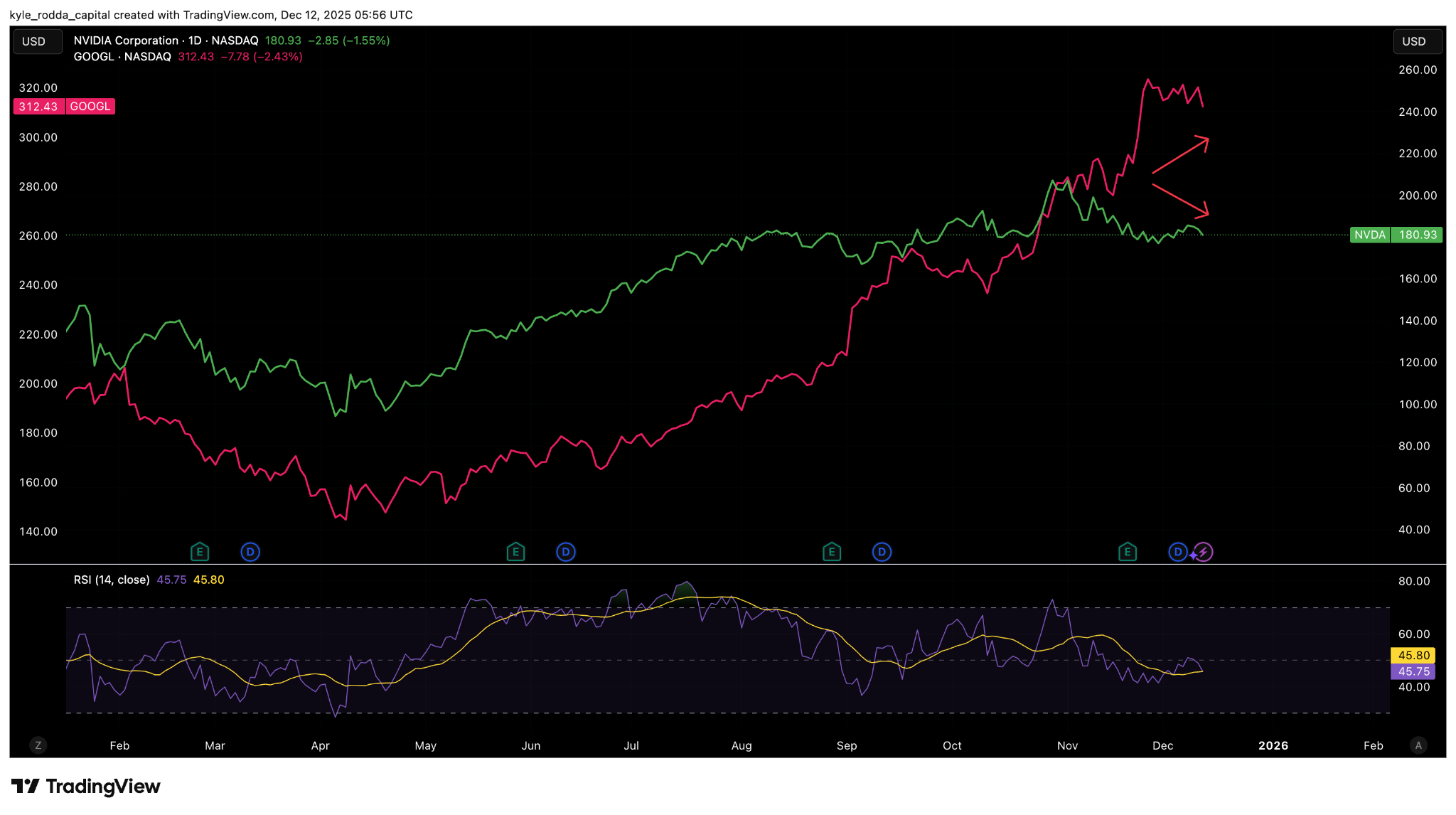
But the biggest issue is the competitive pressures that appear to be threatening Nvidia’s market share. In November, Alphabet announced success with its proprietary TPU chip which it is rolling out in its own data centres. It also announced that it had reached an agreement with Meta to sell these chips to the company from around 2027 onwards. Other hyperscalers are making progress in designing their own chips, too. It comes from an effort by US tech giants to internalise supply chains to lower costs and increase scale as AI demand ratchets up. The dynamic potentially reduces hyperscaler reliance on Nvidia’s chips, risking future revenues.
(Source: Trading View)
(Past performance is not a reliable indicator of future results)
Fears about insufficient return on investment in artificial intelligence persists as well. The weakness in Nvidia stock this week is partly tied to a sell-off in Oracle shares after the company showed weaker growth in cloud revenues but still increased CAPEX. It has inflamed concerns about peaking chip demand. In saying that, Nvidia’s last set of results suggest revenues remain very strong and that demand for chips exceeds the company’s ability to supply them despite meaningful scaling.
Monetary policy and macroeconomics remains a marginal factor also impacting investor flows. The dovish shift from the US Federal Reserve regarding US interest rates this week sparked a rotation of money out of expensive tech stocks and into relatively undervalued cyclical stocks that would stand to benefit from the more supportive economic conditions provided by looser monetary policy. The move sucked money out of all tech names, with the NASDAQ underperforming the more cyclical Dow Jones and Russell 2000.
The perennial risk of sales into China continues and remains a modest headwind, although Nvidia’s sales into China have been trivial for a while. This week, the Trump administration announced the company could permit the sales of Nvidia’s advanced H200 chip into China. However, there are doubts whether China will permit widespread sales of the chip for national security reasons and to protect its own burgeoning chipmakers.
Nvidia remains in an uptrend but charts flash warning signs
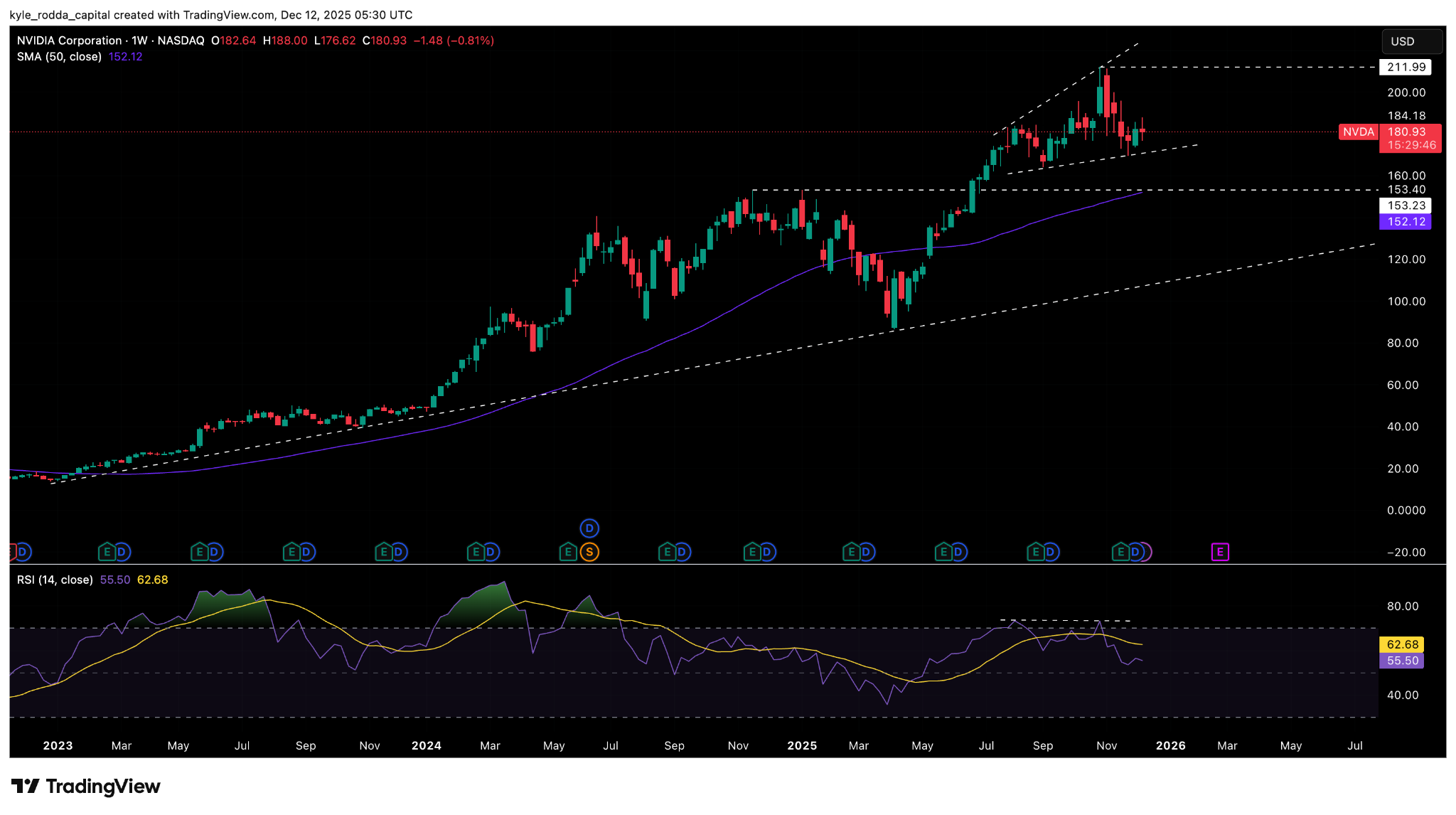
Looking at the long-term technical picture on the weekly charts, the trend is pointing upwards but momentum is slowing. Indecision is evident in the market with what looks like a broadening formation playing-out. Technically speaking, that’s a bearish pattern. If it breaks-down, critical support appears to be around $153. The stock’s upward sloping trendline is around the low 120s right now.
(Source: Trading View)
(Past performance is not a reliable indicator of future results)
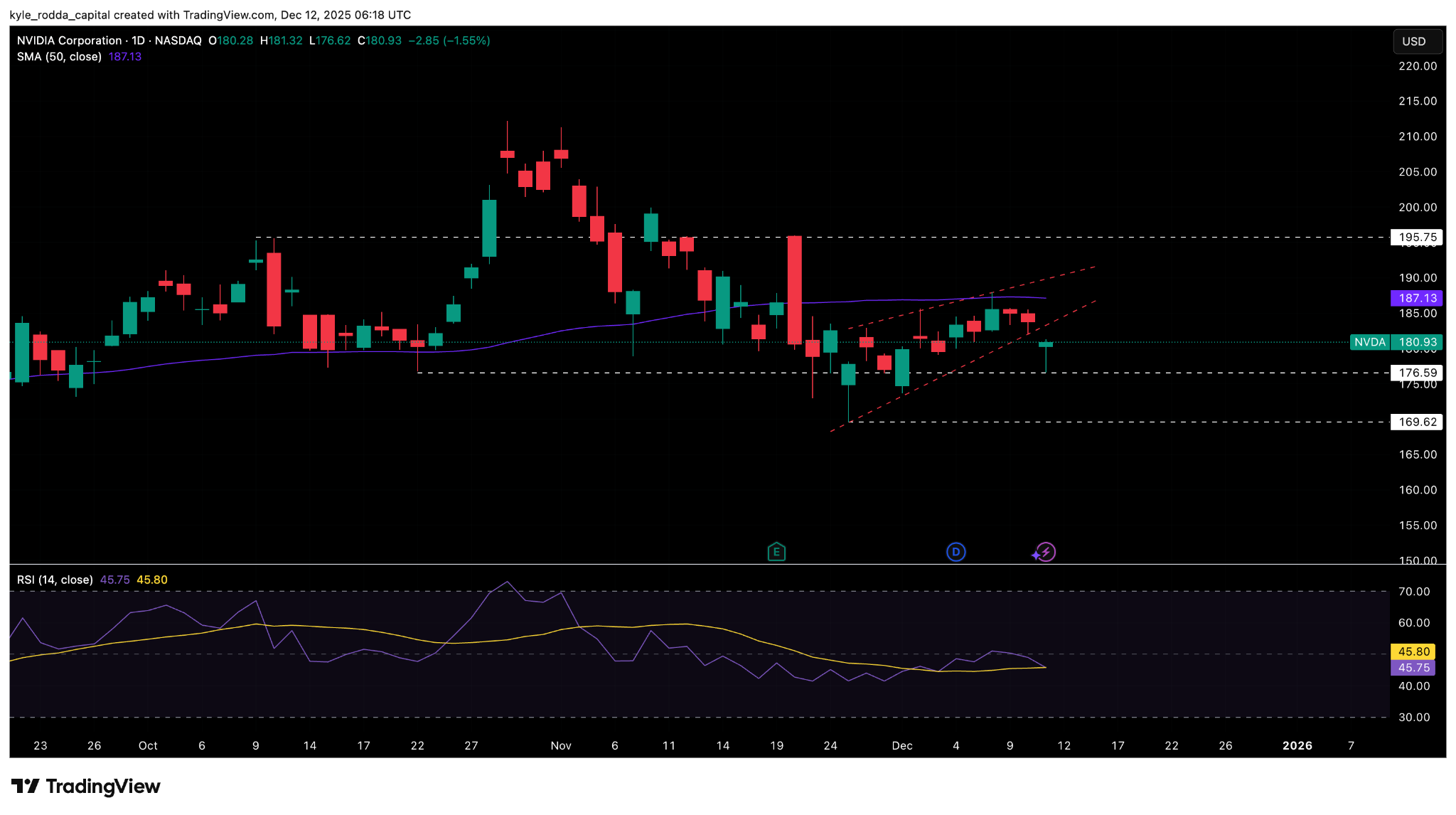
In the short-term, the daily charts point a similar loss of upside momentum but in a more range bound set-up. The price is struggling to break the 50-day moving average, something that, if it were to occur, may open a test of critical resistance at $195 per share. Meanwhile, some support appears to be around $176, which if broken puts roughly $169 into view.
(Source: Trading View)
(Past performance is not a reliable indicator of future results)