

Market Mondays: Why a Hawkish Cut is still the Path of Least Regret
Markets tread with cautious heading into the Fed meeting this week, with focus on the revised projections into 2026.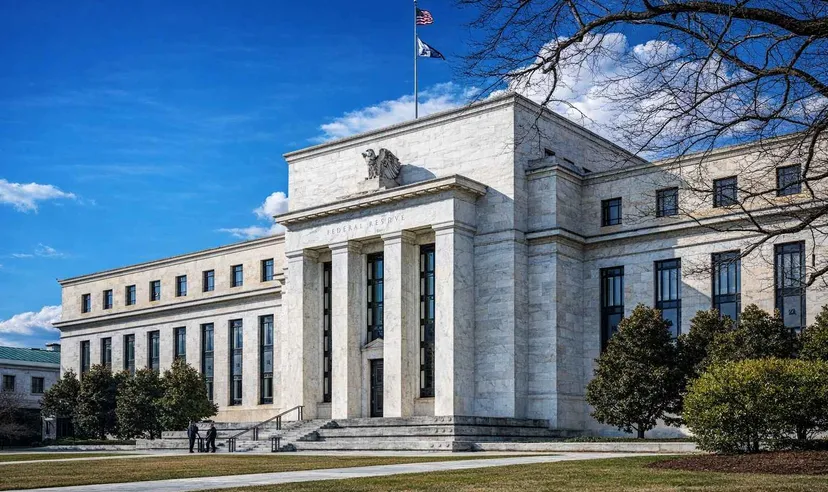
What’s Really at Stake This Fed Week?
Heading into this week’s FOMC, the core question is whether the updated Summary of Economic Projections really changes much for 2026—on inflation, GDP, or the terminal rate. The honest answer is probably not. We’ve just lived through a patchy run of official data, leaving both markets and policymakers short on fresh insight. Private surveys have hinted at resilience with soft spots in manufacturing and services PMIs, consistent with a slow-cooling economy rather than a decisive turn. Friday’s delayed PCE print underscored that point: running in the high twos, still too warm for comfort but not hot enough to justify a full halt to the easing process. In that context, big shifts in the dots or growth projections would be hard to justify; incremental tweaks are more likely.
Powell’s Problem: Preserving Optionality
Chair Powell has every incentive to preserve optionality. Markets once again have raced ahead, pricing a high probability of a December cut, echoing a dynamic we saw before September’s meeting when Powell warned that a December move wasn’t a done deal. The aim then—as now—was to reclaim narrative control and guard against excessive easing assumptions into 2026. Could the Fed decide not to cut this week? It’s not impossible, but it would be a high-volatility outcome the Committee may prefer to avoid in a thin liquidity window. If they did hold, the message would be inflation-first: a reminder that the mandate is dual and that price stability still isn’t “mission accomplished.” More plausibly, the Fed delivers 25bp and pairs it with language that stresses two-sided risks—what amounts to a hawkish cut.
The Dots, the Data, and a “Hawkish Cut”
That nuance will be found in the details. The key watchpoints are whether the dots converge toward market pricing for end-2026 (low-3% territory) or resist it, and whether core PCE paths are nudged higher to reflect sticky services inflation. A modestly firmer inflation profile, plus guidance that “a cut is not a foregone conclusion,” would be enough to wobble the risk rally and re-steepen expectations for the path ahead. Put differently, the Committee can ease now and still cool the market’s conviction about a fast glide-path next year.
Market Positioning: Complacency or Calm?
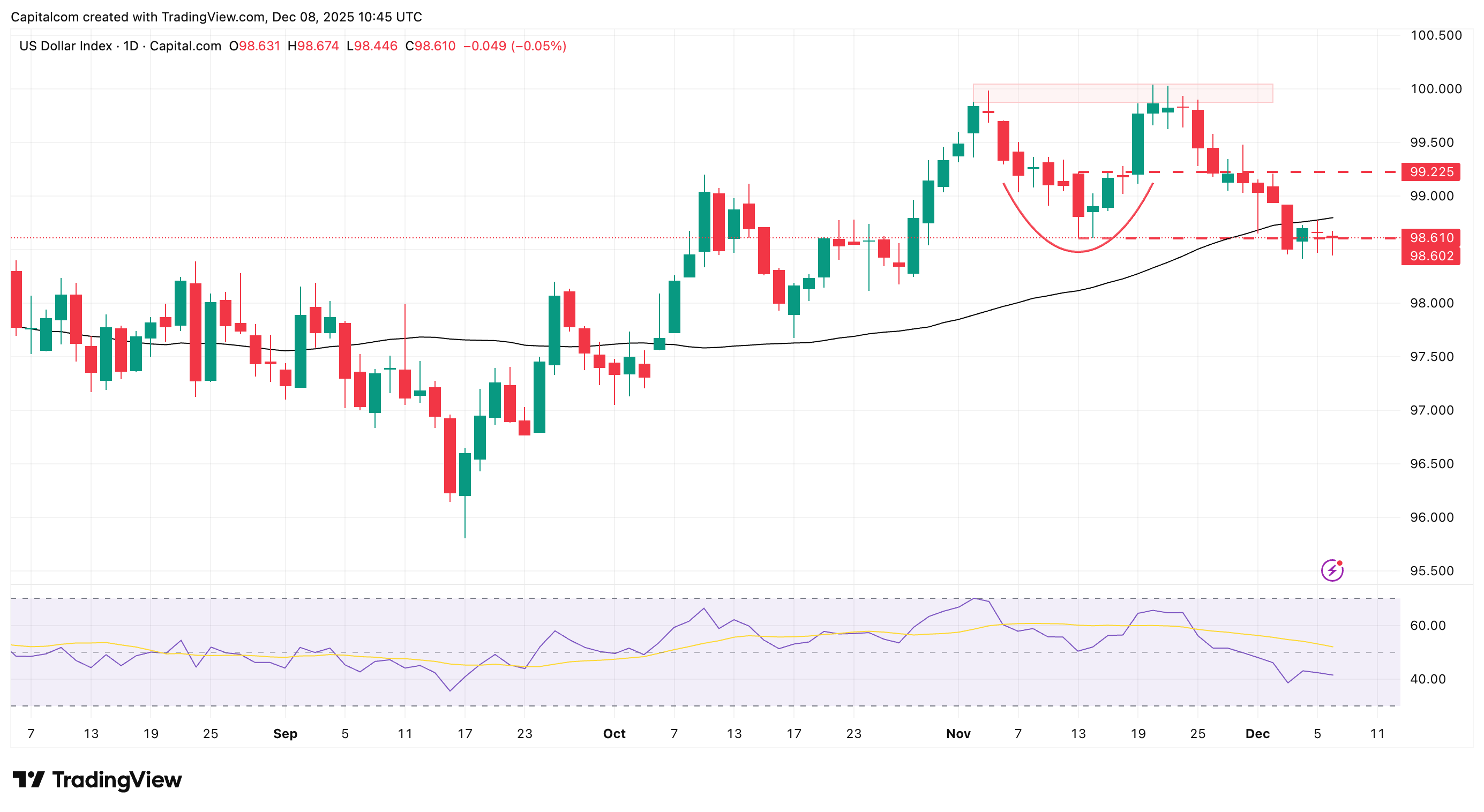
The market setup makes this delicate. Implied equity volatility has faded since the mid-month sell-off, leaving stocks close to highs and vulnerable to any hawkish surprise. A cut paired with cautious guidance may support risk initially while capping follow-through—hardly the textbook “Santa rally” set-up. In FX, the dollar has been consolidating below 100 on the DXY after a sharp pullback; the first directional shove likely comes from the tone of the statement and dots rather than the 25bp itself. If the Fed leans into caution, the dollar could find support; if it validates the market’s easier path, USD softness can resume.
US dollar index (DXY) daily chart
Past performance is not a reliable indicator of future results.
Japan and the BOJ: A Wildcard for FX
Japan adds a powerful cross-current. Stronger wage signals and sticky domestic inflation have kept alive the prospect of a BOJ hike next week, even as revised GDP showed a deeper Q3 contraction. Markets are not fully discounting a meaningful shift toward neutral policy, and the political backdrop still favours easy conditions. That leaves USD/JPY with genuine two-way risk: a dovish Fed plus a firmer BOJ could finally pull the pair lower, while any Fed-hawkish surprise or BOJ hesitancy would reassert upside pressure.
Gold as a Barometer of Conviction
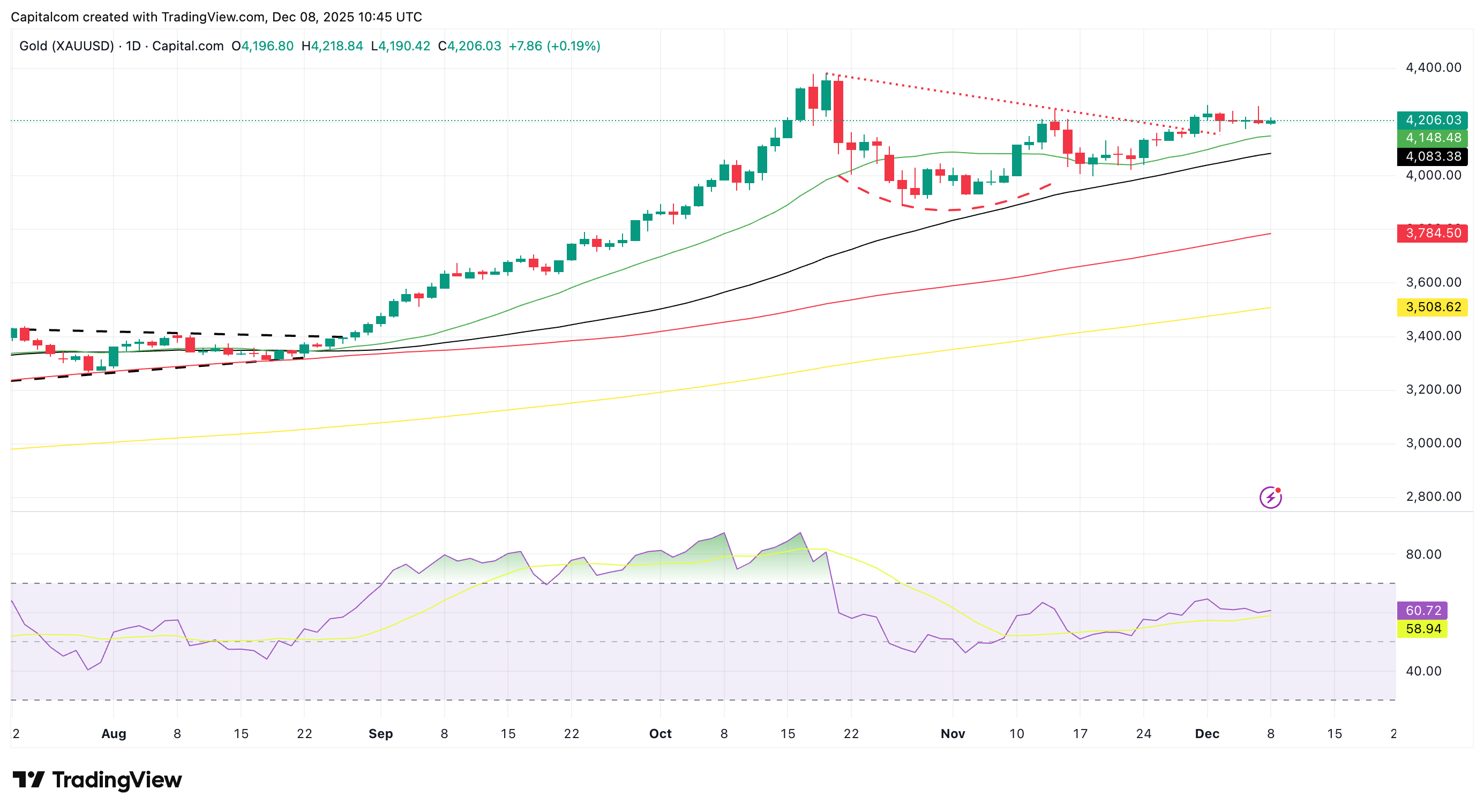
Gold rounds out the macro picture as a tell on conviction. Price has repeatedly struggled to clear the mid-$4,200s area after an impressive run, with recent action looking more like range-bound digestion than a fresh breakout. The long-term case remains constructive—central-bank buying, diversification demand, and the “debasement” hedge—but near term, the Fed’s tone likely dictates direction: a gentle drift higher under an easing-bias, or a checkback if policymakers re-emphasize inflation risks.
Gold (XAU/USD) daily chart
Past performance is not a reliable indicator of future results.
The Bottom Line for Traders
The bottom line: this is a meeting about tone more than tools. With incomplete data and inflation still above target, a small cut accompanied by stern messaging is the Fed’s path of least regret. Traders should focus less on the binary of “cut or no cut” and more on where the dots land for 2026, how the statement frames two-sided risks, and whether Powell reins in the market’s appetite for a swift easing cycle. If the Committee narrows the range of plausible outcomes, volatility will likely ease, and the risk rally can proceed on sturdier ground. If it doesn’t, expect another round of whiplash as markets grope for the next definitive signal.