

How to use stop-loss orders when trading CFDs
When trading contracts for difference (CFDs), managing risk is just as important as identifying opportunities. One way to do this is through stop-loss orders — tools designed to close positions automatically if the market moves beyond a chosen level.
Before looking at how to use them effectively, it’s worth understanding what stop losses are, how they work, and why they form a key part of many trading strategies.*
*Stop-loss orders are not guaranteed. Guaranteed stop-loss orders incur a fee if activated.
A stop-loss order instructs a broker to close a position once the market reaches a specified level, helping to limit loss if the price moves in an unfavourable direction.
Stop-losses are triggered when the stop price is reached and then executed at the next available price. In fast-moving or gapping markets, execution may differ from the stop level. This risk-management tool is especially useful when trading leveraged products such as contracts for difference (CFDs), where potential losses can exceed the initial margin.
In this guide, we’ll look at how stop losses work, how to use them effectively, and their key benefits and limitations in CFD trading.
CFD trading versus stock trading
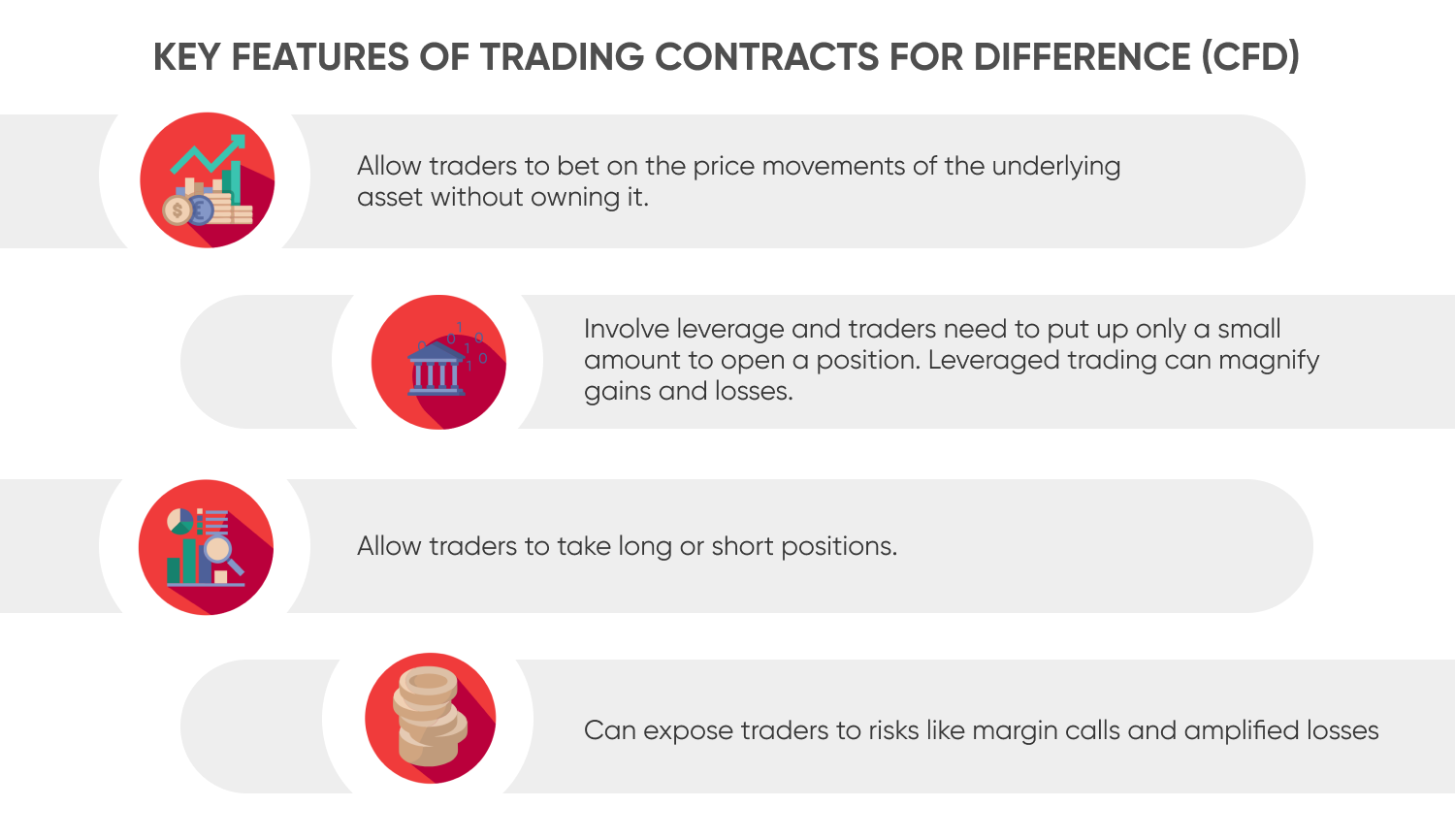
Traders have access to various financial instruments, including futures, options and CFDs, which allow them to speculate on price movements without owning the underlying asset.
A CFD is a contract between a broker and a trader to exchange the difference in the value of an asset between the opening and closing of a trade.
Unlike traditional stock trading, a CFD is a leveraged product, meaning traders deposit only a fraction of the total trade value – known as the margin – while the remainder is effectively lent by the broker.
To maintain an open leveraged position, traders must keep a minimum level of capital, called the maintenance margin, in their account. If losses reduce this amount below the required level, they may receive a margin call asking for additional funds to keep positions open.
What is a stop loss in CFD trading?
Having understood the basics of CFDs, it’s important to explore how stop losses can help manage downside risk.
Because CFDs are traded with leverage, they are considered high-risk instruments and should be used with care. Leverage can magnify both profits and losses. This is where stop-loss orders become an essential component of a trading strategy.
The main advantage of a stop loss is that it allows traders to set predefined limits on potential losses, whether the position is long or short. It can also help remove emotional bias, supporting disciplined decision-making in line with a structured trading plan.
Key features of a stop loss
Below are some key points to understand when using stop losses in CFD trading.
guaranteed vs non-guaranteed
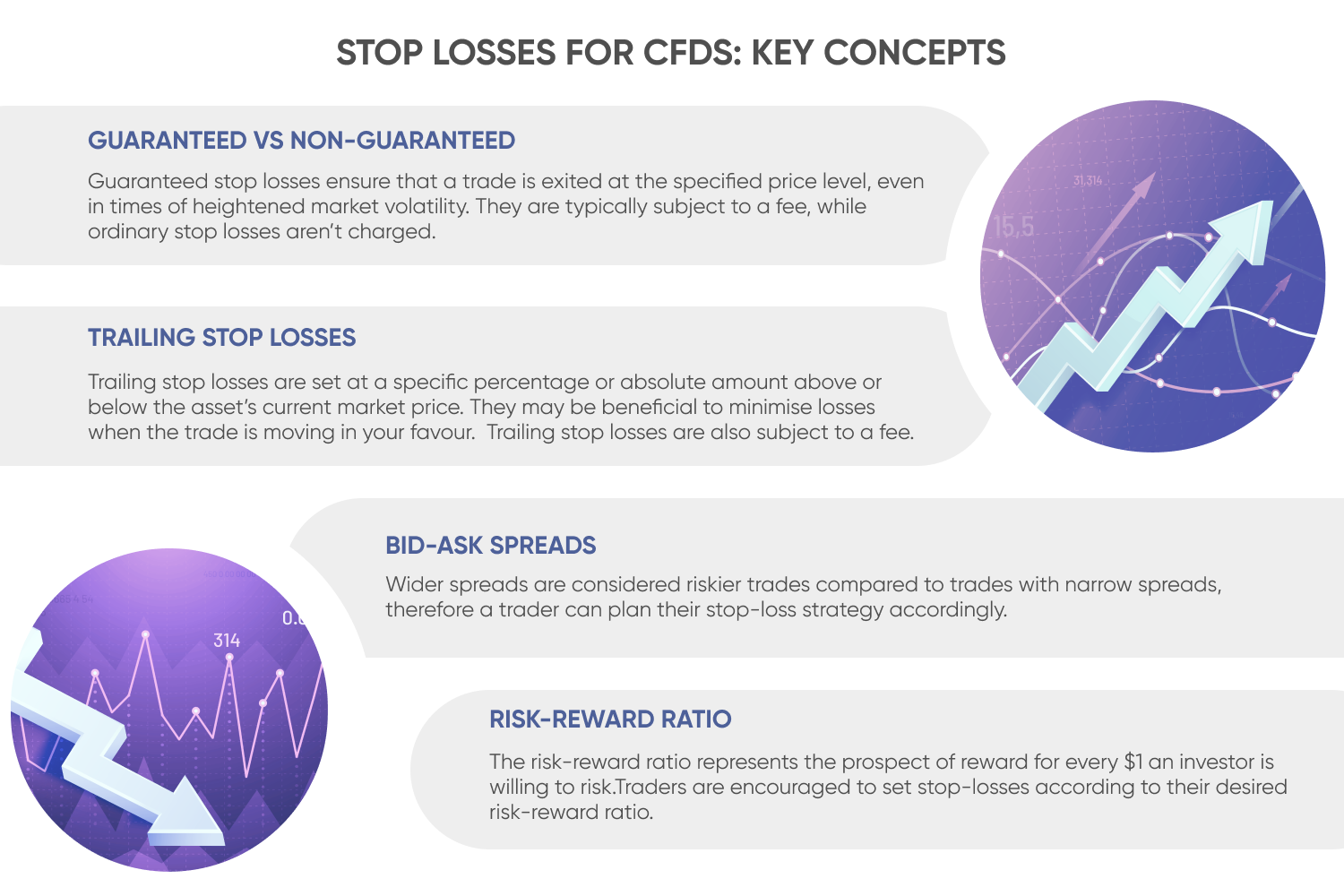
A standard stop-loss triggers when the price reaches the specified level but is filled at the next available price, which may differ during periods of high volatility or low liquidity.
A guaranteed stop-loss closes a position exactly at the chosen level, even if the market gaps. This protection usually involves a premium or fee, subject to availability and trade size.
At Capital.com, guaranteed stop-losses are charged as a percentage of the open value and displayed in the position’s P&L and transactions log.
Trailing stop losses
A fixed stop loss doesn’t move once set. A trailing stop-loss, however, automatically adjusts with the market price, locking in gains as the price moves favourably.
As the US Securities and Exchange Commission (SEC) notes, “when the price moves in a favourable direction, the trailing stop price adjusts accordingly. If the price moves unfavourably, the stop remains fixed and may trigger once reached.”
Availability and fees for trailing stops depend on the broker.
Bid-ask spreads
The bid-ask spread is the difference between the highest price a buyer will pay (the bid) and the lowest price a seller will accept (the ask). Highly liquid assets tend to have narrower spreads.
In CFD trading, a widening spread can trigger stop losses earlier than expected, as stops for long positions are based on the bid and for short positions on the ask. This means the mid-price may not change significantly, but the stop could still be activated.
Risk-reward ratio
The risk-reward ratio shows the potential return for every £1 (or other currency unit) risked. For example, a ratio of 1:5 means a trader aims to make £5 for every £1 at risk.
A trader can align stop-loss levels with their preferred ratio. For instance, if Apple shares trade at $100 and the trader sets a stop loss at $95 while targeting $120, they are risking $5 to gain $20 – a 1:4 risk-reward ratio.
Past performance is not a reliable indicator of future results.
Stop losses in CFD trading: potential advantages and risks
Stop-loss orders have both advantages and limitations. Understanding these helps traders use them more effectively.
Potential advantages of stop-loss orders
- Standard stop-losses usually don’t incur additional costs, while guaranteed and trailing stops may involve small fees depending on the provider.
- They’re automatically triggered, reducing the need for constant monitoring.
- They promote discipline and objectivity by helping traders act on pre-planned strategies.
- They can be used alongside other tools such as risk-reward ratios and technical indicators.
- Trailing stops can help secure profits as prices move favourably.
Risks of stop-loss orders
- Short-term volatility can trigger stops unnecessarily, closing trades that might have recovered.
- Standard stop-losses can experience slippage in fast markets; guaranteed stops can address this but at an additional cost.
- Fixed stop-losses don’t adjust automatically, so traders might miss out on potential gains unless they use a trailing stop.
Key takeaways
To sum up, stop-loss orders are simple yet powerful risk-management tools that can help traders manage potential losses when trading CFDs. While guaranteed and trailing stops may incur a small cost, standard stop-losses are typically free to set. Used correctly, they can form an integral part of a disciplined trading approach.
FAQ
How does a stop-loss order work?
A stop-loss order automatically closes a position when the market reaches a predetermined price set by the trader. It’s designed to help limit potential losses by triggering a sell order on a long position or a buy order on a short position if the market moves unfavourably. The order executes at the next available price once the stop level is reached. However, in volatile or fast-moving markets, the final execution price may vary slightly from the stop level. Traders can also choose a guaranteed stop-loss, which ensures the position closes exactly at the specified price, usually for a small premium.
What's the difference between a standard and guaranteed stop-loss order?
A standard stop-loss order aims to close a position once the market reaches the stop level, but during periods of high volatility or market gaps, the final execution price might not match the exact stop level. A guaranteed stop-loss order, by contrast, ensures the position closes precisely at the price set, regardless of market conditions. This additional protection generally involves a small fee or premium. Guaranteed stop-losses can offer greater certainty for traders seeking more control over potential losses.
Are there CFD brokers that offer guaranteed stop-loss orders, and what are the trade-offs versus standard stops during fast markets?
A risk-control checklist can include standard stop-loss orders, guaranteed stop-loss orders where available, margin alerts, position limits, order history, negative balance protection and how spreads behave in volatile markets. A standard stop normally executes at the next available price, so gaps, low liquidity or widened spreads can create slippage. Where available, a guaranteed stop may protect the exit level, but it may involve a premium if triggered.
Can you trade CFDs with stop-loss tools on capital.com?
Yes. Capital.com provides a range of integrated risk-management tools, including standard, trailing and guaranteed stop-loss orders. These are available across a broad selection of CFD markets, such as shares, indices, commodities, and forex. Traders can set or modify stop-loss levels either before opening a position or while managing an active trade. Guaranteed stop-losses close positions exactly at the selected price for a fee. CFDs (contracts for difference) are traded on margin – leverage amplifies both your profits and your losses.