

A Week of Divergence: Markets react to BoE, ECB and BoJ as data reshapes the outlook
The latest central bank meetings show a growing divergency in policy directions as the latest data changes the narrative in some economies.
This past week delivered a dense run of central-bank decisions and key data releases, leaving global markets navigating mixed signals heading into the final stretch of the year.
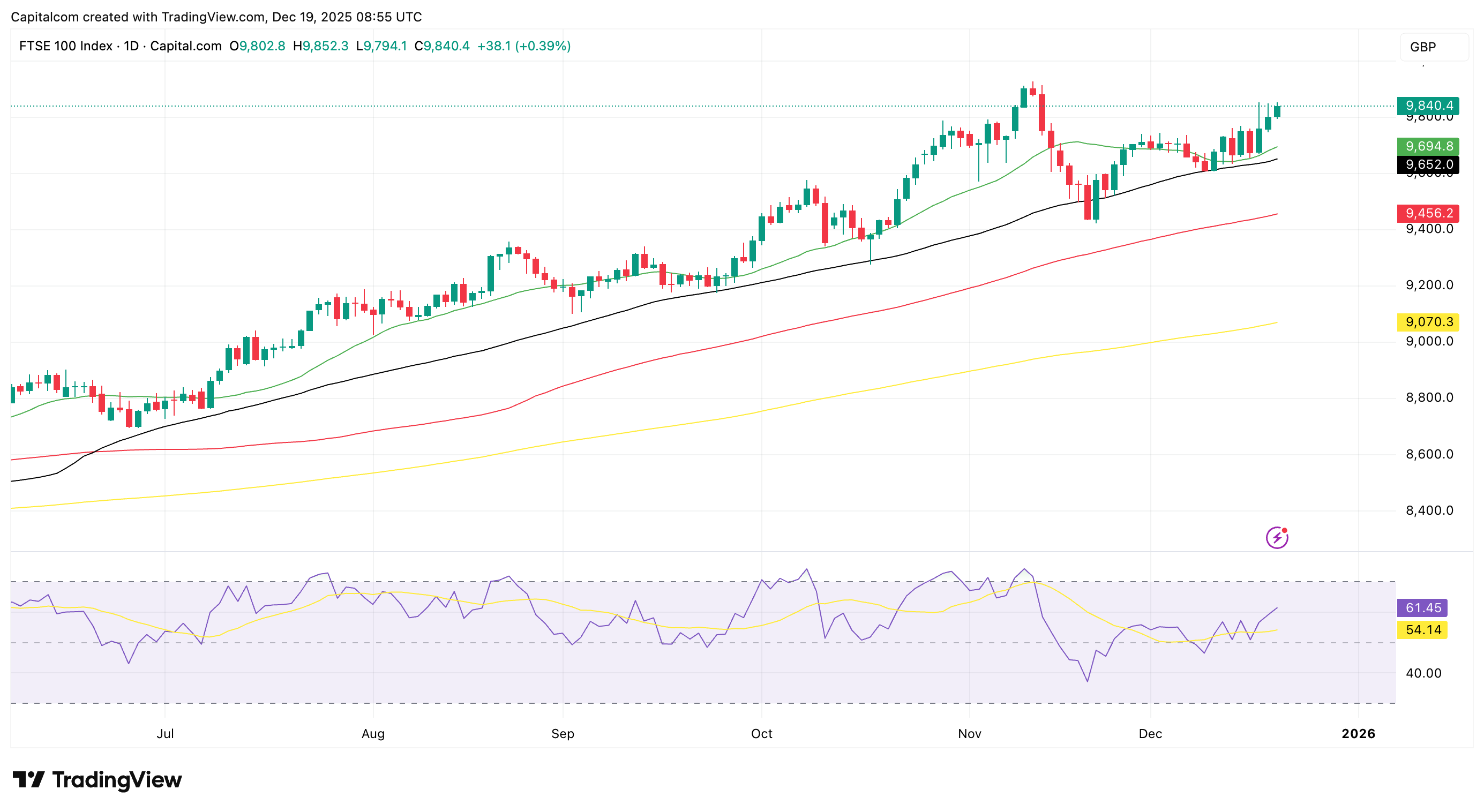
In the UK, the Bank of England cut rates as widely expected, but paired the move with deliberately cautious communication. Policymakers acknowledged progress on disinflation and evidence of cooling in the labour market yet stopped well short of signalling a rapid easing cycle. Markets responded with two-way price action: the FTSE found support from the growth-friendly tone of the cut, while GBP whipsawed as traders balanced lower yields against the BoE’s careful messaging and slightly improved macro picture. Supporting the BoE’s decision were earlier data showing UK inflation easing again and labour-market slack building, helping reassure markets that the worst of the UK’s stagflation scare may be behind us.
FTSE 100 daily chart
 Past performance is not a reliable indicator of future results.
Across the Channel, the European Central Bank held rates steady, exactly as anticipated, and offered little in the way of fresh forward guidance. With eurozone inflation already near the 2% target, the ECB leaned into a message of patience, signalling comfort with its current stance while avoiding commitments on timing for future easing. The market reaction was muted: EUR/USD saw modest intraday swings driven more by US dollar dynamics than by the meeting itself, and European equities traded broadly in line with global sentiment shifts rather than ECB-specific catalysts.
In contrast, the Bank of Japan was the most eventful central bank of the week. The BoJ delivered another rate hike as expected, reinforcing the narrative of Japan moving gradually out of its decades-long ultra-loose policy regime. With inflation still hovering near 3% and fiscal expansion on the horizon, the BoJ hinted that further tightening remains possible. The yen strengthened initially, reflecting expectations of a more credible tightening path, while the Nikkei faced pressure as investors weighed the impact of higher borrowing costs and yen appreciation.
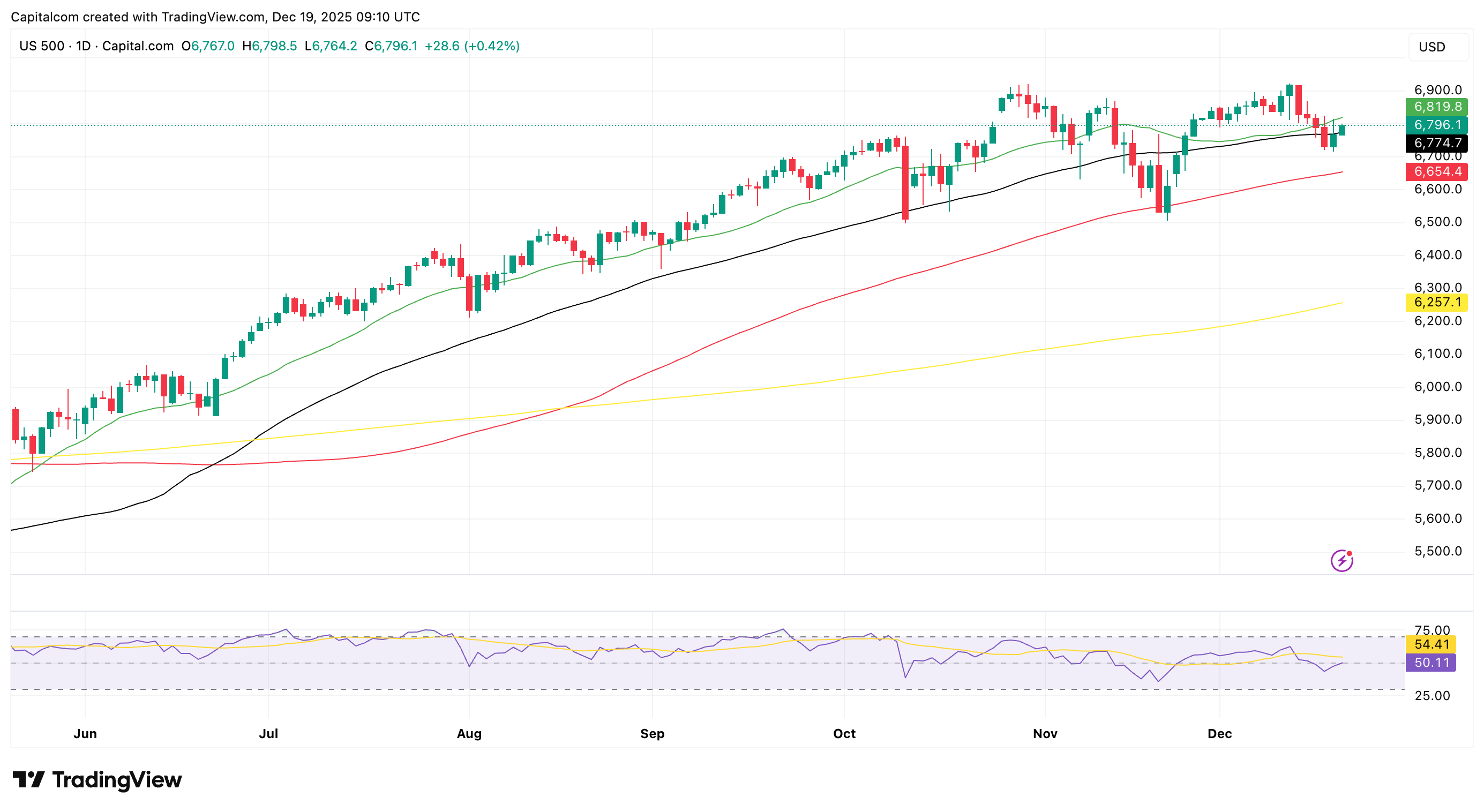
On the data front, the United States released labour-market and inflation figures, offering the Fed a clearer picture after months of disrupted publication. The numbers showed a labour market that continues to cool (moderate payroll gains, a higher unemployment rate and softer wage growth) paired with still-contained inflation. Markets interpreted the combination as supportive of the Fed’s gradual easing bias, helping lift US equities early in the week before sentiment turned more cautious.
Meanwhile, in the UK, inflation and jobs data similarly reinforced the narrative of a slowing economy with fading price pressure, effectively setting the stage for the BoE’s rate cut. Through the week, price action has reflected a market searching for direction: US equities have remained choppy, with tech under pressure due to ongoing concerns about stretched AI-related valuations; bonds rallied modestly as rate-cut expectations firmed; and FX markets traded largely on central bank divergence, with the dollar firming, sterling mixed, and the euro steady.
Heading into next week, markets face a delicate setup. Central-bank divergence is now clearer: the BoE is easing, the ECB is pausing, and the BoJ is tightening. This is likely to inject more volatility into currency and rates markets, especially as investors reassess the timeline and depth of Fed cuts in 2026.
Equities remain caught between improving inflation trends and concerns about earnings sustainability, particularly in AI-linked sectors, suggesting that risk appetite may remain constrained unless upcoming data provide stronger confirmation of the global soft-landing narrative. Overall, the week leaves markets stabilising but cautious, with the next major catalysts set to come from any signs of whether the year-end rally can regain momentum.
S&P 500 daily chart
Past performance is not a reliable indicator of future results.