

Gold and Silver forecast: Precious metals surge as confidence in the dollar frays
Gold and Silver surge into the new week as rising market uncertainty drives investors to seek refuge in precious metals.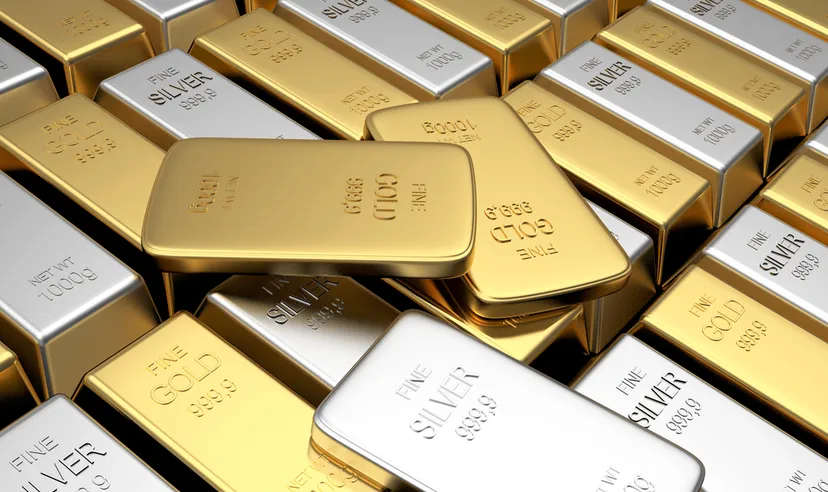
Precious metals reflect a deeper shift in confidence
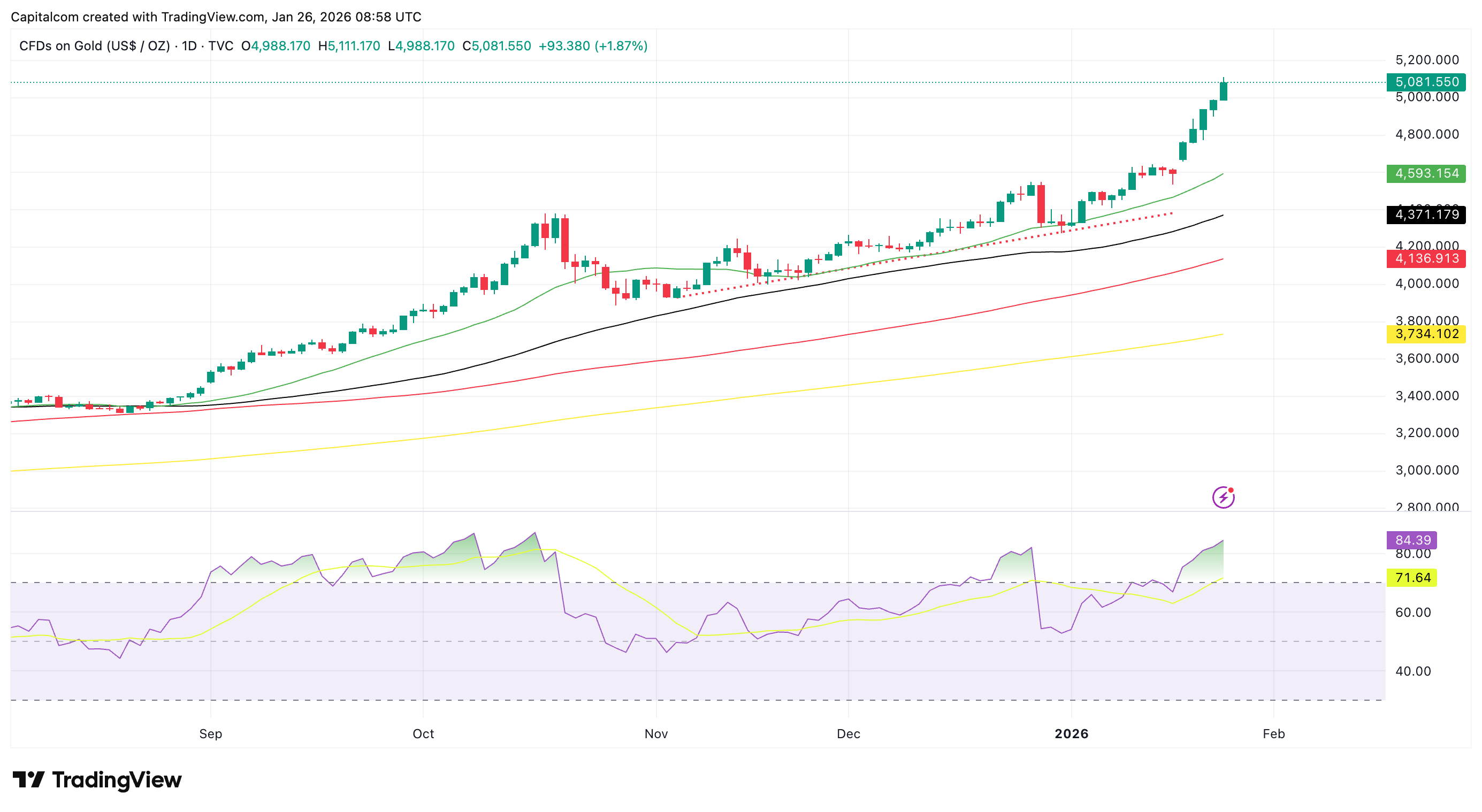
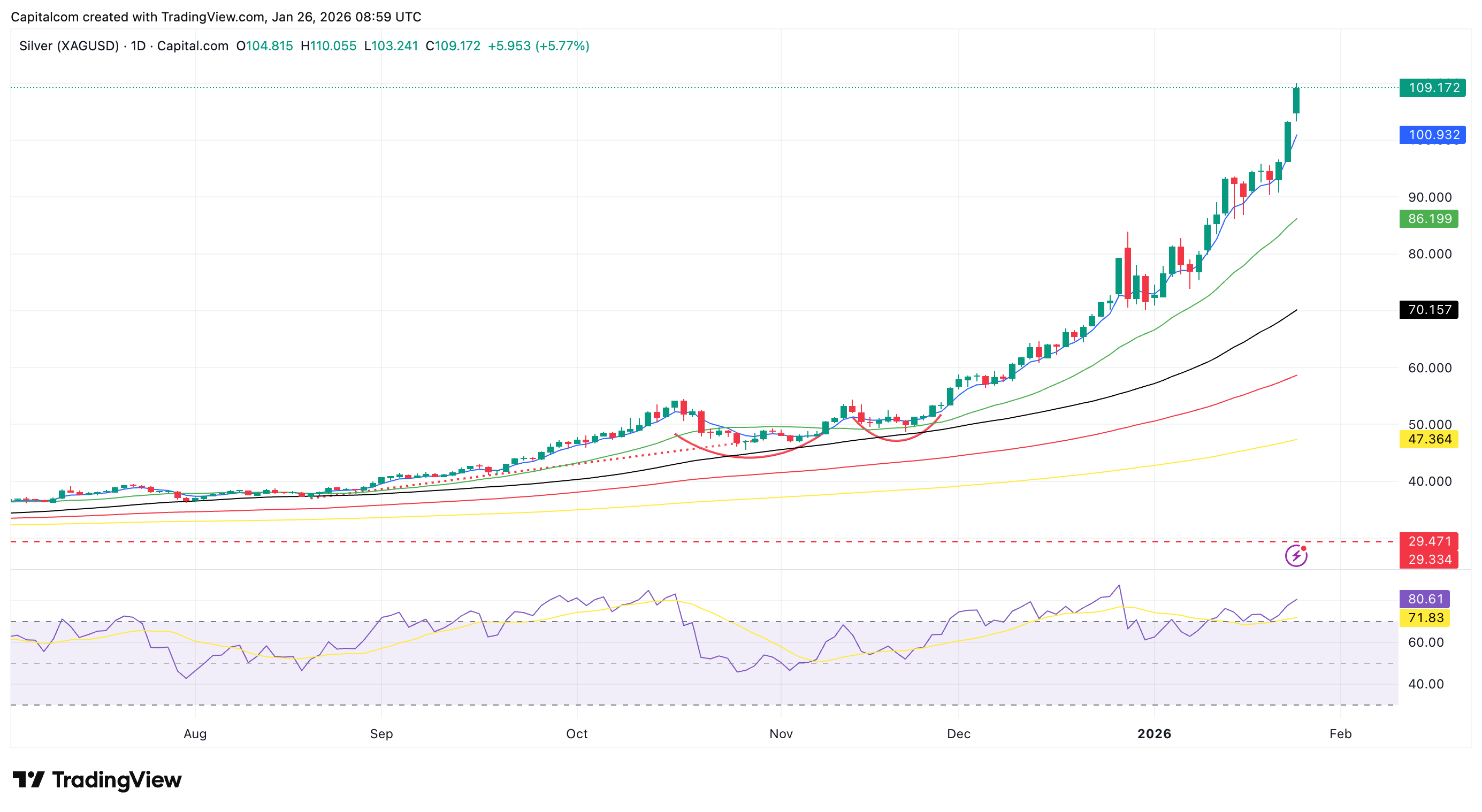
Precious metals have extended their rally into the new week, offering further evidence of a deepening crisis of confidence in the US dollar and the broader monetary order. Gold pushed toward the psychologically significant $5,000 level, while silver surged beyond $100, markedly outperforming its larger counterpart. The move underscores a shift in investor behaviour: precious metals are no longer being treated merely as tactical hedges, but increasingly as alternative stores of value in a world defined by political fracture, fiscal strain and monetary uncertainty.
Gold (XAU/USD) daily chart
Past performance is not a reliable indicator of future results.
The advance in gold has been driven by a familiar but intensifying mix of forces. Persistent geopolitical tension, growing concerns over US fiscal sustainability, and repeated attacks on central bank credibility have kept demand for hard assets elevated. At the same time, real yields have struggled to rise meaningfully despite bouts of risk-on sentiment, limiting one of gold’s traditional headwinds. The result has been a sustained bid for bullion that appears increasingly detached from short-term macro data and more anchored in structural distrust of fiat systems.
Silver’s outperformance tells an even more nuanced story. While it continues to benefit from its historical role as a monetary metal, recent gains have been amplified by industrial and supply-side dynamics. Trump’s latest tariff climbdown has eased near-term fears of trade escalation, briefly lifting risk appetite and industrial metals more broadly, but silver has captured a disproportionate share of that upside. Reports of physical shortages in China have further tightened sentiment, reinforcing the idea that the silver market is more vulnerable to supply-demand imbalances than gold, particularly in an environment of accelerating industrial demand.
Silver (XAG/USD) daily chart
Past performance is not a reliable indicator of future results.
Fiscal dominance, AI investment and the metals bid
The industrial demand is not cyclical in the traditional sense. The global push toward massive AI infrastructure buildouts, electrification, and advanced manufacturing has structurally increased silver’s importance. Unlike previous technology cycles, the current wave of investment is capital-intensive, energy-hungry and long-dated, tying up large quantities of physical materials. This has blurred the line between silver’s role as a defensive asset and as a growth-linked commodity, making it especially sensitive to both macro uncertainty and investment optimism.
Overlaying these dynamics is what markets have come to describe as the “run it hot” trade. Governments, particularly in the United States, have shown an increasing willingness to tolerate higher inflation, larger deficits and looser fiscal discipline in pursuit of growth, industrial policy and strategic dominance. This tolerance has been reinforced by political pressure on central banks, most notably the Federal Reserve, whose independence has been repeatedly questioned. For investors, this raises uncomfortable questions about the long-term purchasing power of currencies and the credibility of inflation targets, conditions under which precious metals historically thrive.
Remilitarisation has added another layer to the bullish case. Rising defence spending, geopolitical fragmentation and the re-shoring of supply chains all point to a more inflationary, resource-intensive global economy. Unlike the disinflationary forces of the past three decades, this environment favours tangible assets over financial abstractions. Gold benefits as a neutral reserve asset in a fractured geopolitical system, while silver gains from its dual role in both defence-related technologies and civilian industrial applications.
A repricing of trust, not just risk
Crucially, the recent surge in precious metals does not appear to be driven by speculative excess alone. Physical demand, central bank accumulation, and longer-term allocation shifts have all played a role. Central banks, particularly outside the Western bloc, have continued to diversify reserves away from the dollar, lending structural support to gold prices. Meanwhile, investor flows suggest that precious metals are increasingly being used not just as portfolio insurance, but as core holdings against systemic risk.
The broader implication is that gold and silver are reflecting more than short-term market stress; they are signalling a re-pricing of trust. Trust in currencies, in institutions, and in the stability of the post-Cold War economic order. While sharp pullbacks remain possible after such explosive moves, the underlying drivers suggest that precious metals are operating within a powerful secular trend rather than a transient spike.
In this context, gold’s march toward new highs and silver’s explosive breakout look less like anomalies and more like symptoms. Symptoms of a global system under strain, where capital increasingly seeks refuge in assets that sit outside political discretion. As long as fiscal dominance, geopolitical fragmentation and central bank credibility remain in question, precious metals are likely to stay at the centre of this perfect storm, not just as hedges, but as alternatives.