

US midterms: Can political gridlock revive the precious metals rally?
The Midterm elections have resulted in a blue sweep meaning legislation changes may happen, but how will that affect precious metals?
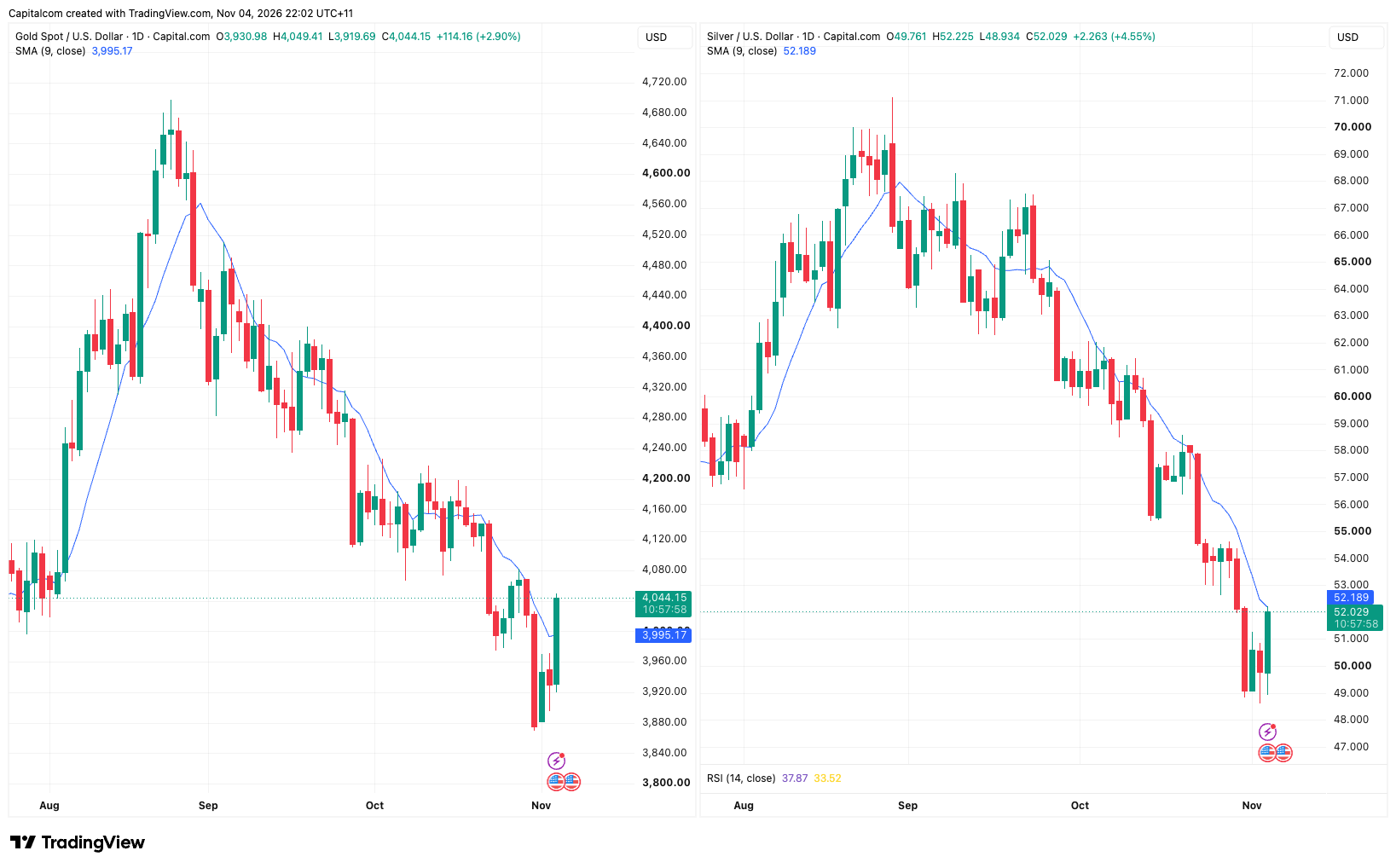
The US midterm elections have provided some much-needed relief for precious metals, with gold climbing back above $4,000 an ounce and silver recovering towards $52 as investors digest the Democrats' takeover of both chambers of Congress. The initial reaction has been driven largely by a weaker US dollar and falling Treasury yields, alongside renewed demand for defensive assets amid political uncertainty. However, whether this marks the beginning of a sustained recovery will depend on how the election results change expectations for fiscal policy, interest rates and economic growth.
Gold (XAU/USD) and Silver (XAG/USD) daily charts
Past performance is not a reliable indicator of future results.
Could political gridlock create a more supportive environment for gold?
The Democratic victory introduces a new dynamic into US policymaking, with President Trump now facing a Congress controlled by the opposition. This could make it considerably harder to introduce additional tax cuts or major spending programmes, potentially reducing expectations of further fiscal expansion. In theory, this could benefit gold by easing pressure on Treasury yields and weakening the dollar, both of which have been major obstacles to precious metals in recent months.
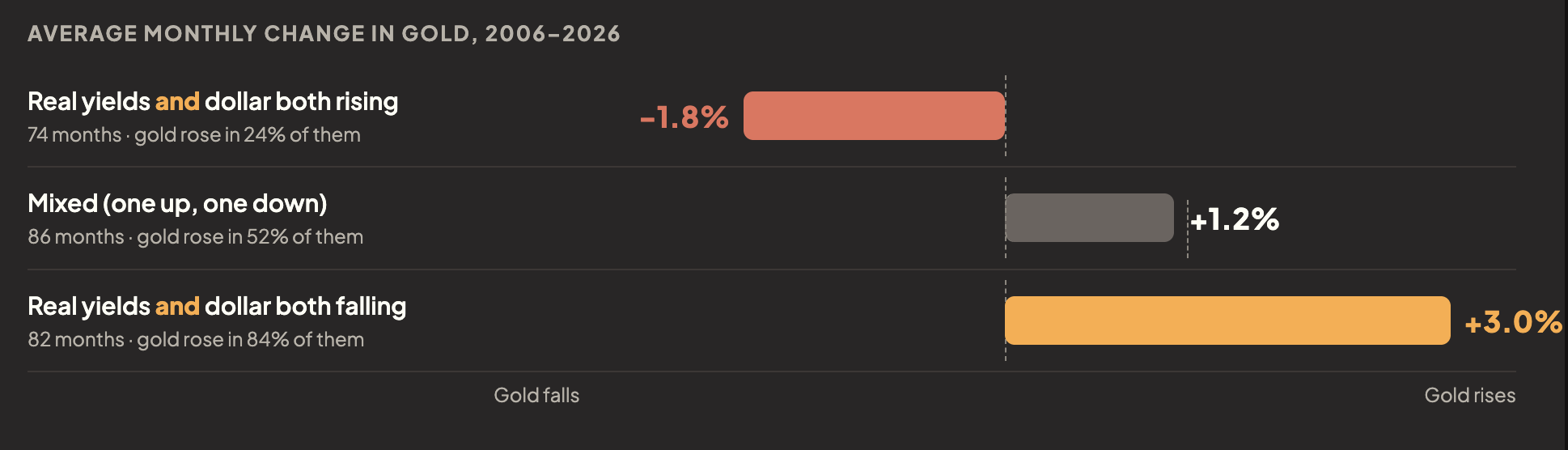
However, the relationship is not straightforward. A more constrained fiscal outlook could reduce inflationary pressures and allow the Federal Reserve to adopt a less restrictive stance, creating a supportive environment for non-yielding assets. Conversely, prolonged political gridlock could complicate budget negotiations, increase the risk of government shutdowns and undermine confidence in US policymaking. While this uncertainty could encourage safe-haven demand, it could also increase volatility across financial markets.
The distinction is that political gridlock does not automatically translate into higher gold prices. Whether investors interpret the outcome as reducing inflation and borrowing pressures or increasing uncertainty around the US economy will be key. Both could support gold under certain circumstances, but the direction of real yields and the dollar will remain crucial.
Can legislative changes have a lasting impact on precious metals?
Changes in legislation could influence precious metals through several channels, although most would be indirect. Fiscal policies affecting government spending, taxation and borrowing could alter inflation expectations and Treasury yields, while trade restrictions and tariffs could influence the dollar and the cost of imported commodities. Greater congressional scrutiny of government spending or the Federal Reserve could also affect perceptions of US monetary and fiscal stability.
For gold, the most important longer-term consideration is whether political developments strengthen or weaken confidence in US assets. Persistent fiscal deficits, concerns about debt sustainability and uncertainty surrounding monetary policy could encourage central banks and institutional investors to diversify their reserves. This has been an important structural source of demand for gold, although it does not guarantee higher prices, particularly when real yields remain elevated.
Silver faces an additional complication because of its significant industrial applications. Legislation affecting renewable energy, electrification, manufacturing incentives and trade policy could have a more direct impact on silver demand. Changes to subsidies for solar energy, for example, could influence consumption from the photovoltaic industry, while tariffs on industrial components or raw materials could disrupt supply chains. However, any legislative changes would need to pass through Congress and potentially overcome a presidential veto, meaning significant policy shifts are far from guaranteed.
There is also a risk that greater political uncertainty could weigh on industrial investment and economic growth. While this might support gold's defensive appeal, it could be less favourable for silver, whose performance depends partly on demand from manufacturing and technology, which helps explain why silver can experience more pronounced swings than gold during periods of economic uncertainty.
Will Treasury yields and the dollar remain the dominant drivers?
Despite the political changes in Washington, the direction of US real yields and the dollar will remain more important for precious metals than the composition of Congress itself. Gold does not generate income, meaning higher inflation-adjusted bond yields increase the opportunity cost of holding it. Similarly, a stronger dollar generally makes precious metals more expensive for international buyers, potentially weighing on demand.
This relationship has been particularly evident during October's correction, when persistent inflation and expectations of further Federal Reserve tightening undermined gold and silver despite ongoing geopolitical tensions. The recent weakness also demonstrated that safe-haven demand cannot always offset the impact of restrictive monetary policy.
The immediate reaction to the midterms reinforces this relationship. Gold's recovery has coincided with a decline in the dollar and Treasury yields, rather than any concrete legislative changes.
Looking ahead, the Federal Reserve's December meeting and incoming US economic data could therefore prove more influential than the election result. Strong employment figures or persistent inflation could reinforce expectations of another rate hike, pushing real yields higher and potentially limiting the recovery.