

Animal spirits: how confidence and narratives shape market behaviour
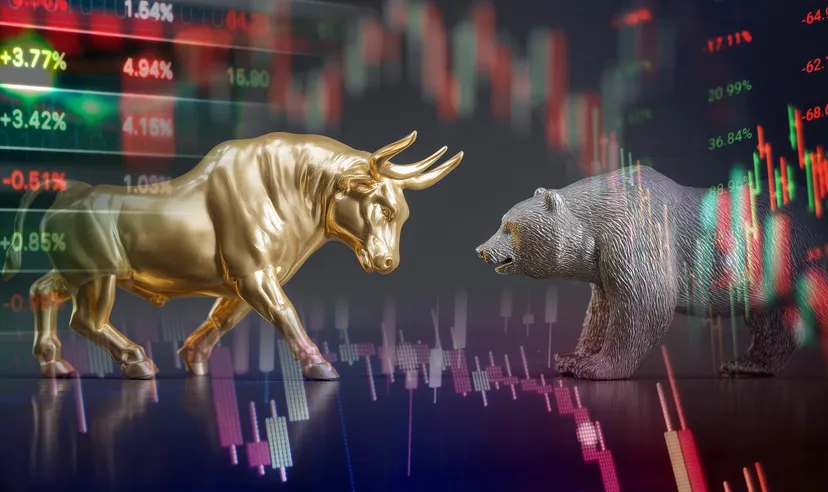
Animal spirits in economics describe the role that confidence, optimism and instinct can play in economic decisions. John Maynard Keynes used the term to explain why people and businesses sometimes act even when the future is uncertain and the numbers alone cannot give a clear answer.
In financial markets, animal spirits can help explain why prices do not always move in line with fundamentals. Confidence can build gradually, spread through stories and headlines, and then shift quickly when the mood changes. For traders, the concept is useful because it connects market psychology with risk-taking, sentiment and decision-making.
- Animal spirits describe the psychological forces – confidence, optimism and narrative – that can influence economic and market behaviour.
- Keynes introduced the term in 1936 to explain why investment decisions cannot be reduced to calculation alone.
- Akerlof and Shiller later developed the idea around five forces: confidence, fairness, corruption, money illusion, and stories.
- In financial markets, animal spirits can help explain why prices sometimes move beyond what fundamentals might suggest.
- For traders, the most practical part of the concept is confidence, both personal and market-wide.
- Animal spirits cannot be measured or timed precisely, but sentiment indicators may help show when confidence is stretched in either direction.
To understand why animal spirits matter, it helps to start with Keynes’s original idea: that economic decisions often depend on confidence as much as calculation.
What are animal spirits?
Animal spirits are the psychological forces that encourage people, businesses and investors to act when the outcome is uncertain. Keynes used the term in The General Theory of Employment, Interest and Money (1936) to explain why investment decisions involve more than a neat calculation of future returns (Investopedia, 2026).
The point is not that people ignore facts. It is that facts rarely remove all uncertainty. A business may not know whether future demand will be strong. An investor may not know whether an asset will keep rising. A trader may not know whether a price move will continue or reverse. In each case, action depends partly on confidence.
Origins and development of animal spirits
The idea of ‘animal spirits’ has shifted over time, from an early medical term to a way of explaining the emotional forces behind economic decisions.
- The phrase came before Keynes. In 17th-century medicine, 'animal spirits' described the forces believed to animate the human body (Investopedia, 2026).
- Keynes adapted it for economics. He used the phrase to explain the human side of decision-making, especially when choices can't be explained by calculation alone (PIMCO, 2026).
- The concept later became less prominent. As economics became more formal and model-based, animal spirits received less attention (Acquirer's Multiple, 2025).
- Behavioural economics brought it back into focus. This field looks at how psychology, emotion and bias can shape economic decisions (Investopedia, 2026).
- Akerlof and Shiller expanded the idea. In their 2009 book Animal Spirits, George Akerlof and Robert Shiller framed the concept around five psychological forces (PIMCO, 2026). These forces were confidence, fairness, corruption and antisocial behaviour, money illusion, and stories (Acquirer's Multiple, 2025).
- Shiller later developed the role of stories further. His work on narrative economics explored how popular narratives can spread and influence economic behaviour (AEA, 2017).
Today, animal spirits remain a useful way to understand how confidence, emotion and shared stories can affect markets and economies.
Key principles of animal spirits
Animal spirits can help explain why markets and economies don’t always move on data alone. Confidence, narratives and sentiment can all shape behaviour, especially when the future is uncertain.
Animal spirits in financial markets
In financial markets, animal spirits can help explain why prices sometimes move further than fundamentals alone might suggest. Valuation models, earnings expectations and economic data all matter, but they do not always explain the full scale or speed of market moves.
During periods of strong confidence, investors and traders may become more willing to accept risk. Rising prices can attract more attention, which can bring in more buyers and support further gains. During periods of falling confidence, the opposite can happen: selling pressure can build, risk appetite can fall, and prices can move lower quickly.
This is why animal spirits are often linked to bubbles, crashes and sharp turning points. The concept does not replace fundamental or technical analysis, but it adds an important psychological layer.
Robert Shiller’s work on market psychology and price volatility suggests that stock prices can move more than changes in expected future dividends alone would explain. In practical terms, this points to the role of sentiment and psychology in market pricing.
Animal spirits and market turning points
- Market turning points often involve a change in confidence. Economic data may shift slowly, but sentiment can change quickly when a widely held belief starts to lose support.
- The 2008–09 financial crisis is one example. Problems in mortgage and credit markets built over time, but the crisis accelerated when confidence in the housing and financial system deteriorated sharply. The belief that house prices would not fall nationally became harder to maintain, and that change in confidence spread across markets.
- This shows why animal spirits matter at extremes. When confidence is very high or very low, markets may become more vulnerable to a shift in narrative.
Animal spirits and trader behaviour
- Animal spirits also apply to individual traders. A trader’s confidence can change after a run of profitable or losing trades, even when the market setup itself has not changed as much.
- After a series of favourable outcomes, a trader may feel more certain, increase trade size or take more frequent positions. That confidence may feel like conviction, but it can also reflect recent experience. After a series of losses, the opposite can happen. A trader may become hesitant, reduce activity or avoid setups that still fit their plan.
- The stories traders tell themselves also matter. A trader might think, 'this is a long-term trend', or 'this move is only temporary'. Those narratives can affect how they interpret price action, news and risk. When the story changes, behaviour can change too.
Applying animal spirits to CFD trading
In contracts for difference (CFD) trading, animal spirits are most useful as a way to check whether confidence is affecting risk-taking. This applies both to individual behaviour and to wider market conditions.
At the personal level, traders can ask whether their risk settings still match their plan, or whether recent wins or losses have changed their behaviour. The key question is not whether confidence is present. It usually is. The question is whether confidence is helping decision-making or distorting it.
At the market level, animal spirits can help traders interpret sentiment. Indicators such as the VIX, retail positioning, analyst views and market headlines may suggest when confidence has become unusually high or low. These indicators do not give precise entry or exit signals, but they can provide useful context.
For example, very one-sided confidence may suggest that a market is more sensitive to disappointment, while extreme pessimism may show that negative expectations are already widely held. In both cases, animal spirits can support risk management by encouraging traders to think about positioning, stop-loss placement and exposure.
Criticisms and limitations of animal spirits
Animal spirits can help explain the emotional side of markets, but the concept has several limits traders should keep in mind.
- It can be hard to define. Confidence, optimism and fear all affect markets, but they’re less precise than data points like interest rates, earnings or inflation.
- It’s difficult to measure. Because animal spirits are psychological, they can’t always be quantified in a consistent or reliable way.
- It works better as a broad framework than a precise model. The concept can help explain market behaviour, but it can’t provide exact forecasts.
- It’s often clearer in hindsight. After a bubble bursts, it may be easy to say confidence had become stretched, but harder to know in advance when sentiment will turn.
- It has limited use for timing decisions. Animal spirits can provide context, but shouldn’t be treated as a standalone trading or investment signal.
- The mechanisms aren’t always clear. Akerlof and Shiller’s five forces – confidence, fairness, corruption and antisocial behaviour, money illusion, and stories – may affect behaviour in different ways and at different speeds.
- Individual and market-wide behaviour don’t always align. People can react to the same event differently, making it difficult to link psychology directly to every market move.
- It doesn’t explain everything. Animal spirits can be a useful lens, but it shouldn’t replace analysis of fundamentals, data, risk and market structure.
In short, animal spirits can add valuable context to market behaviour, but they’re most useful when combined with other forms of analysis rather than used on their own.
Common misconceptions about animal spirits
Animal spirits are often misunderstood because they describe broad shifts in confidence and sentiment, rather than one specific market signal. Here are two common misconceptions to keep in mind.
Understanding these limits can help traders use animal spirits as part of a broader view of market behaviour, rather than treating them as a precise forecasting tool.

