

UK CPI nears 3% as BoE faces another inflation balancing act
UK inflation rises in July but price pressures have started to ease further up the pipeline.
The UK inflation report is a mixed but mildly uncomfortable one for the Bank of England. Headline CPI accelerated from 2.6% to 2.9% in July, albeit exactly as expected, with housing and household services making the largest upward contribution. More encouragingly, services inflation—the component the BoE tends to watch closely for domestic persistence—actually eased from 3.6% to 3.4%, while core CPI held at 2.6%.
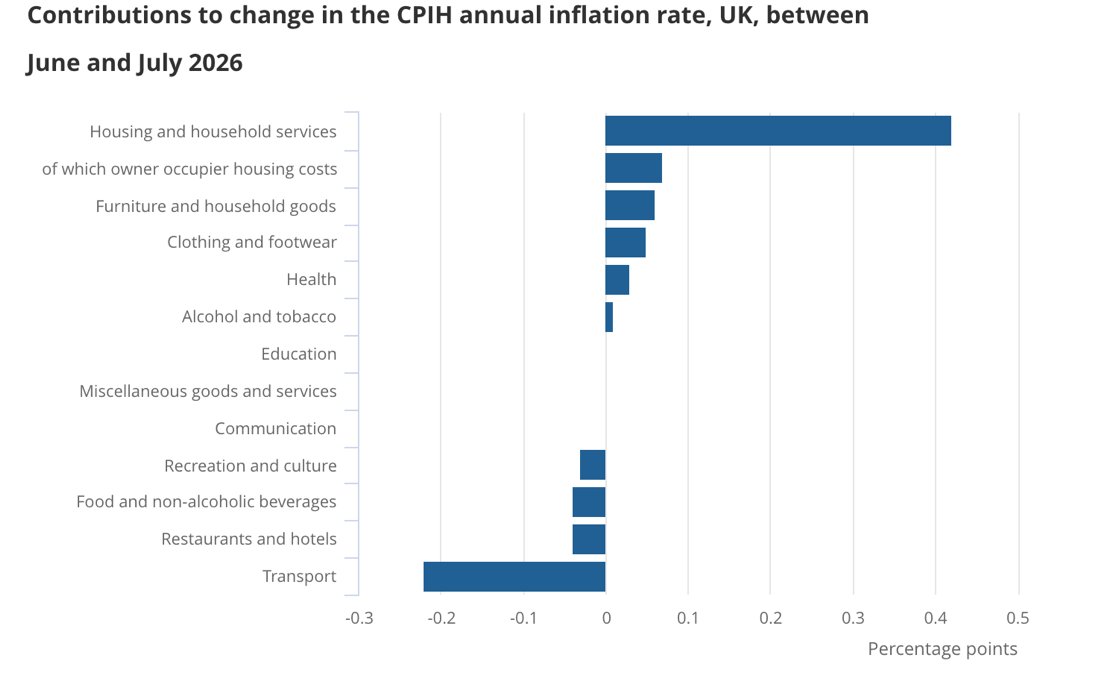
Source: Office for National Statistics
There are also some encouraging signals further up the pipeline. Producer input prices fell 1.7% month-on-month and annual input inflation slowed sharply to 4.9% from 7.4%. That doesn't guarantee lower consumer inflation, but it suggests some of the cost pressure facing businesses is beginning to dissipate. The complication is that goods inflation accelerated to 2.2% from 1.7%, partly reflecting energy, so the recent external price shock is still working its way through the economy.
For the BoE, I don't think today's figures materially change the case for patience. Headline inflation moving back towards 3% makes an imminent easing of policy harder to justify, but the lack of acceleration in core inflation—and particularly the fall in services inflation—also provides little reason to tighten further. The Bank can therefore afford to remain on hold and wait to see whether the headline increase proves temporary. The combination of the next few wage, employment and services-inflation readings will likely matter more for the policy path than today's headline number alone.
For sterling, the implications are modestly supportive. Inflation at 2.9% makes it harder for markets to price aggressive BoE easing, potentially keeping UK yields relatively attractive. But because the headline figure matched expectations and the underlying details are more benign, there isn't an obvious catalyst for a major hawkish repricing. The pound's reaction should therefore depend increasingly on relative policy expectations, particularly whether US data continue to reduce the probability of further Fed tightening.
GBP/USD daily chart
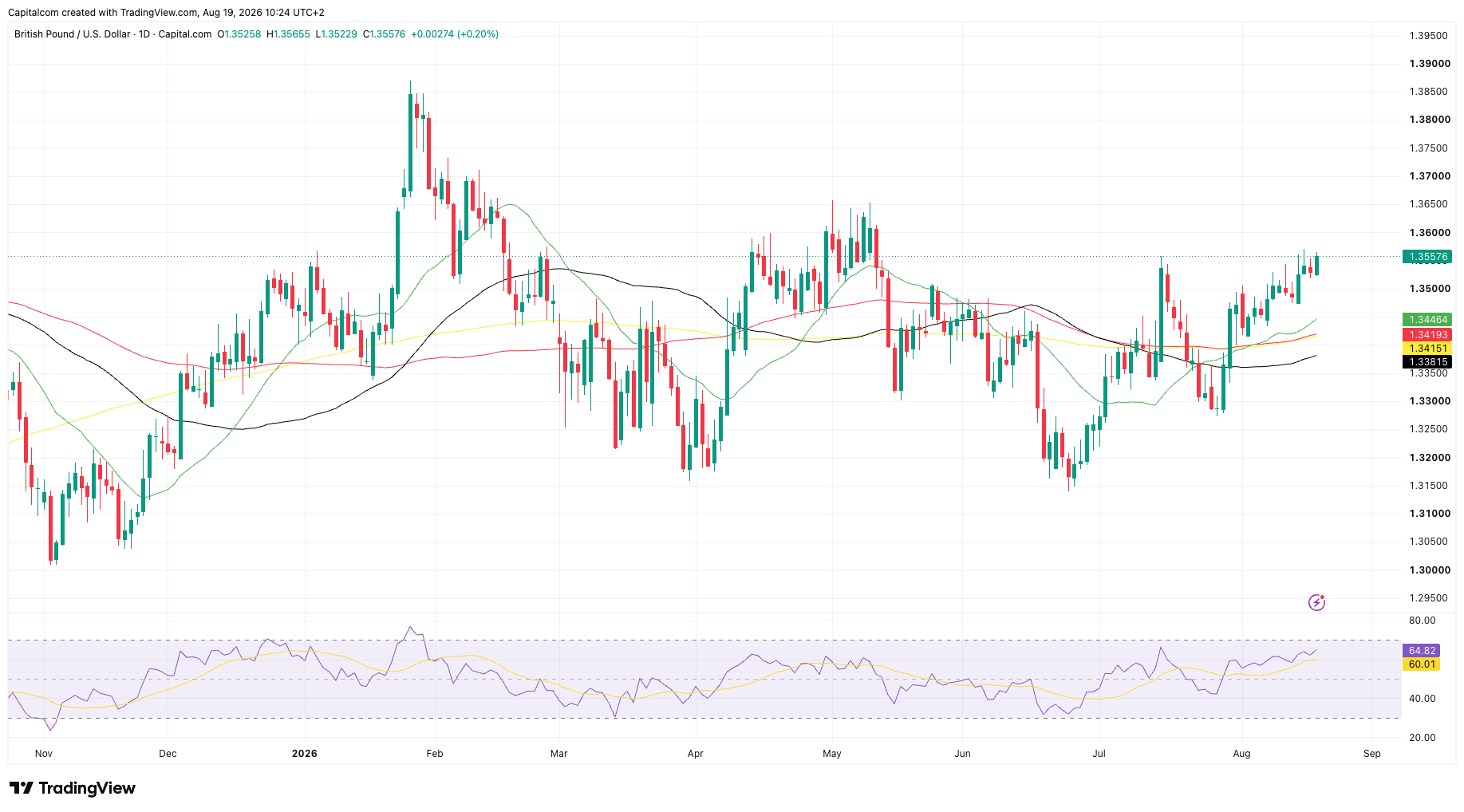
Past performance is not a reliable indicator of future results.
The interesting takeaway is that UK inflation has risen without showing convincing evidence of renewed domestic inflationary pressure. Headline CPI looks uncomfortable, but falling services inflation and much weaker producer input inflation tell a more reassuring story underneath. That distinction should allow the BoE to look through some of the headline increase for now.