

WTI falls below $70 as markets price out the Middle East risk premium
Oil continues to face downward pressure as markets hope for a resolution to the Middle East conflict and reopening of the Strait of Hormuz.
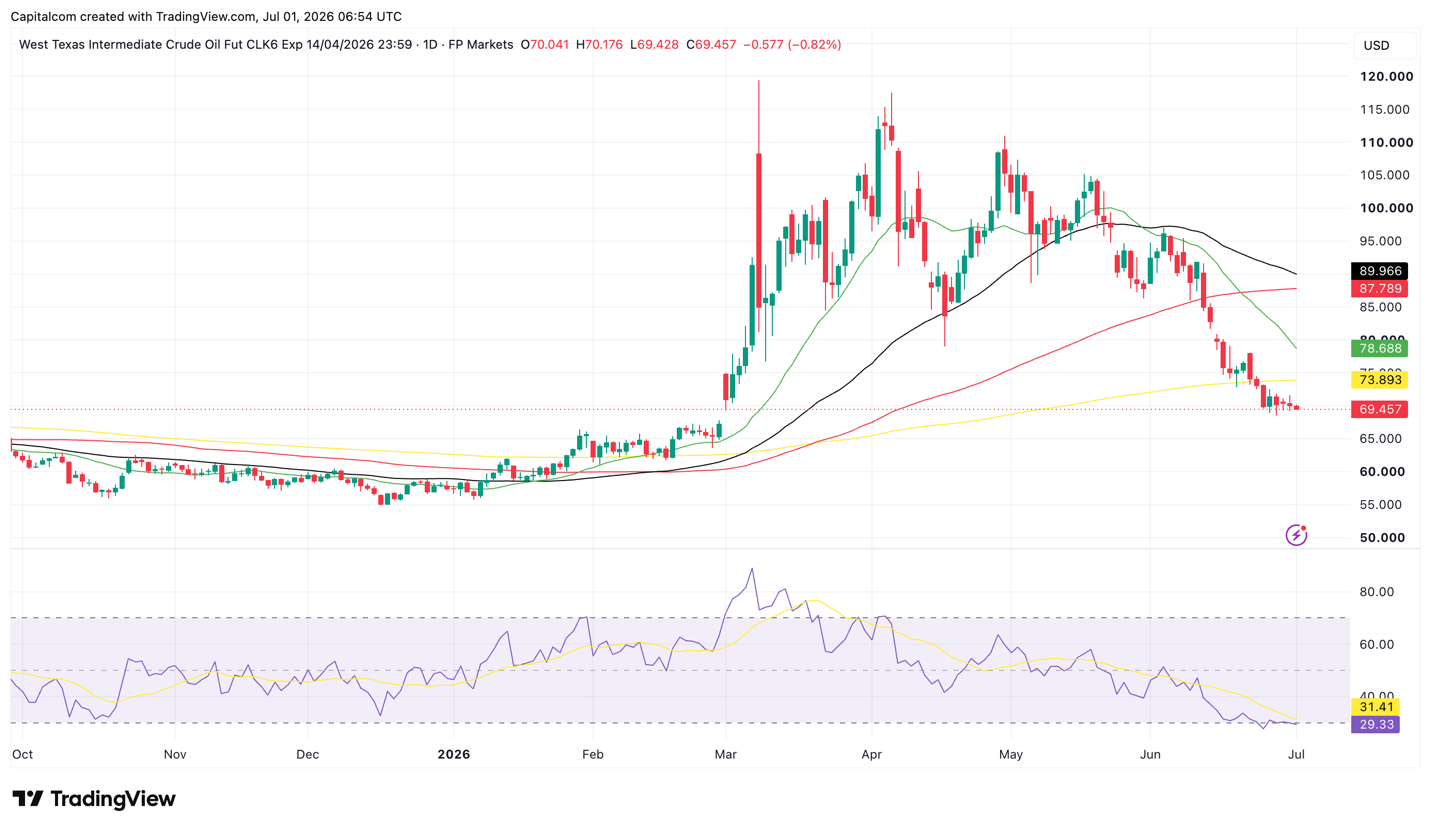
WTI crude has slipped below $70 per barrel for the first time since the Middle East conflict began in March, underscoring how dramatically sentiment has shifted over recent weeks. The combination of the US-Iran ceasefire, progress toward a longer-term diplomatic agreement and the gradual reopening of the Strait of Hormuz has prompted traders to unwind much of the geopolitical premium that had been embedded in oil prices. At the same time, concerns over slowing global demand and expectations that additional supply could return to the market have reinforced the move lower.
From a technical perspective, the selloff has become increasingly stretched. WTI is now trading below its 20, 50, 100 and 200-day moving averages, while RSI has fallen into oversold territory, highlighting the strength of the recent selloff. Although momentum remains firmly bearish, oversold conditions often coincide with periods of consolidation or increased volatility as sellers begin to take profits and buyers assess whether prices have moved too far, too quickly.
US crude (WTI) daily chart
Past performance is not a reliable indicator of future results.
The fundamental picture is also more balanced than recent price action might suggest. Markets are increasingly pricing a smooth normalisation of energy flows and a lasting reduction in geopolitical risk. However, negotiations between the US and Iran remain ongoing, and several key issues—including long-term security arrangements and nuclear oversight—have yet to be fully resolved. Any deterioration in those talks could quickly reintroduce a geopolitical premium into oil prices.
Another factor that could provide support over the medium term is inventory rebuilding as several countries have drawn down strategic petroleum reserves or relied more heavily on existing stockpiles to cushion supply disruptions. If confidence in global energy markets improves, governments and commercial users may begin replenishing those inventories, creating an additional source of demand that may not be fully reflected in current prices.
OPEC+ also remains an important variable. The producer group has consistently shown a willingness to intervene when prices weaken materially, either through extending voluntary production cuts or adjusting supply targets to support market stability. While there is no guarantee that further action will be taken, prices below $70 are likely to attract increasing attention from producers seeking to defend revenues, particularly if demand shows signs of stabilising.
None of this necessarily suggests that oil is poised for an immediate rebound. Weaker geopolitical risk, improving supply expectations and softer inflation have fundamentally changed the outlook from just a few weeks ago. However, after such a sharp decline, markets may be placing considerable weight on one outcome, a smooth and sustained normalisation of energy markets. With technical indicators pointing to oversold conditions and several fundamental support factors still in play, the balance of risks may be becoming less one-sided than recent price action implies.