

Markets brace for a critical week as geopolitics and macro risks collide
Markets face the latest US CPI data and Warsh's testimony before Congress as tensions in the Middle East continue to rise.
Markets have started the week firmly on the defensive as renewed tensions between the US and Iran once again dominate sentiment. Weekend strikes and fresh rhetoric from Tehran have revived concerns that the path towards a lasting agreement remains fragile. Iran's latest statement that it will not honour its commitments under the memorandum of understanding unless the US does the same has reinforced that uncertainty, even as reports suggest some vessels continue to transit the Strait of Hormuz despite Iranian claims that it has been closed.
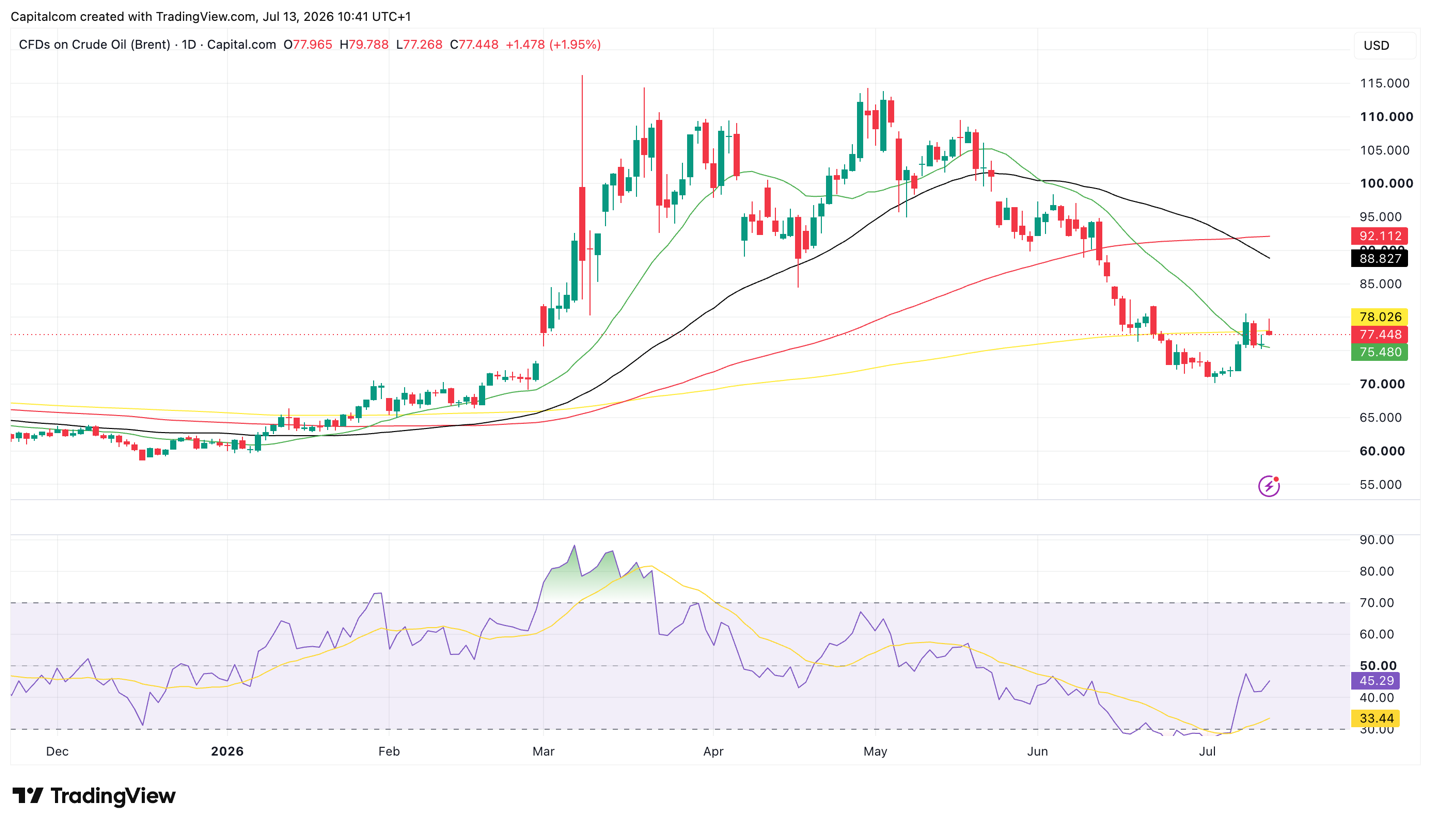
The market reaction has been relatively measured compared with previous flare-ups. Oil prices have moved higher, equities have retreated and government bond yields have edged up as investors rebuild some inflation premium into asset prices. However, the response has been less dramatic than earlier in the conflict, reflecting a shift in how markets are assessing the situation.
Brent crude daily chart
Past performance is not a reliable indicator of future results.
Rather than viewing the Strait of Hormuz as simply open or closed, investors increasingly see it as a continuum of disruption, where shipping volumes, insurance costs and operational risks can fluctuate without necessarily leading to a complete halt in global energy flows. That more nuanced assessment has helped prevent another sharp repricing across financial markets, even as geopolitical risks remain elevated.
Even so, the latest developments are a reminder that markets may have become too confident in pricing a smooth normalisation of Middle East tensions. Oil had fallen sharply over recent weeks as investors stripped out much of the geopolitical premium, assuming energy markets would continue returning to normal. The latest setback suggests that process may prove more uneven than initially expected, leaving crude prices sensitive to further headlines while also complicating the inflation outlook for central banks.
Geopolitics, however, is only one part of what promises to be a pivotal week for investors. The second-quarter earnings season begins in earnest, providing the first major test of whether the AI-driven earnings story that has underpinned equity markets can continue to justify elevated valuations. Markets will be looking not only at headline results, but also at guidance, capital expenditure plans and any indication that higher costs or geopolitical uncertainty are beginning to affect margins.
At the same time, monetary policy is back in focus. Federal Reserve Chair Kevin Warsh is due to testify before Congress, giving investors another opportunity to assess how he intends to navigate an economy where inflation remains above target but geopolitical risks are once again influencing the outlook. Last week's comments reinforced his commitment to price stability while offering little in the way of forward guidance. Any further clarity on the Fed's reaction function could prove influential for the dollar, Treasury yields and broader risk sentiment.
The week's other major event will be the latest US CPI report. Following stronger inflation readings earlier this year and a resilient labour market, investors are keen to determine whether underlying price pressures remain persistent despite the recent fall in energy prices. A hotter-than-expected reading would reinforce the higher-for-longer narrative and could add further support to the dollar and bond yields. Conversely, a softer report would help offset some of the inflation concerns stemming from renewed geopolitical tensions and could provide equities with a much-needed boost.
Taken together, the combination of geopolitical uncertainty, the start of earnings season, key inflation data and testimony from the new Fed Chair creates the conditions for a volatile week. While the longer-term backdrop for risk assets remains supported by resilient corporate earnings and continued investment in artificial intelligence, investors are once again being forced to balance those structural positives against shorter-term macroeconomic and geopolitical risks. After several weeks of relative calm, markets may be entering another period where headlines and data releases drive sentiment just as much as fundamentals.