

US equities keep climbing despite hotter inflation
US equities look through hotter CPI and PPI prints as the earnings momentum continues to drive the narrative.
US equities are continuing to grind higher even after hotter readings in both CPI and PPI, which would normally be a clear headwind for risk assets. April CPI rose 0.6% month-on-month and 3.8% year-on-year, while core CPI rose 0.4% on the month and 2.8% annually. PPI was even more uncomfortable, with wholesale prices reportedly rising 1.4% month-on-month and 6.0% year-on-year, pointing to pipeline inflation pressures still building.
The reason equities are holding up is that inflation is not currently the dominant market driver. The market has already moved away from pricing near-term rate cuts, so hotter inflation does not create the same shock it might have earlier in the year. Instead, investors are focused on earnings, and on that front the US story remains very strong. The Nasdaq and S&P 500 have been supported by large-cap tech, AI demand, margin expansion and expectations that corporate profits can continue to grow despite higher input costs. Tech strength helped push both the S&P 500 and Nasdaq to record highs even as hotter wholesale inflation weighed on parts of the market.
S&P 500 daily chart
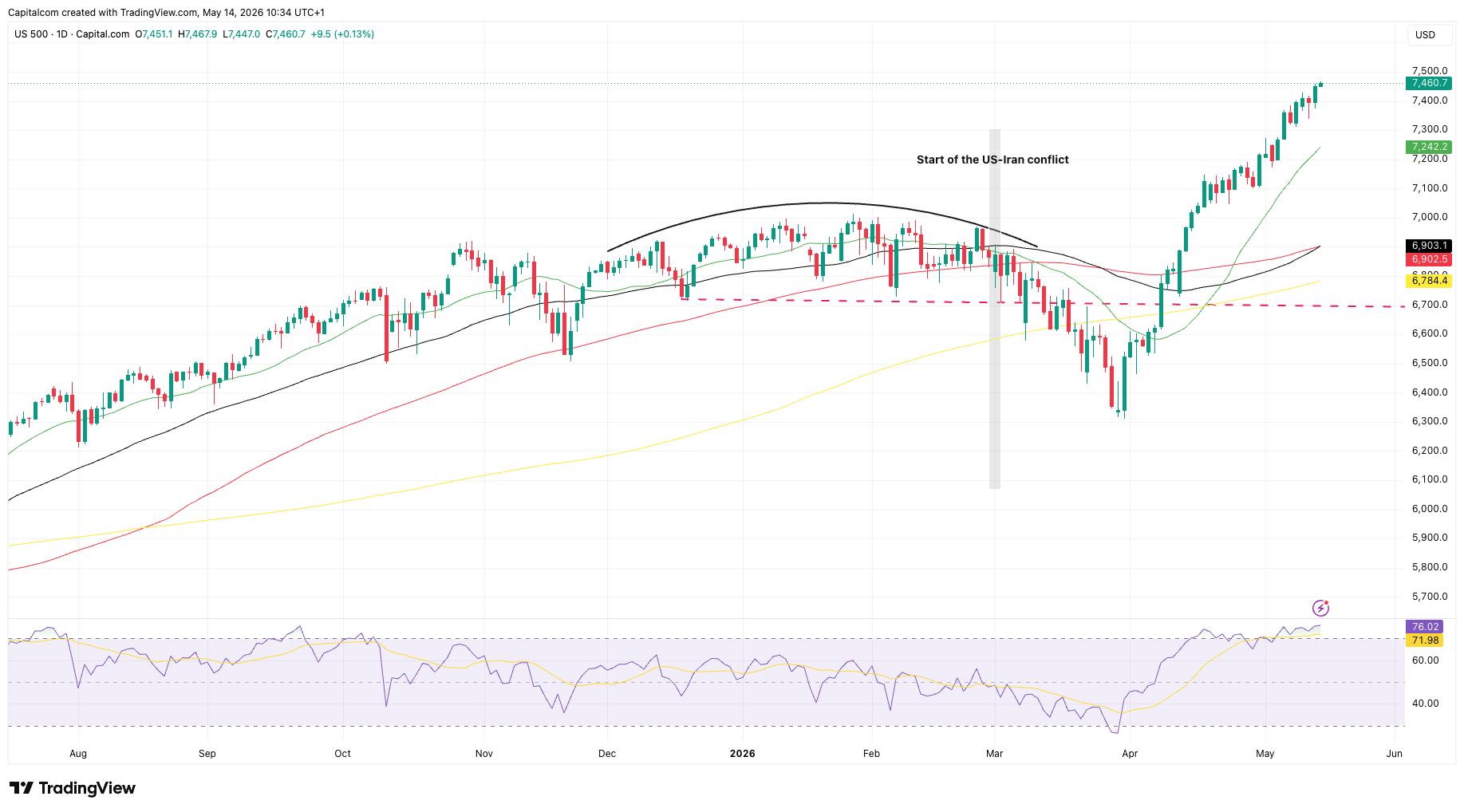
Past performance is not a reliable indicator of future results.
In other words, the market is treating the inflation problem as a constraint on Fed easing, but not yet as a threat to earnings. That distinction is crucial. If companies can defend margins through pricing power, productivity gains and strong demand, equities can tolerate higher yields for longer. This is especially true for the Nasdaq, where the dominant companies are highly profitable and still benefiting from AI-related capital spending.
That said, this is a fragile setup. The hotter CPI and PPI data suggest inflation is becoming more embedded, especially if energy costs continue to pass through into services and goods. If that starts to compress margins or forces the Fed to talk seriously about further tightening, the current equity resilience could be harder to sustain.