

Market Mondays: Markets on edge as war narrative resets and earnings loom
Markets face renewed uncertainty about the Middle East conflict as the US and IRan are unable to reach an agreement, with both threatening further action.
Markets are once again being pulled between competing forces, with geopolitical escalation in the Middle East reintroducing uncertainty just as investors turn their focus toward the start of earnings season. After a brief period of relief following ceasefire hopes, the breakdown in talks and the emergence of a “blockade of the blockade” strategy by the US has pushed the narrative back toward duration risk: how long this conflict will last and how deeply it will impact the global economy.
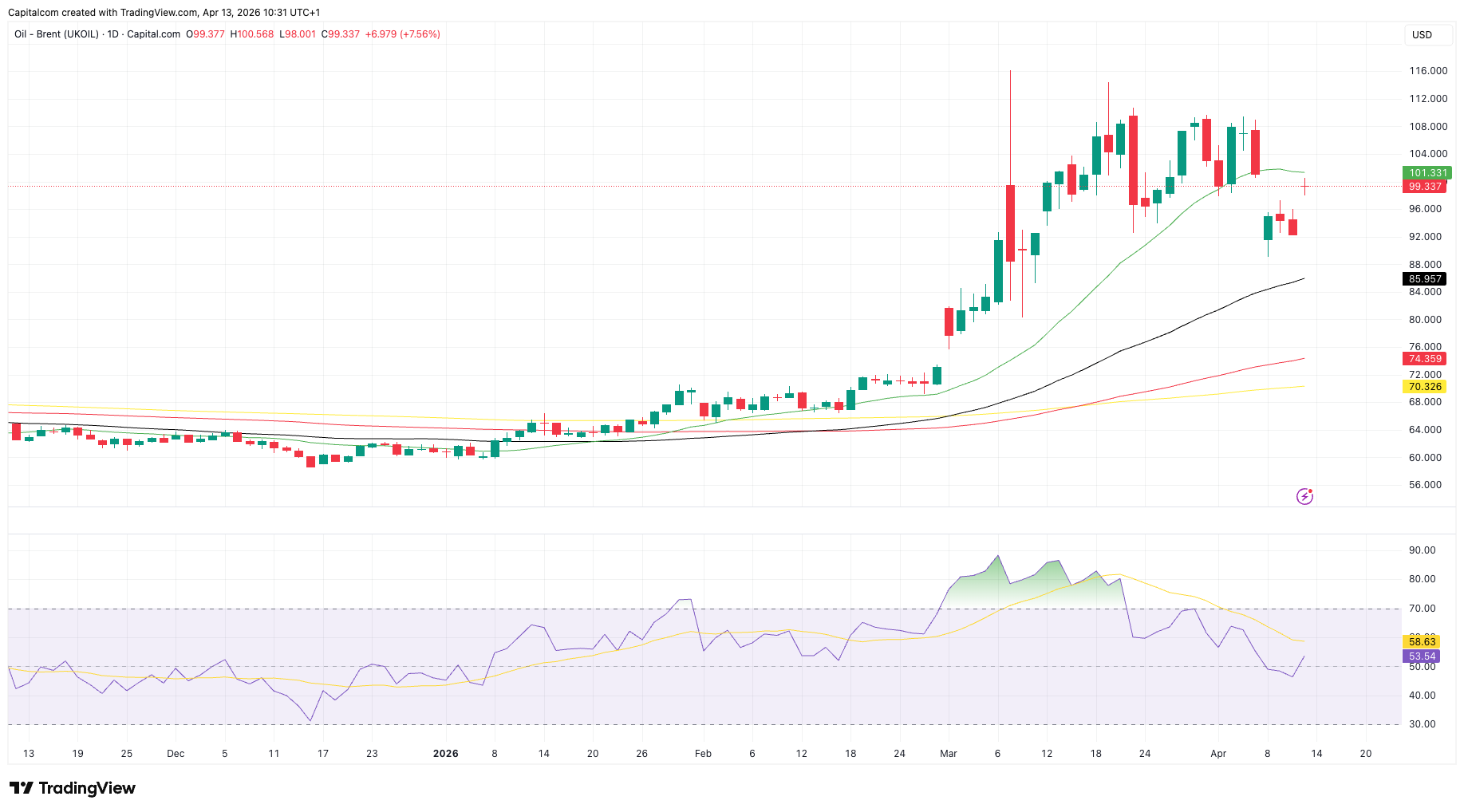
The latest price action reflects that tension. Oil initially spiked on renewed supply fears but has since struggled to build on gains, trading in a relatively tight range despite the escalation in rhetoric. This lack of follow-through suggests markets are still grappling with how to price the situation, caught between the risk of further disruption to global energy flows and the possibility of another last-minute de-escalation. Under the surface, however, the physical market appears far tighter than futures imply, pointing to a disconnect that could eventually resolve with higher prices if disruption persists.
Brent crude daily chart
Past performance is not a reliable indicator of future results.
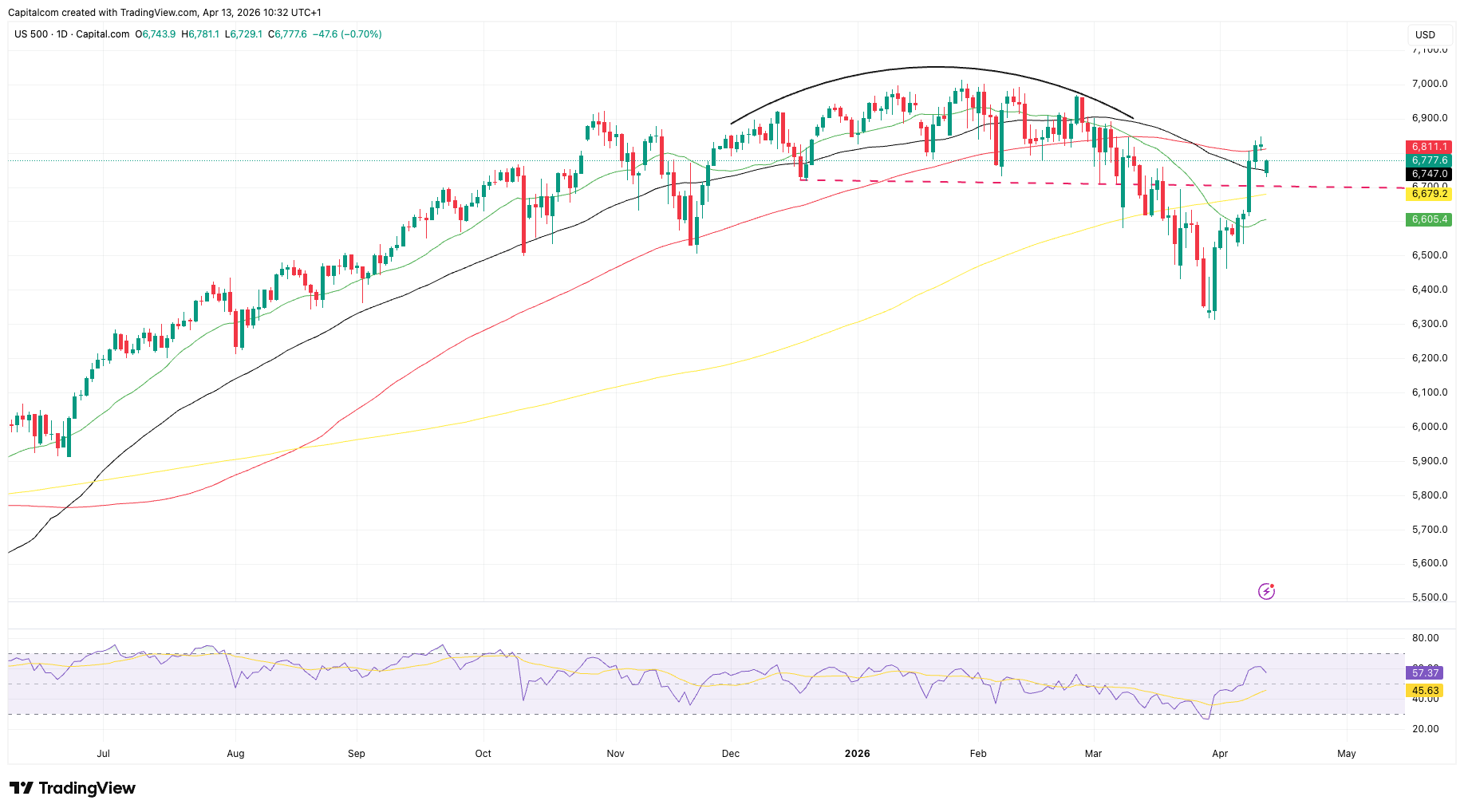
Equities, meanwhile, have shown surprising resilience. The S&P 500 and Nasdaq have rebounded from recent lows and are attempting to stabilise, even as the macro backdrop deteriorates. Part of this strength can be attributed to easing volatility in bond markets and greater clarity around the Federal Reserve’s reaction function, namely, a willingness to look through supply-driven inflation shocks rather than aggressively tighten policy. That has helped compress risk premia and support valuations in the short term.
S&P 500 daily chart
Past performance is not a reliable indicator of future results.
However, this resilience is increasingly being tested by the reality of what lies ahead. The upcoming earnings season is likely to be a critical inflection point. Expectations remain high, with analysts still projecting double-digit earnings growth in the near term and even stronger growth in the second quarter. This sets a high bar at a time when input costs, particularly energy, have risen sharply and growth momentum was already slowing prior to the conflict. If companies begin to signal margin pressure or revise guidance lower, the current optimism in equities could quickly unwind.
There are also structural questions re-emerging beneath the surface. The AI-driven growth narrative that dominated markets over the past year is facing renewed scrutiny, particularly as rising energy costs increase the expense of data centre expansion and capital expenditure. Combined with geopolitical uncertainty and slowing growth, this creates a more complex backdrop for equity markets than headline price action might suggest.
In essence, markets are transitioning from a phase driven by headlines to one that will increasingly be driven by data. The geopolitical situation remains fluid and capable of generating sharp moves, but the next major test will come from earnings and forward guidance. Until then, the combination of elevated uncertainty, stretched expectations and fragile positioning suggests that volatility is likely to remain a defining feature of markets in the weeks ahead.