
STMicroelectronics stock forecast: Third-party price targets
STMicroelectronics is a Paris-listed semiconductor manufacturer with global operations, producing chips for automotive, industrial and consumer electronics applications. Explore STMPA price action, third-party price targets, and technical analysis.
STMicroelectronics N.V. (STMPA) is trading around €23.91 in intraday European dealing, near the top of the current session’s €22.71–€23.98 range as of 2:46pm UTC on 21 January 2026. Past performance is not a reliable indicator of future results.
The move comes amid a series of recent company updates, including recognition among the 'Top 100 Global Innovators 2026' (MarketScreener, 21 January 2026) and as a ‘Global Top Employer 2026’ (STMicroelectronics, 15 January 2026), as well as preparations for the fourth-quarter and full-year 2025 results release and conference call scheduled for 29 January 2026 at 9:30am CET (STMicroelectronics, 7 January 2026). Earlier third-quarter 2025 figures showed net revenues of about $3.19bn and a gross margin near 33.2%, with management noting ongoing margin pressure linked to product mix and manufacturing efficiency (Reuters, 23 October 2025).
STMicroelectronics stock forecast 2026–2030: Third-party price targets
As of 21 January 2026, third-party STMicroelectronics stock predictions show a range of 12-month views based on different methodologies and currency bases. These figures reflect third-party expectations rather than Capital.com’s own forecasts, and quoted targets may differ from the current Capital.com stock CFD price feed.
Taken together, these sources illustrate the breadth of opinion that typically surrounds a large, cyclical semiconductor name, rather than a single consensus outlook.
MarketBeat (Wall Street consensus)
MarketBeat states that 20 Wall Street equity analysts reported an average 12-month target of around $31.19 for STMicroelectronics, with individual targets spanning $25–$45 per share. The overall summary leans towards a Hold-type view, reflecting a balance between competitive positioning and valuation considerations in cyclical end-markets (MarketBeat, 21 January 2026).
Investing.com (STMPA consensus)
Investing.com’s consensus page for STMPA stock forecasts shows that, based on projections from 19 analysts, the average 12-month price target stands at around €26.17, with estimates ranging from €19.86 to €26.17. The platform notes that these projections embed assumptions around revenue trends, margins and macroeconomic conditions across automotive, industrial and consumer electronics end-markets (Investing.com, 21 January 2026).
MarketScreener (target-price panel)
MarketScreener’s consensus dashboard for STMicroelectronics indicates an average target price of around $30.66, derived from 19 contributing analyst models. Commentary accompanying the panel links this spread to expectations for mid-cycle earnings recovery, alongside ongoing risks tied to demand volatility and capital-expenditure cycles in the chip sector (MarketScreener, 21 January 2026).
Mizuho via FMP (single-broker target)
Financial Modeling Prep’s news summary reports that Mizuho Securities set a 12-month price target of $26 for STMicroelectronics, when the stock was trading around $26.47 in the US market. The broker’s stance reflects a comparatively cautious view on electric-vehicle and automotive demand relative to other semiconductor segments (Financial Modeling Prep, 16 December 2025).
Predictions and third-party forecasts are inherently uncertain, as they cannot fully account for unexpected market developments. Past performance is not a reliable indicator of future results.
STMPA stock price: Technical overview
The STMPA stock price is trading near €23.91 as of 2:46pm UTC on 21 January 2026, with price holding above a rising moving-average cluster. The 20-, 50-, 100- and 200-day simple moving averages sit around €23.6, €21.9, €22.6 and €22.9 respectively. The alignment of the shorter-term averages above the longer-term ones keeps the near-term trend constructive, while the 14-day RSI near 54.4 sits in the upper-neutral zone and the ADX around 34 points to an established trend rather than a range-bound market.
On the topside, the nearest classic resistance level sits at R1 around €23.69. A sustained daily close above this area would bring the €24.93 R2 zone back into focus as the next upside reference. On the downside, initial support appears near the classic pivot around €21.60, with the 100-day SMA near €22.57 acting as the first notable moving-average support. A clear break below this region could open the way towards the S1 area near €20.35 if downside pressure were to extend (TradingView, 21 January 2026).
This technical analysis is provided for informational purposes only and does not constitute financial advice or a recommendation to buy or sell any instrument.
STMicroelectronics share price history (2024–2026)
STMPA’s stock price has completed a full cycle over the past two years, falling from the low-€40s in early 2024 to below €20 at points in April 2025, before gradually recovering into the low- to mid-€20s by late 2025. The stock then edged higher into January 2026, with recent prices in the €22–€24 area and a latest end-of-day level near €23.98 on 21 January 2026. This leaves the price below the mid-2024 highs, but above the troughs seen in the first half of 2025.

Past performance is not a reliable indicator of future results. Share prices are indicative and may differ from live market prices.
STMicroelectronics (STMPA): Capital.com analyst view
STMicroelectronics’ share price over the past two years has moved from the low-€40s in early 2024 into the high-€10s to low-€20s by April 2025, before recovering towards the mid-€20s and easing back to around €23.91 as of 2:46pm UTC on 21 January 2026. This pattern highlights alternating phases of momentum and retracement, which may appeal to different trading approaches but also increases risk when using leverage.
Recent trading has been shaped by company-specific developments, such as third-quarter 2025 results that showed stronger-than-expected revenues but lower year-on-year gross margins, alongside wider semiconductor sector themes. Shifts in demand across automotive, industrial and consumer electronics markets can support or weigh on the share price as expectations evolve.
Capital.com’s client sentiment for STMicroelectronics CFDs
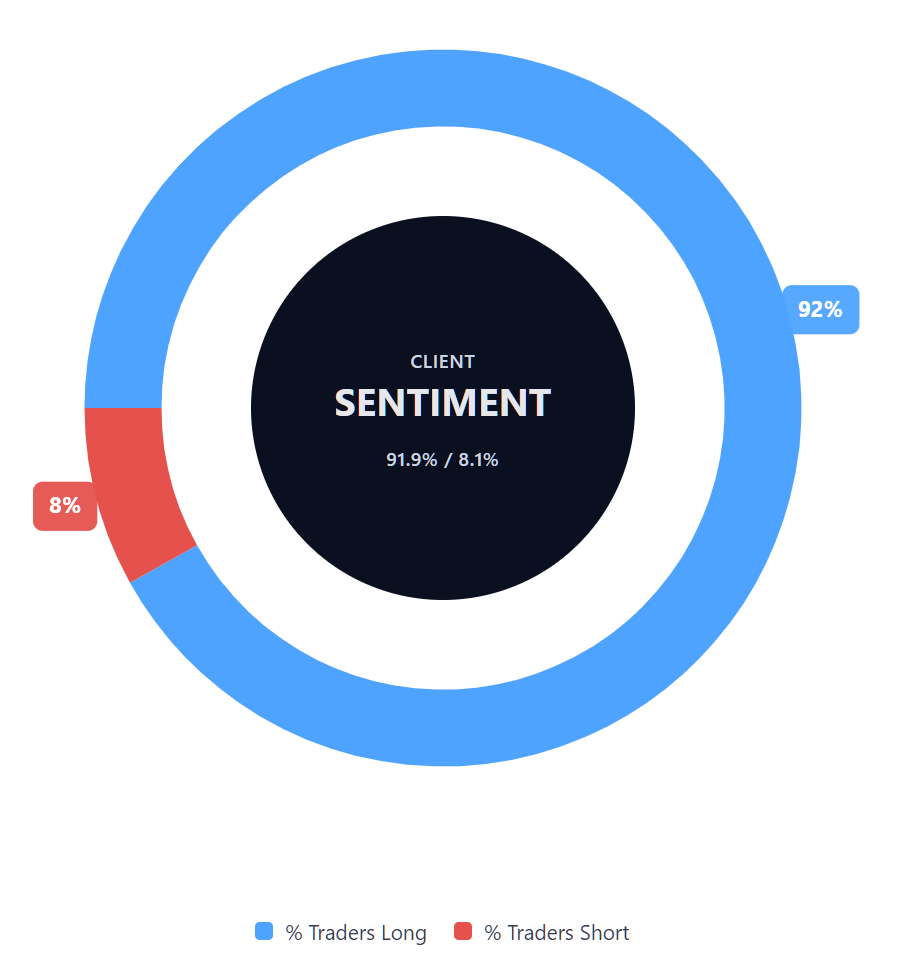
As of 21 January 2026, Capital.com client positioning in STMicroelectronics CFDs currently shows a strong long bias, with buyers accounting for 91.9% of open positions compared with 8.1% sellers. This leaves buyers ahead by roughly 83.8 percentage points, indicating concentrated positioning rather than a balanced market. This snapshot reflects open positions on Capital.com at the time and can change as trading activity evolves.
Summary – STMicroelectronics 2026
- STMicroelectronics traded between roughly €17.9 and €28.4 during 2025, with periods of elevated volatility around earnings releases and broader semiconductor sector moves.
- The share price declined from the mid-€20s in January 2025 to below €20 in April, before recovering towards the mid-€20s later in the year and ending December around €22–€23.
- Intraday on 21 January 2026, the STMicroelectronics stock CFD on Capital.com traded between €22.71 and €23.98, with a last price of €23.91 as of 2:46pm UTC.
- Technical indicators show the price trading above key longer-term moving averages, with the 20-, 50-, 100- and 200-day SMAs clustered around €23.6, €21.9, €22.6 and €22.9 respectively. The 14-day RSI near 54 continues to point to an upper-neutral momentum backdrop rather than overbought or oversold conditions.
Past performance is not a reliable indicator of future results.
FAQ
Who owns the most STMicroelectronics stock?
STMicroelectronics has a broad institutional shareholder base, with ownership spread across global asset managers, pension funds and index-tracking vehicles. Large positions are generally held by long-term institutional investors rather than a single controlling shareholder. As a European-listed semiconductor group with a US ADR, ownership also reflects passive investment flows linked to major equity indices. Reported shareholdings can change over time as funds rebalance portfolios or respond to market and sector developments.
What is the five-year STMicroelectronics share price forecast?
There is no single, agreed five-year STMPA stock forecast. Longer-dated projections published by third parties, such as scenario-based models or valuation commentary, vary widely and depend on assumptions about semiconductor demand, margins and execution. These longer-term views are typically illustrative rather than predictive and tend to carry greater uncertainty than short-term estimates, particularly given the cyclical nature of the semiconductor industry.
Is STMicroelectronics a good stock to buy?
Whether STMicroelectronics is a 'good' stock depends on individual objectives, time horizon and risk tolerance. Analyst views differ, reflecting a balance between the company’s scale and market positioning and the risks associated with cyclical demand, margins and capital expenditure. This article provides third-party forecasts and historical context for information only and does not assess suitability or make a recommendation to buy or sell the stock.
Could STMicroelectronics stock go up or down?
STMicroelectronics’ share price can move higher or lower in response to a range of factors, including earnings results, guidance updates, shifts in semiconductor demand and broader equity market conditions. As with other cyclical industries, price movements can be more pronounced when expectations change. Past price behaviour highlights both sharp drawdowns and recoveries, illustrating that outcomes are uncertain and market conditions can change quickly.
Should I invest in STMicroelectronics stock?
Deciding whether to invest in STMicroelectronics stock is a personal decision that depends on financial circumstances, experience and risk appetite. Equity investments carry the risk of loss, and semiconductor stocks can be sensitive to economic cycles and industry trends. This content is provided for informational purposes only and does not offer investment advice or consider individual suitability. Independent research or professional advice may be appropriate before making any investment decision.
Can I trade STMicroelectronics CFDs on Capital.com?
Yes, you can trade STMicroelectronics CFDs on Capital.com. Trading share CFDs lets you speculate on price movements without owning the underlying asset and to take long or short positions. However, contracts for difference (CFDs) are traded on margin, and leverage amplifies both profits and losses. You should ensure you understand how CFD trading works, assess your risk tolerance, and recognise that losses can occur quickly.