

Market Mondays: caught between de-escalation hopes and rising uncertainty
Markets remain headline driven as the latest developments in the Middle East point to higher risks of further escalation despite the ceasefire holding.
Markets are once again grappling with a rapidly shifting narrative in the Middle East, as the past 48 hours have delivered both optimism and renewed concern. Late last week, sentiment improved sharply on signs that Iran could reopen the Strait of Hormuz and that a deal was within reach. That triggered a relief rally in equities and a sharp drop in oil. However, the breakdown in talks over the weekend and renewed restrictions on the Strait — alongside US enforcement actions — have quickly reversed that narrative, pushing markets back into a state of uncertainty.
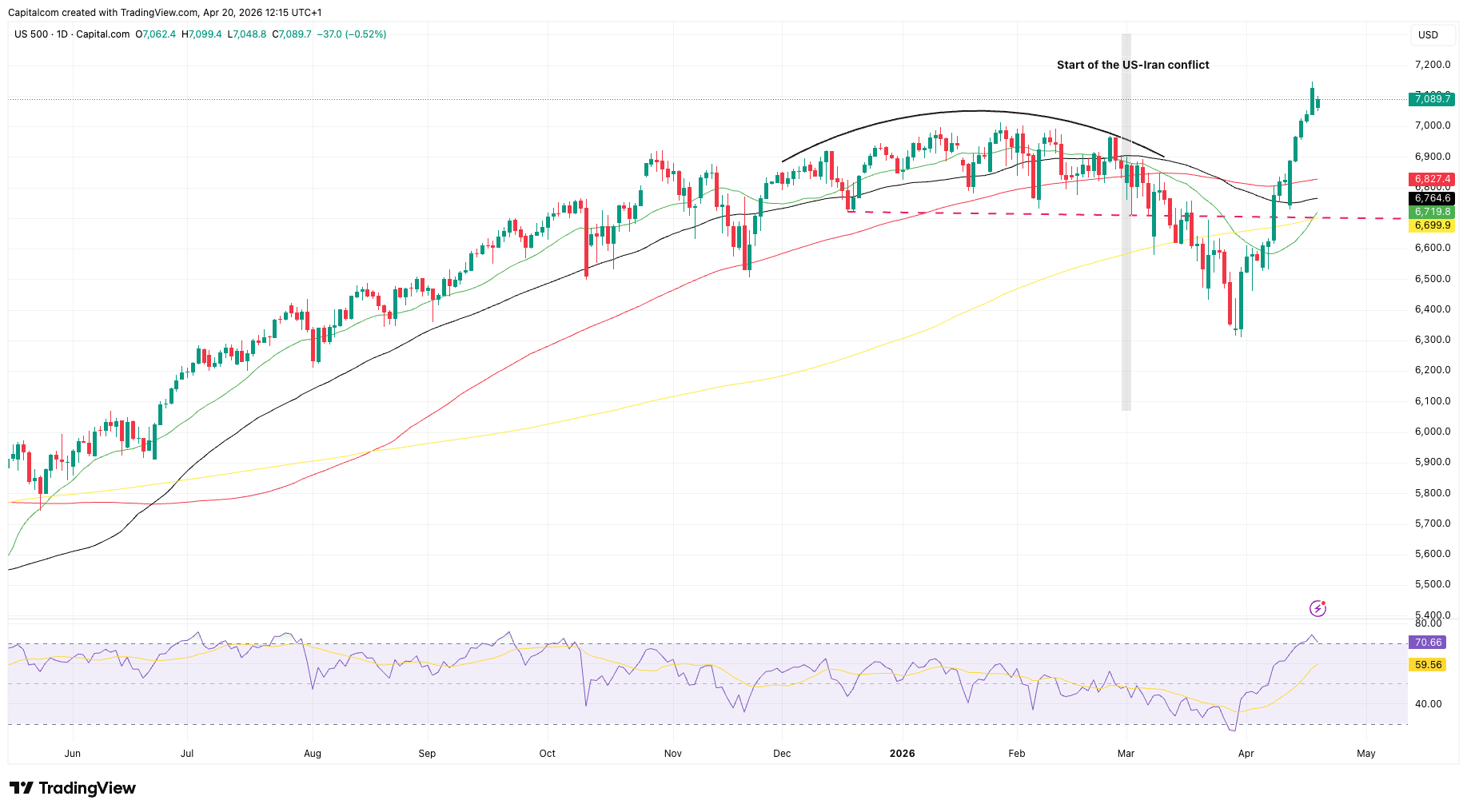
The reaction across assets highlights this indecision. Brent crude initially spiked higher on renewed supply fears but has since struggled to extend gains, holding near recent highs without the kind of follow-through seen earlier in the conflict. This suggests the market is pricing risk but not yet committing to a full-blown supply shock scenario. At the same time, the S&P 500 and Nasdaq 100 remain close to all-time highs, despite the deterioration in headlines. Technically, both indices have rebounded sharply from March lows, with momentum indicators like RSI flipping from oversold to overbought in record time — a sign of strong but potentially stretched positioning.
S&P 500 daily chart
Past performance is not a reliable indicator of future results.
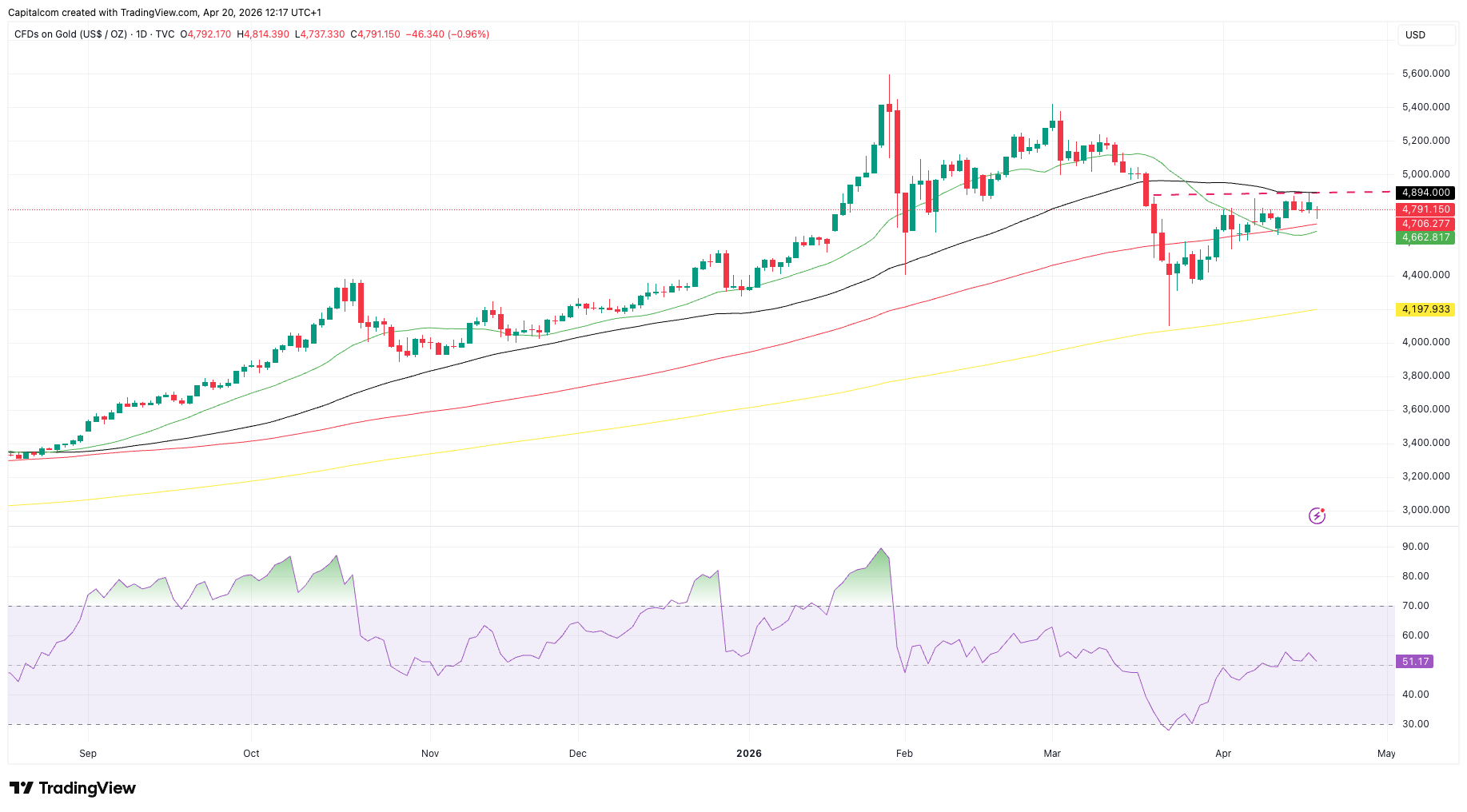
Safe-haven assets are also at key levels. Gold is struggling to break through resistance around $4,900, suggesting that while there is underlying demand, it is being capped by higher yields and a relatively firm US dollar. Meanwhile, the dollar index remains supported above key support zones around 98, reflecting ongoing demand for liquidity and safety even as risk assets rally. This combination — firm dollar, capped gold, elevated equities — underscores a market that is cautious, but not fully defensive.
Gold (XAU/USD) daily chart
Past performance is not a reliable indicator of future results.
Under the surface, there are signs that not all is being fully priced in. The oil futures curve suggests stability, but indications from the physical market point to tighter conditions, implying that current prices may understate the true level of strain in global energy supply. If that disconnect closes, oil could move higher again, putting renewed pressure on inflation expectations and financial conditions.
At the same time, attention is turning to earnings season, which is beginning to take centre stage. Early results have been solid, with expectations for double-digit growth still intact. However, the real test will come from forward guidance. Sectors such as airlines, industrials and manufacturing — all sensitive to fuel costs — will be closely watched for signs of margin pressure. With oil still elevated around $90, companies may soon be forced to reflect higher input costs in their outlook.
In essence, markets are operating in a state of conditional optimism. Investors are betting that the conflict will de-escalate and that the global economy can absorb higher energy costs. But the technical setup across assets suggests that positioning is becoming stretched, while the fundamental risks remain unresolved. If negotiations fail to progress or earnings begin to reflect rising cost pressures, the current equilibrium could shift quickly, leading to renewed volatility across markets.