
Soitec stock forecast: €500m ORNANE bond
Soitec is a French semiconductor materials company. In September 2026, it placed €500m of 0.5% ORNANEs due in 2033, with settlement expected on 25 September. Explore third-party SOI price targets and technical analysis. Past performance is not a reliable indicator of future results.
Soitec SA (SOI) is trading at €151.36 as of 9:05am UTC on 22 September 2026, within a €146.20–€155.29 intraday range. The price is €3.93, or about 2.5%, below the session high. Past performance is not a reliable indicator of future results.
Recent company news includes Soitec's €500 million placement of 0.5% ORNANEs – convertible or exchangeable bonds due in September 2033 – with a €206.46 conversion or exchange price and settlement expected on 25 September (Soitec, 18 September 2026).
Soitec stock outlook: photonics growth and valuation
As of 22 September 2026, third-party Soitec stock predictions range widely, reflecting different views on valuation and the outlook for Soitec's photonics business.
HSBC (broker note)
HSBC set a €149 target and maintained a Hold rating as of 4 September 2026. The target sits close to the current share price, pointing to a more cautious valuation view despite stronger photonics demand (Ideal Investisseur, 4 September 2026).
Oddo BHF (broker note)
Oddo BHF raised its target to €175 and upgraded Soitec to Outperform as of 3 September 2026. The change followed Soitec's higher second-quarter revenue growth guidance, which the broker linked to Photonics-SOI demand (Zonebourse, 3 September 2026).
Kepler Cheuvreux (broker note)
Kepler Cheuvreux set a €180 target while maintaining a Buy rating as of 4 September 2026. Its assumptions include higher revenue guidance and stronger photonics orders (Ad Hoc News, 4 September 2026).
JPMorgan (broker note)
JPMorgan raised its target to €200 and moved to an Overweight rating as of 16 September 2026. The bank linked its outlook partly to expected growth in photonics demand from AI data centres and optical networking (Investing.com, 16 September 2026).
Barclays (broker note)
Barclays also set a €200 target, upgrading Soitec to Overweight as of 18 September 2026. Its forecast assumes that growing photonics exposure will support Soitec's longer-term growth profile (MarketScreener, 18 September 2026).
Predictions and third-party forecasts are inherently uncertain, as they cannot fully account for unexpected market developments. Past performance is not a reliable indicator of future results.
Soitec’s latest and upcoming earnings
Soitec raised its second-quarter fiscal 2027 (Q2 2027) revenue growth guidance on 2 September 2026 to around 50% year-on-year at constant currency and scope, from more than 30% previously.
The company linked the revision to higher Photonics-SOI demand. It expects Q2 2027 Photonics-SOI revenue to reach around three times the roughly $25 million recorded in Q2 2026, while H1 2027 revenue from the segment is expected to reach about 2.3 times the roughly $50 million reported in H1 2026.
For the full 2027 fiscal year, Soitec expects Photonics-SOI revenue at 2.5–3 times the slightly above $100 million recorded in fiscal 2026. Guidance for its other activities remained broadly unchanged (Soitec, 2 September 2026).
Soitec is due to publish its H1 2027 results after market close on 18 November 2026 (GlobeNewswire, 22 July 2026).
A stronger-than-expected update could support sentiment, while weaker growth or softer guidance could weigh on the shares.
SOI stock price: technical overview
As of 9:05am UTC on 22 September 2026, the SOI stock price trades at €151.36, above its 20-, 50-, 100- and 200-day moving averages, at around €130, €118, €128 and €88 respectively. The 20-day average remains above the 50-day average.
The 14-day relative strength index (RSI) stands at 62.9, below the commonly used overbought threshold of 70. The average directional index (ADX) is 24.9, close to the 25 level often associated with an established trend.
TradingView data puts stochastic %K at 88.6 and Williams %R at −13.7, both within commonly used overbought ranges. These readings can point to strong recent momentum, but may also indicate that the price has moved quickly relative to its recent range.
The classic R2 pivot is €151.40, close to the current price, while R3 stands at €185.65. Below the market, R1 is near €133, with the classic pivot near €117 and the 100-day SMA around €128 (TradingView, 22 September 2026).
Technical levels don't determine future price direction. A break above or below them may affect how traders interpret momentum, but company news and wider market conditions can have a greater influence.
This is technical analysis for informational purposes only and does not constitute financial advice or a recommendation to buy or sell any instrument.
Soitec share price history (2024–2026)
SOI’s stock price traded around €90–€98 through September 2024 before moving lower towards year-end, closing December at €23.11. January 2025 brought a brief recovery into the low-€80s, but the stock fell nearly 30% on 6 February, from around €82 to €58.
The shares continued lower over the following months, testing €31 in September 2025. November was volatile, with the price falling from around €34 to €24 mid-month before recovering towards year-end.
The trend changed sharply in February 2026. From a €24.54 low on 3 February, Soitec more than quadrupled in three months, reaching an all-time intraday high of €201.21 on 29 May and closing at €179.33. The move coincided with higher guidance linked to photonics-related AI demand.
A sharp correction followed, taking the price to around €112 by late June. The shares then traded between roughly €86 and €135 during the summer before moving back above €150 in September.
SOI closed at €151.51 on 22 September 2026, around 555% above its December 2024 close of €23.11 and 35% higher year-to-date.

Past performance is not a reliable indicator of future results. Share prices are indicative and may differ from live market prices.
Capital.com’s client sentiment for Soitec CFDs
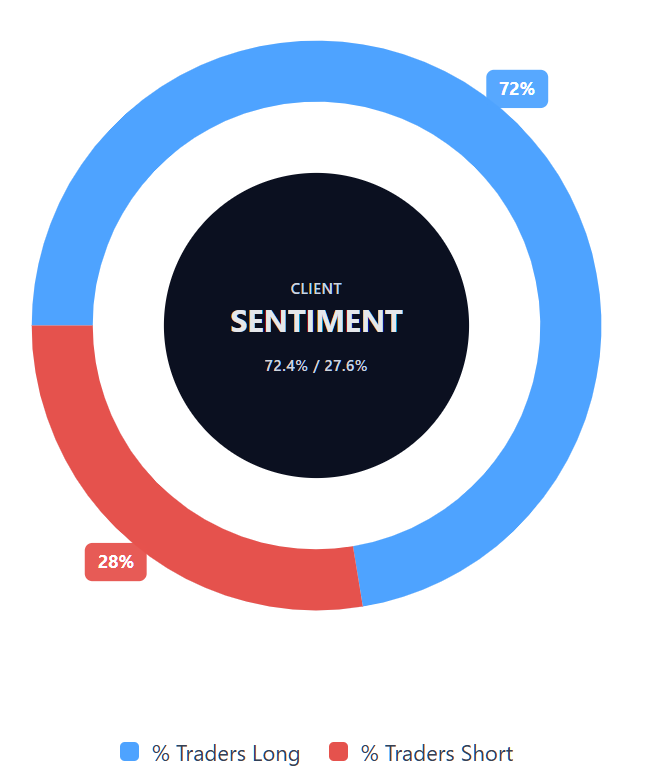
As of 22 September 2026, Capital.com client positioning in Soitec CFDs is 72.4% buyers and 27.6% sellers, a difference of 44.8 percentage points.
The figures represent open positions held by Capital.com clients at the time of the snapshot. They can change and don't indicate future price direction.
Summary – Soitec 2026
- As of 9:05am UTC on 22 September 2026, Soitec was trading at €151.36, within an intraday range of €146.20–€155.29.
- According to TradingView data, the price sits above the listed 20-, 50-, 100- and 200-day moving averages, while RSI stands at 62.9.
- Recent developments include higher Photonics-SOI revenue guidance, a €500 million convertible bond issuance and several broker rating changes.
Past performance is not a reliable indicator of future results.
FAQ
Who owns the most Soitec stock?
The article doesn't identify Soitec's largest shareholder, and ownership levels can change as institutional and other investors adjust their holdings. For the latest position, check Soitec's most recent shareholder disclosures, annual report and relevant regulatory filings. These sources can show major shareholders and changes in ownership, but they don't indicate how the share price may perform in future.
What is the five-year Soitec share price forecast?
The article doesn't provide a five-year Soitec share price forecast. Recent analyst targets cited on the page range from €149–€200, but these are shorter-term estimates based on assumptions about valuation, photonics demand and future growth. Over a five-year period, factors such as earnings, AI-related demand, competition and semiconductor-sector conditions could change considerably, making long-term price forecasts particularly uncertain.
Is Soitec a good stock to buy?
Whether Soitec is suitable depends on your objectives, risk tolerance and view of the company. The article highlights potential support from higher Photonics-SOI guidance and demand linked to AI data centres, but it also notes valuation risk, possible shareholder dilution from convertible bonds and sensitivity to semiconductor conditions. Analyst views differ, so their targets shouldn't be treated as a recommendation or guarantee of future performance.
Could Soitec stock go up or down?
Yes. Soitec's share price could move in either direction. Stronger-than-expected Photonics-SOI demand, higher revenue or supportive semiconductor conditions could help sentiment, while weaker growth, lower guidance, valuation concerns or dilution could weigh on the shares. The stock has already shown significant volatility in 2026, so both company-specific news and wider technology-sector developments may influence future price movements.
Should I invest in Soitec stock?
The article isn't intended to tell you whether to invest in Soitec. It sets out factors that may affect the shares, including Photonics-SOI growth, analyst expectations, valuation, convertible debt and semiconductor demand. Before making any investment decision, consider your own financial circumstances, objectives and tolerance for risk, and carry out independent research. Third-party forecasts can be wrong and past performance doesn't indicate future results.
Can I trade Soitec CFDs on Capital.com?
Yes, you can trade Soitec CFDs on Capital.com. Trading share CFDs lets you speculate on price movements without owning the underlying asset and to take long or short positions. However, contracts for difference (CFDs) are traded on margin, and leverage amplifies both profits and losses. You should ensure you understand how CFD trading works, assess your risk tolerance, and recognise that losses can occur quickly.