
BioNtech stock forecast: Third-party price targets
BioNTech’s share price has moved through a wide range in recent years, influenced by developments across its Covid-19 portfolio, oncology pipeline and broader trends within the biotechnology sector.
BioNTech (BNTX) is trading around $96.86 in US dollars, between an intraday low of $95.70 and a high of $98.43 on 3 December 2025 at 2:28pm UTC. Past performance is not a reliable indicator of future results.
The move comes amid corporate news that BioNTech has reported progress on its exchange offer for CureVac shares, with the offer period set to expire at 09:00 Eastern Time on 3 December 2025 and a minimum acceptance condition tied to a large majority of CureVac’s outstanding stock (GlobeNewsWire, 3 December 2025). Trading also unfolds against a backdrop of steady sector activity, with the Nasdaq Biotechnology Index around 5,716.4 points (Investing.com, 3 December 2025), even as the latest quarterly figures for BioNTech show higher revenues supported by collaboration payments alongside a recent net loss (BioNtech, 3 November 2025).
Past performance is not a reliable indicator of future results.
BioNtech stock forecast 2026–2030: Analyst price targets
As of 3 December 2025, third-party BNTX price forecasts over the next 12 months span a relatively wide range, reflecting differing views on the company’s oncology pipeline, Covid-19 vaccine cash flows, and capital allocation.
JPMorgan (broker research)
JPMorgan maintains a neutral stance in its BioNTech SE stock prediction, trimming its 12-month price target from $121 to $120, in the context of updated revenue and margin expectations for the Covid-19 and oncology portfolios. The broker notes that this modest adjustment comes amid ongoing investment in R&D and a focus on execution in later-stage oncology trials, as the firm balances cash reserves against a still-loss-making income statement (GuruFocus.com, 23 October 2025).
Morgan Stanley (broker research)
Morgan Stanley keeps an overweight rating on BioNTech, lowering its price target slightly from $133 to $131 in an October 2025 update that still implies double-digit upside from spot levels at that time. The bank cites continued confidence in the company’s oncology strategy and mRNA platform amid sector volatility, as it adjusts for nearer-term earnings headwinds and a reassessed risk-reward profile (TipRanks, 10 October 2025).
HC Wainwright (broker research)
HC Wainwright reiterates a buy view on BioNTech with a 12-month target of $136, positioning the stock toward the upper end of the published range. The research house flags expected 2025 losses and elevated R&D spending as it models potential upside from the late-stage pipeline and partnership economics (MarketBeat, 11 November 2025).
MarketBeat (consensus aggregator)
MarketBeat reports that, as of October 2025, the average 12-month price target from 14 covering analysts stands near $133.96, with the full range running from approximately $110 to $171.44 and an overall 'Moderate Buy' consensus rating for BNTX. The service notes that this aggregation uses the most recent target from each analyst over the prior 12 months, amid a mix of buy, hold, and one sell recommendation linked to differing views on earnings trajectory and sector comparables (MarketBeat, 26 October 2025).
Predictions and third-party forecasts are inherently uncertain, as they cannot fully account for unexpected market developments, and past performance is not a reliable indicator of future results.
BNTX stock price: Technical overview
BNTX last traded at $96.86 as of 2:28pm UTC on 3 December 2025. The simple moving-average cluster sits around the 20/50/100/200-DMAs at ~102 / 103 / 105 / 104, keeping price below the full MA band; there’s no 20-over-50 crossover in place. RSI(14) is soft at 39.1, while ADX(14) at 13.9 indicates a weak trend environment.
On the topside, the nearest Classic pivot above last is R1 at 113.0; a daily close above would put R2 at 122.9 back in view. Initial support is the Classic Pivot at 103.5, with the 100-day SMA near ~105 as the next MA shelf; losing that shelf would risk a move toward S1 at 93.6 (TradingView, 3 December 2025).
This is technical analysis for informational purposes only and does not constitute financial advice or a recommendation to buy or sell any instrument.
BioNtech share price history
BioNTech’s stock price (US-listed shares) have seen a varied couple of years, moving between periods of sharp rallies and notable pullbacks. The stock traded around $98–$120 for much of late 2023 and early 2024, then slipped towards the low-$80s by August 2024 before rebuilding into the $90s and low-$100s into early 2025. By mid-2025, BNTX briefly spiked above $120–$127 in late April and early June, before easing back into a broad $95–$115 band over the summer.
In the more recent stretch, closing prices climbed from the high-$80s in early April 2025 to peaks near $120 in late April, then oscillated mostly between $100 and $115 through September and October. Since mid-November 2025, the share price has softened from levels above $108, with BNTX closing at $96.81 on 3 December 2025, modestly below the late-2024 finish near $111.79 and slightly under its mid-May 2025 lows in the low-$90s.

Past performance is not a reliable indicator of future results. Share prices are indicative and may differ from live market prices.
BioNTech – Capital.com analyst view
Over the past two years, the BioNTech stock price has reflected shifting market views on its Covid-19 legacy revenues and longer-term oncology pipeline, moving from the low-$100s in late 2023 into an $80–$120 range through 2024 and 2025. Trading around $96.86 as of 2:28pm UTC on 3 December 2025, the stock currently sits below its late-2024 closing levels and under the triple-digit zone that dominated much of early 2025, showing how sentiment has moderated after earlier spikes linked to earnings updates and deal activity.
Price swings have been frequent, with sharp rallies around late April and early June 2025 followed by pullbacks towards the mid-90s, underlining how updates on trial progress, partnerships and broader biotech sector moves can feed into BNTX’s volatility. For traders, this backdrop means the stock has offered both upside and downside moves within a relatively wide band, as markets weigh shorter-term earnings against longer-term research and development plans.
Past performance is not a reliable indicator of future results.
Capital.com’s client sentiment for BioNtech CFDs
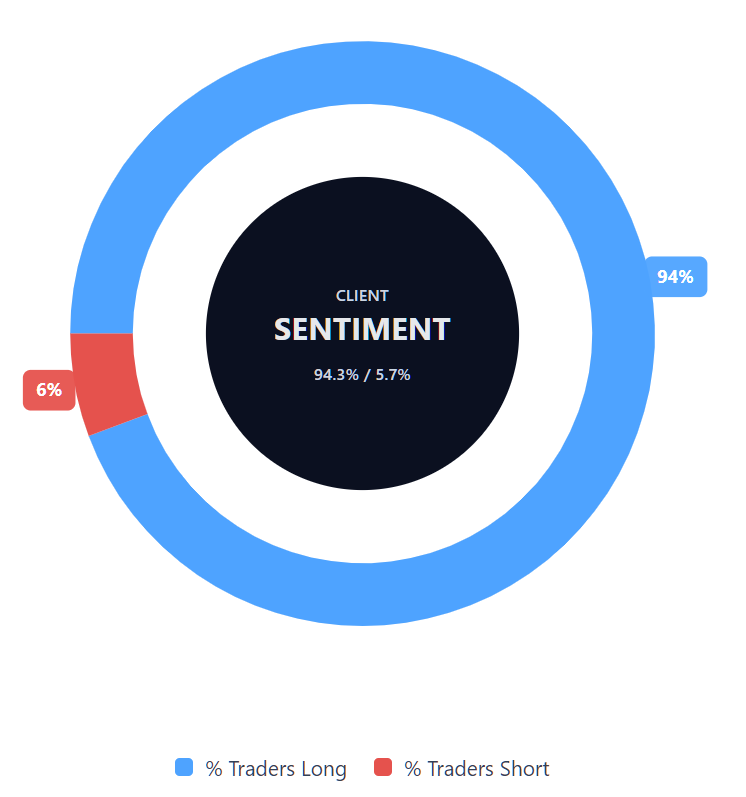
As of 3 December 2025, Capital.com client positioning in BioNTech share CFDs is currently weighted towards buyers, with 94.3% of positions long and 5.7% short, leaving buyers ahead by 88.5 percentage points. This snapshot reflects open positions on Capital.com and is subject to change.
Summary – BioNtech price 2025
- BioNTech’s US share price has traded in a broad range in 2025, moving between the low-$80s and highs above $120.
- By early December 2025, the stock is back below $100, following earlier spikes linked to company updates.
- Technical indicators remain soft, with price below key moving averages and momentum tilted lower.
- Over the past two years, BNTX has shifted between $80 and $120, highlighting recurring volatility driven by pipeline and revenue factors.
- Client positioning on Capital.com is currently skewed towards longs, with 94.3% of positions long and 5.7% short.
Past performance is not a reliable indicator of future results.
FAQ
Who owns the most BioNTech stock?
BioNTech’s largest shareholders typically include its founders, long-standing institutional investors and strategic partners, although exact holdings can shift over time as filings are updated. Public disclosures show that ownership is distributed across a mix of major asset managers, company insiders and long-term institutional holders. These positions can change as funds rebalance portfolios or respond to company developments, so checking the latest regulatory filings offers the most up-to-date picture.
What is the five-year forecast for BioNTech stock?
Five-year forecasts for BioNTech vary widely, as analysts assess different assumptions about Covid-19 revenue trends, the performance of its oncology pipeline and the level of ongoing research and development spending. Projections over longer time horizons are often uncertain, and the range of analyst views reflects this. Forecasts shouldn’t be taken as indicators of future performance and may change as new clinical data, financial results or sector developments emerge, making long-term expectations inherently tentative.
Is BioNTech a good stock to buy?
Whether BioNTech is considered a good stock to buy depends on individual objectives, risk appetite and investment strategy. Analysts currently hold a mix of views, with recent 12-month price targets ranging from around $110 to more than $170, based on differing expectations for the company’s pipeline, partnership revenues and cost base. These assessments are opinions rather than guarantees, and they can shift in response to market and company updates. None of this should be interpreted as a recommendation or endorsement.
Could BioNTech stock go up or down?
BioNTech’s share price could move in either direction, as it has historically shown notable volatility linked to earnings updates, clinical trial results, sector sentiment and broader market conditions. Recent trading has ranged between the low-$80s and above $120, illustrating how quickly prices can react to news and shifting expectations. Like all share prices, future movements can’t be predicted with certainty, and both upside and downside risks are possible, regardless of recent trends.
Should I invest in BioNTech stock?
Deciding whether to invest in BioNTech is a personal decision that depends on your financial goals, level of experience and tolerance for risk. The stock has traded in a wide range over recent years and is influenced by factors such as R&D progress, regulatory milestones and changes in demand for its Covid-19 products. While analysts review these elements to form their own price targets, none of these views guarantee future outcomes. This material is for information only and shouldn’t be treated as investment advice.
How can I trade BioNTech CFDs on Capital.com?
You can trade BioNTech share CFDs on Capital.com by opening an account, verifying your details and passing suitability checks, then accessing the market through the platform or app. Contracts for difference (CFDs) let you speculate on price movements in either direction without owning the underlying shares. However, CFDs are traded on margin, and leverage amplifies both profits and losses.