
Airbus stock forecast: Third-party price targets
Airbus is one of the world’s largest aerospace manufacturers, with its share price shaped by a mix of commercial aviation cycles, government involvement and long-term industrial strategy. Discover the latest third-party AIR stock forecasts…
Airbus (AIR) is trading around €215.03 as of 2:24pm UTC on 8 January 2026, holding near the upper end of its intraday range between €208.19 and €215.57 on Capital.com’s EUR-denominated Airbus stock CFD feed. Past performance is not a reliable indicator of future results.
The stock is moving amid continued market focus on Airbus’s commercial aircraft deliveries, after reports that the manufacturer handed over 793 aircraft in 2025 (Reuters, 5 January 2026) and plans to release its audited full-year orders and delivery data on 12 January 2026 (Reuters, 2 January 2026). Recent updates have also drawn attention to widebody activity, including STARLUX Airlines taking delivery of its first A350-1000 (AviTrader, 7 January 2026) and IndiGo receiving its first A321 XLR as part of a larger A320-family order (Aviation Week, 7 January 2026).
Airbus stock forecast 2026–2030: Third-party price targets
As of 8 January 2026, third-party Airbus stock predictions reflect a range of views on upside potential, using a mix of discounted cash flow, earnings multiples and sector-relative approaches. These targets typically reference 12-month horizons and are contingent on execution of aircraft delivery plans, supply chain conditions and broader demand for commercial aviation.
DBS Bank (equity research update)
DBS Bank maintains a target price of €240 for Airbus shares, referencing a 12-month investment horizon, and pegs this to a 25x multiple on forecast FY26 earnings per share. The bank cites expectations for continued delivery growth and the potential for higher shareholder distributions as key assumptions, while flagging risks around supply chain bottlenecks and execution (DBS Private Bank, 17 December 2026).
TipRanks / Globe and Mail (consensus snapshot)
An analyst consensus snapshot shows Airbus Group SE (US-listed shares) rated Strong Buy, with an average price target of $268.64, implying mid-single-digit percentage upside from the then current share price. The summary notes that this view reflects generally positive expectations for earnings and deliveries, set against a supportive backdrop for commercial aerospace demand (The Globe and Mail, 7 January 2026).
Simply Wall St (valuation-focused analysis)
An AIR stock forecast review from Simply Wall St derives an intrinsic value estimate of about €460.68 per share from a discounted cash flow model, comparing this with the then market price to frame perceived valuation upside. The analysis attributes this figure to projections of rising free cash flow over a long horizon as aircraft deliveries grow, while explicitly flagging uncertainties around growth rates and broader sector risks (Yahoo Finance, 14 December 2025).
Forecast International / Aerospace Global News (delivery-linked performance view)
An article summarising Forecast International’s work highlights that Airbus was estimated to have delivered 121 jets in December 2025 and may have met or exceeded its revised annual delivery goals. Rather than offering a specific equity price target, the piece frames delivery performance as supportive for the company’s financial outlook. It also notes that differing delivery tallies, including Reuters-based counts near 793 aircraft, underscore how delivery momentum and year-end surges remain closely watched inputs in many analysts’ valuation frameworks (Aerospace Global News, 6 January 2026).
Predictions and third-party forecasts are inherently uncertain, as they cannot fully account for unexpected market developments. Past performance is not a reliable indicator of future results.
AIR stock price: Technical overview
Airbus is holding above its short- and medium-term trend markers, with the 20-, 50-, 100- and 200-day simple moving averages clustered around 199, 203, 198 and 182 respectively, supporting a constructive technical backdrop while the price trades near €215.03 as of 2:24pm UTC on 8 January 2026. The 14-day RSI near 73 points to stretched momentum, while an ADX around 27 suggests an established trend rather than a range-bound phase.
On the topside, the nearest Classic pivot above the market is R1 at €205.87, with R2 at €213.35 remaining relevant on any sustained daily close above that zone. On the downside, the Classic pivot at €194.13 forms initial support, with the 100-day SMA near €198 acting as the first moving-average shelf, and S1 at €186.65 marking the next level if that area gives way (TradingView, 8 January 2026).
This technical analysis is provided for informational purposes only and does not constitute financial advice or a recommendation to buy or sell any instrument.
Airbus share price history
AIR’s stock price spent much of 2024 trading in the mid-€100s, starting the year around €144 in early January and grinding higher into the summer. Prices generally fluctuated between €130 and €170 as aviation demand recovered and the broader equity market remained risk-on. Through 2025, the stock pushed steadily higher from around €160 in January, dipping towards the mid-€130s in April before climbing again, then accelerating into the autumn and finishing the year close to €199 on 31 December as delivery updates and earnings kept the stock in focus.
In early 2026, AIR extended that upswing, moving from about €204 on 2 January to €215.52 on 8 January. This places the price modestly above the late-2025 range and reflects a strong two-year run from sub-€150 levels. Over that period, the stock has added more than €60 per share compared with early January 2024, highlighting both meaningful gains and notable price swings for medium-term holders.

Past performance is not a reliable indicator of future results. Share prices are indicative and may differ from live market prices.
Capital.com analysis: Airbus stock price outlook
The AIR stock price has climbed sharply over the past two years, moving from the mid-€100s in early 2024 to trade above €200 by late 2025 and into early 2026. This trajectory has coincided with a broader recovery in commercial aviation and relatively supportive equity market conditions, although the path has included periods of volatility and consolidation as investors responded to shifting macro data and sector-specific headlines.
Recent reporting that Airbus delivered around 793 aircraft in 2025, broadly in line with its revised target of 'around 790' jets after earlier production issues, has reinforced the focus on execution and backlog quality as key drivers of sentiment. While meeting such targets can support confidence in cash flow and earnings, it can also raise expectations, leaving the share price sensitive to any future delivery setbacks or supply chain disruptions. Looking ahead, the planned release of audited year-end commercial data on 12 January 2026, alongside ongoing commentary on order intake and margins, is likely to keep attention on how Airbus balances growth ambitions with cost pressures and programme risks. Depending on how these factors evolve, they could either underpin the shares or weigh on them if investors reassess the operational or cyclical backdrop.
Capital.com’s client sentiment for Airbus CFDs
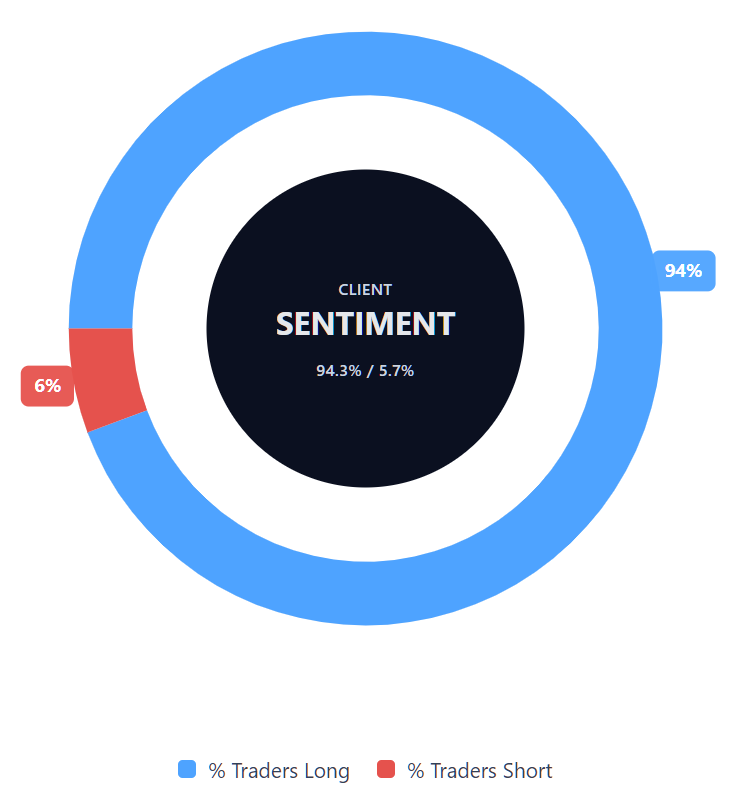
As of 8 January 2026, Capital.com client positioning in Airbus CFDs shows 94.3% buyers versus 5.7% sellers, a heavy-buy skew that places buyers ahead by about 88.6 percentage points. This one-sided positioning indicates a strong bias towards long exposure, with only a small minority holding short positions. This snapshot reflects open positions on Capital.com and can change over time.
Summary – Airbus price 2026
- Airbus traded mostly in the €130–€200 range through 2025, extending a two-year climb from sub-€150 levels in early 2024.
- The share price moved higher into year-end, closing around €199 on 31 December 2025 before trading above €200 in early January 2026.
- Technical indicators pointed to a constructive backdrop late in 2025, with the price holding above clustered medium-term moving averages and momentum measures remaining positive.
Past performance of financial instruments is not a reliable indicator of future results; projections or analyst targets are not guarantees and may change without notice.
FAQ
Who owns the most Airbus stock?
Airbus has a diversified shareholder base, with significant ownership held by institutional investors and public-sector stakeholders. Major European governments, including France, Germany and Spain, retain strategic shareholdings through state-backed entities, reflecting Airbus’s role as a key industrial group. Alongside these holdings, a large portion of the free float is owned by global asset managers, pension funds and other institutional investors, with retail investors accounting for a comparatively smaller share of overall ownership.
What is the 5-year Airbus share price forecast?
There is no single agreed five-year AIR stock forecast, as longer-term projections vary widely depending on assumptions around aircraft deliveries, supply chain stability, cost pressures and global aviation demand. Some valuation models focus on long-term cash flow growth, while others take a more cautious view based on cyclical risks and execution challenges. Any multi-year outlook is best viewed as indicative rather than predictive, as forecasts can change as new information emerges.
Is Airbus a good stock to buy?
Whether Airbus is considered a 'good' stock depends on individual objectives, risk tolerance and time horizon. The company is closely linked to the commercial aviation cycle, meaning its share price can be sensitive to delivery performance, cost management and broader economic conditions. While periods of strong execution may support investor confidence, setbacks can weigh on sentiment. This content is provided for general market context only and does not constitute investment advice.
Could Airbus stock go up or down?
Airbus stock can move both up and down, sometimes sharply, depending on a range of factors. These include aircraft delivery updates, earnings results, supply chain developments, order intake and broader market conditions. External influences such as interest rates, geopolitical events and changes in travel demand can also affect price movements. As with any equity, past performance does not guarantee future results, and price volatility remains a key risk to consider.
Should I invest in Airbus stock?
Deciding whether to invest in Airbus stock is a personal decision that depends on your financial situation, objectives and understanding of the risks involved. Airbus shares can be influenced by cyclical industry trends and company-specific execution risks, which may not suit all investors. You may wish to consider seeking independent financial advice before making any investment decision, as this content is provided for informational purposes only.
How can I trade Airbus CFDs on Capital.com?
You can trade Airbus share CFDs on Capital.com. Contracts for difference (CFDs) let you speculate on rising or falling prices without owning the underlying shares. CFDs are traded on margin – leverage amplifies both profits and losses – and involves significant risk.