
Year-end volatility appears as strong US growth meets Yen intervention risk
US growth comes in stronger than expected in the third quarter and Japan FX intervention rhetoric. ramps up.
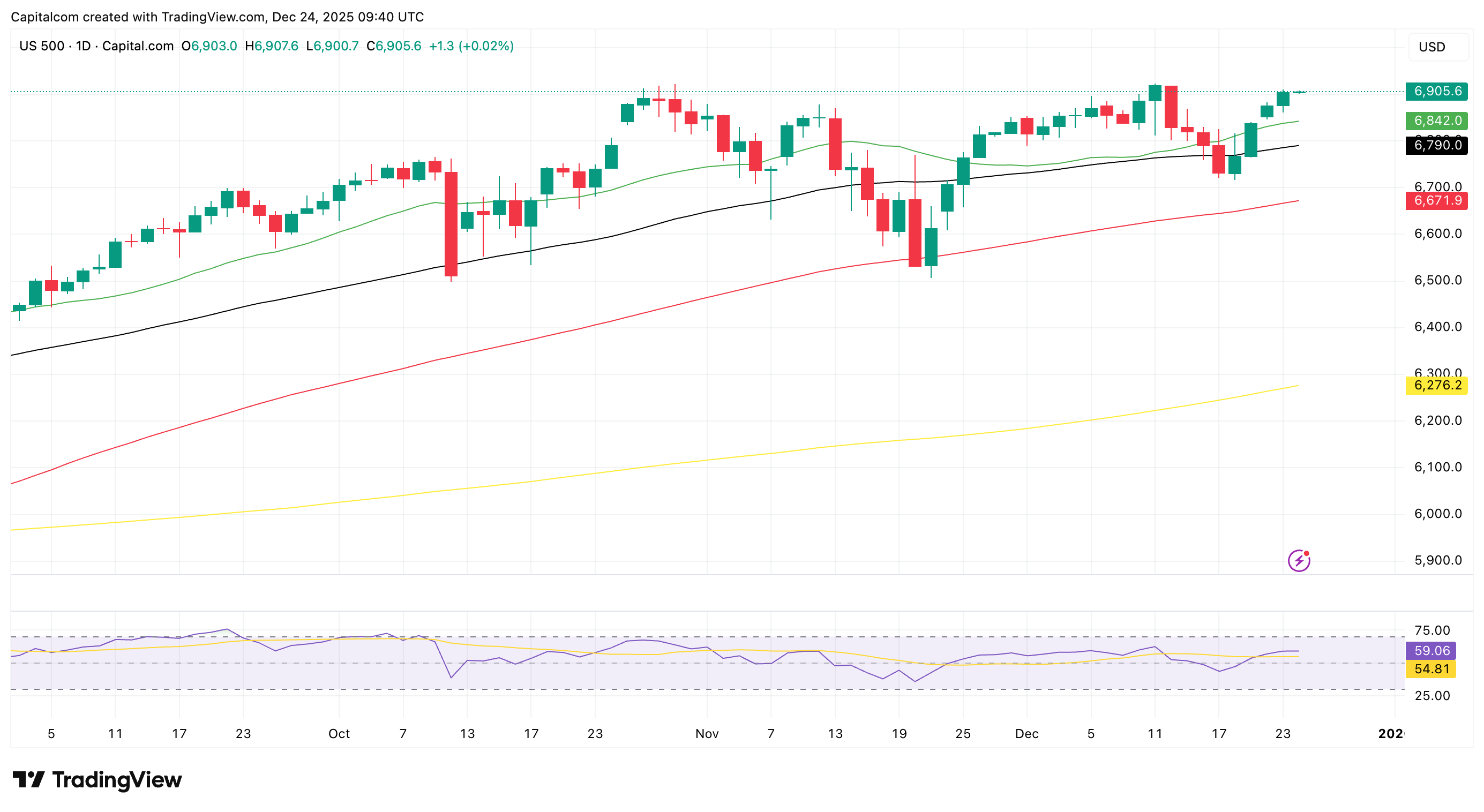
The US economy grew faster than expected in the third quarter, expanding by 4.3%, up from 3.8% in the previous quarter. The initial market reaction saw US Treasury yields push higher, the US dollar bounce from intraday lows, and equities lose some of their earlier momentum. The data is delayed because of the government shutdown as this is only the first release of Q3 when we are at the end of Q4, so markets may have dismissed some of its impact after the initial reaction.
S&P 500 daily chart
Past performance is not a reliable indicator of future results.
Still, the report reinforces the narrative of a resilient US economy, with growth driven largely by consumer spending. On one hand, this is supportive for equities, as it underpins expectations for continued earnings strength into 2026. On the other, it complicates the outlook for monetary policy. Strong growth reduces the urgency for the Federal Reserve to deliver aggressive easing, reinforcing the idea that rates may remain relatively restrictive for longer than markets had previously assumed. That dynamic is broadly supportive for the US dollar, as it helps preserve yield differentials.
For now, the data appear to have stabilised sentiment rather than derailed it. Equity markets have resumed their constructive tone and hopes of a late-stage Santa rally remain positive as long as yields stay contained and risk appetite holds.
Japan intervention warnings boost the yen ahead of CPI data
Attention has also turned to Japan, where renewed FX intervention rhetoric has driven fresh volatility in USD/JPY. The yen’s recent weakness was initially triggered by last week’s Bank of Japan rate hike to 0.75%, the highest policy rate in three decades, followed by Governor Ueda’s comments suggesting that policymakers are in no hurry to tighten further. Markets interpreted the message as dovish relative to expectations, reigniting pressure on the yen.
However, recent comments from Japanese officials have revived speculation that authorities are prepared to act if currency moves become disorderly. Japan and the US have previously reaffirmed their commitment to market-determined exchange rates, while also acknowledging that intervention is justified in cases of excessive volatility. Japanese policymakers have repeatedly cited this framework as granting them scope to step in when FX moves diverge too sharply from economic fundamentals.
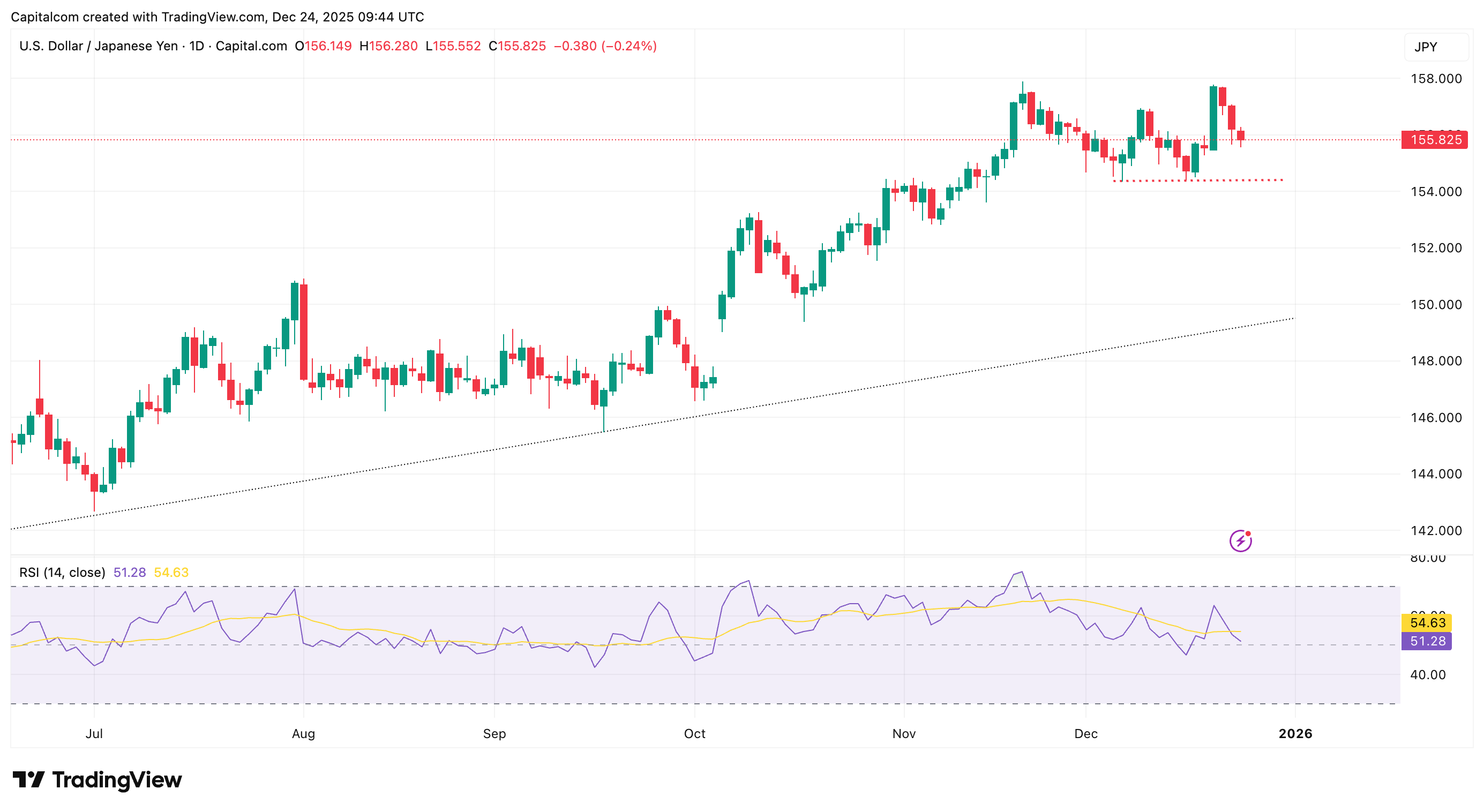
The first phase of intervention, verbal signalling, is already underway. While rhetoric does not alter underlying fundamentals, it can be highly effective when positioning is stretched, particularly during thin year-end liquidity. As a result, the current yen correction could extend over several sessions. With Tokyo CPI for December due on Thursday, USD/JPY may remain volatile, especially if the data reinforces concerns that the BoJ is lagging behind rising price pressures.
From a technical perspective, 154.40 remains a key support level for USD/JPY, while the 158 area increasingly appears to mark the authorities’ tolerance threshold. A sustained move above that zone would likely invite stronger intervention warnings, or action.
USD/JPY daily chart
Past performance is not a reliable indicator of future results.