
Saipem stock forecast: Angola offshore contract
Saipem is an Italian energy engineering group listed in Milan. On 14 September, it announced a $350m offshore contract in Angola for the West Hub Tails project. Explore third-party SPM price targets and technical analysis. Past performance is not a reliable indicator of future results.
Saipem S.p.A. (SPM) traded at €4.29 at 10:03am UTC on 16 September 2026, near the top of its €4.14–€4.29 intraday range and €0.15 above the session low. Past performance is not a reliable indicator of future results.
Recent company developments include an approximately $350m offshore contract from Azule Energy Angola for the West Hub Tails project and a letter of intent with Jan De Nul for preliminary Rovuma LNG Phase 1 work in Mozambique, initially valued at about €11m. Saipem also completed the sale of its Saudi Arabian Saipem Limited stake to ADES Saudi Limited following the required approvals (Saipem, 14 September 2026).
Third-party Saipem outlook: $350m Angola contract
As of 16 September 2026, third-party Saipem stock predictions reflect different assumptions around contract execution, the pending Subsea7 merger and oil prices. These are third-party valuation estimates rather than expected outcomes.
Teleborsa (broker rating)
Teleborsa reports that Intermonte maintained an Outperform rating with a €5 target. The broker reviewed the stock following a series of contract announcements across the Middle East and North Africa (Teleborsa, 25 August 2026).
Alliance News (monthly market wrap)
Alliance News reported an average target of €4.94 across 18 analysts, with an Outperform mean rating. It linked Saipem’s 9.7% monthly gain with higher oil prices and a roughly $1.8bn offshore EPCI contract in the Middle East (MarketScreener, 31 August 2026).
MarketScreener (consensus snapshot)
MarketScreener reports an average 12-month target of €4.94, with estimates ranging from €3.40–€6 across 18 analysts. The average stood about 14.5% above the cited €4.31 closing-price reference, while the European Commission had paused its Saipem-Subsea7 merger review under a stop-the-clock mechanism (MarketScreener, 11 September 2026).
Simply Wall St (fair value narrative)
Simply Wall St’s most-followed narrative puts Saipem’s fair value at about €5.99 and described the shares as trading around 31% below that estimate. The valuation assumes stronger order intake and higher EBITDA margins, linked to a reported €53bn pipeline of offshore and energy-infrastructure tenders (Simply Wall St, 15 September 2026).
Investing.com (consensus overview)
Investing.com reports an average 12-month target of €4.94. Of the analysts tracked by the platform, 13 carried Buy recommendations and one a Sell, resulting in an overall Buy classification (Investing.com, 16 September 2026).
Predictions and third-party forecasts are inherently uncertain, as they cannot fully account for unexpected market developments. Past performance is not a reliable indicator of future results.
Saipem earnings: latest results and next reporting date
Saipem reported its latest results on 27 July, covering the second quarter and first half of 2026. H1 revenue reached €7.35bn, up 1.9% year on year, while Q2 revenue of €3.8bn increased 8% quarter on quarter and 3.4% year on year (Saipem,27 July 2026).
Adjusted EBITDA reached €836m, equivalent to an 11.4% margin and up 9.4% year on year, after €70m of additional costs linked to conflict-related disruption in the Middle East. Excluding these costs, the adjusted EBITDA margin would have been 12.3%. Adjusted net result was €131m, while net result stood at €96m after €35m in redundancy charges.
Operating cash flow was €841m, broadly in line with the prior year, while net cash on a pre-IFRS 16 basis stood at €1.08bn at 30 June. Second-quarter book-to-bill was 1.1x and backlog reached €29.86bn.
Saipem’s board is scheduled to meet on 27 October 2026 to approve third-quarter results (Saipem, 9 January 2026).
SPM stock price: technical overview
The SPM stock price traded at €4.29 at 10:03am UTC on 16 September 2026, below its 20-, 50- and 100-day simple moving averages near €4.40, €4.36 and €4.40 respectively, but above the 200-day average near €3.80. The price also remained above the 100-day exponential moving average near €4.25.
The 14-day relative strength index stood at 44.2, below the neutral midpoint but above the conventional oversold threshold of 30. The average directional index was 16.2, below the 25 level often associated with an established trend.
Higher technical references included the €4.36–€4.40 moving-average area, the central pivot at €4.44 and R1 at €4.77. Camarilla and Fibonacci R1 levels also sat around €4.62–€4.65.
Below the quoted price, S1 at €4.23 and the 100-day exponential moving average near €4.25 provided nearby references. S2 at €3.90 and the 200-day simple moving average near €3.80 sat further below. Stochastic %K stood at 18.8 and the commodity channel index at −100.5 (TradingView, 16 September 2026).
These levels and indicators provide technical reference points rather than indications of future price direction.
This is technical analysis for informational purposes only and does not constitute financial advice or a recommendation to buy or sell any instrument.
Saipem share price history (2024–2026)
SPM’s stock price traded around €1.95 on 17 September 2024 before moving higher over the following two years.
The shares started 2025 near €2.66 and traded mainly between €1.85–€2.60 during much of the year, briefly falling to around €1.60 in April. They later recovered and ended 2025 near €2.42 before moving above €2.60 in January 2026.
After trading around €3.94 in late April 2026, Saipem rose to an intraday high near €4.85 on 16 June. The shares then eased before recovering through parts of July and August alongside further offshore contract announcements.
As of 10:03am UTC on 16 September 2026, Saipem traded near €4.29, around 11.5% below the June intraday high but still substantially above its September 2024 level.
Past performance is not a reliable indicator of future results. Share prices are indicative and may differ from live market prices.
Saipem (SPM): Capital.com analyst view
Saipem’s shares have moved considerably over the past two years, rising from around €1.95 in September 2024 to €4.29 by 16 September 2026. The period has included offshore contract wins across several markets alongside progress towards the proposed Subsea7 merger.
Further contract wins, stronger energy-sector investment or progress on the merger could support revenue and earnings expectations. Project delays, weaker energy investment or uncertainty around the merger review could weigh on them instead.
Oil prices may also influence expectations for offshore spending. Higher prices could encourage investment by energy producers and support demand for Saipem’s services, while weaker prices could reduce spending appetite. However, oil prices are only one influence and do not necessarily translate directly into Saipem’s share price.
Geopolitical conditions can work in both directions. New energy-infrastructure requirements may create project opportunities, while disruption can raise costs or delay execution. Saipem reported €70m of additional first-half costs linked to conflict-related disruption in the Middle East.
Capital.com’s client sentiment for Saipem CFDs
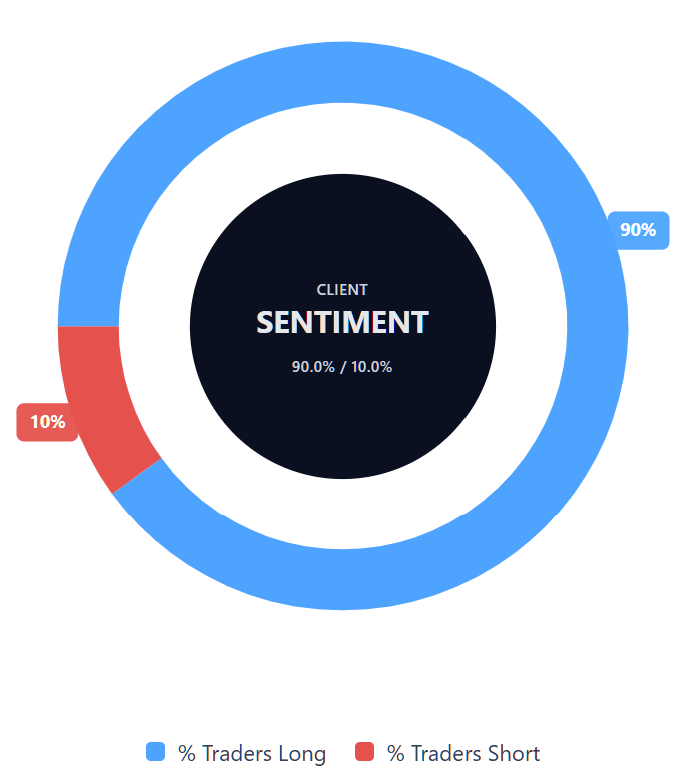
As of 16 September 2026, Capital.com client positioning in Saipem CFDs shows 90% buyers and 10% sellers, a difference of 80 percentage points. This reflects open positions as of 16 September 2026, can change and does not indicate future price direction.
Summary – Saipem 2026
- As of 10:03am UTC on 16 September 2026, Saipem traded near €4.29 within an intraday range of €4.14–€4.29.
- Technical readings placed the stock below its 20-, 50- and 100-day moving averages but above the 200-day average, with RSI near 44.2 and ADX at 16.2.
- Key influences include offshore contract wins, the pending Subsea7 merger review, oil prices and energy-sector investment.
- Additional contracts, stronger energy spending or merger progress could support expectations, while execution issues, weaker oil prices or regulatory delays could weigh on them.
- Recent developments include a $350m Angola offshore contract, a Mozambique LNG letter of intent and completion of the Saudi Arabian stake sale.
Past performance is not a reliable indicator of future results.
FAQ
Who owns the most Saipem stock?
What is the five-year Saipem share price forecast?
Is Saipem a good stock to buy?
Could Saipem stock go up or down?
Should I invest in Saipem stock?
Can I trade Saipem CFDs on Capital.com?
Yes, you can trade Saipem CFDs on Capital.com. Trading share CFDs lets you speculate on price movements without owning the underlying asset and to take long or short positions. However, contracts for difference (CFDs) are traded on margin, and leverage amplifies both profits and losses. You should ensure you understand how CFD trading works, assess your risk tolerance, and recognise that losses can occur quickly.