

Michael Kramer: How the Options Market Prices Earnings Uncertainty
Investors tend to have differing opinions about what a company’s results are likely to be heading into an earnings announcement.
Investors tend to have differing opinions about what a company’s results are likely to be heading into an earnings announcement. Because of these differing expectations and the uncertainty surrounding earnings outcomes, option prices typically reflect the market’s assessment of that uncertainty.
Typically, in the days leading up to a company’s earnings report, option premiums often rise as implied volatility increases. At the same time, open interest may change as traders establish, adjust or close positions ahead of the announcement. When pricing options ahead of earnings, market participants often consider how much a stock has historically moved following prior earnings announcements, as well as current market conditions and implied volatility.
The Expected Move
(Source: Michael Kramer, Mott Capital Management)
(Past performance is not a reliable indicator of future results)
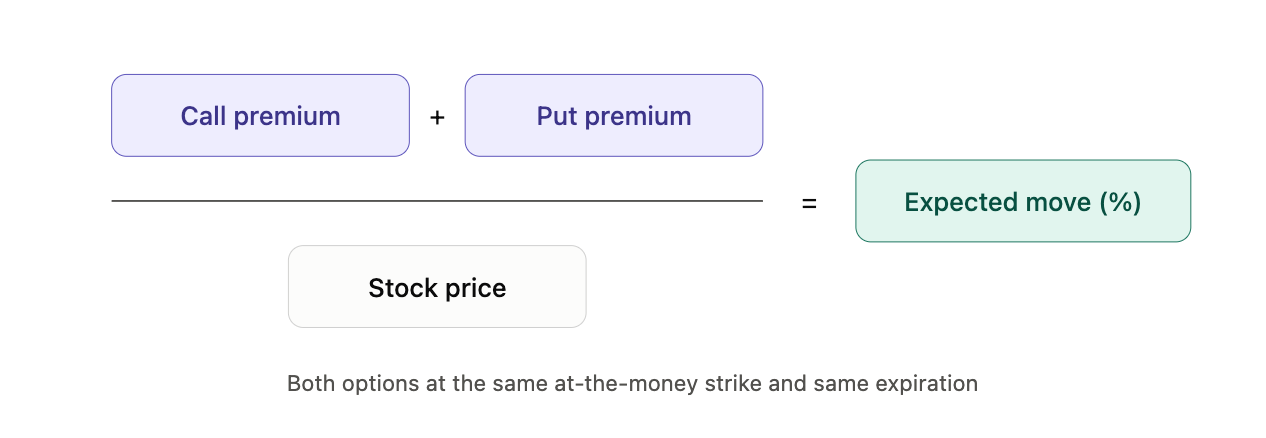
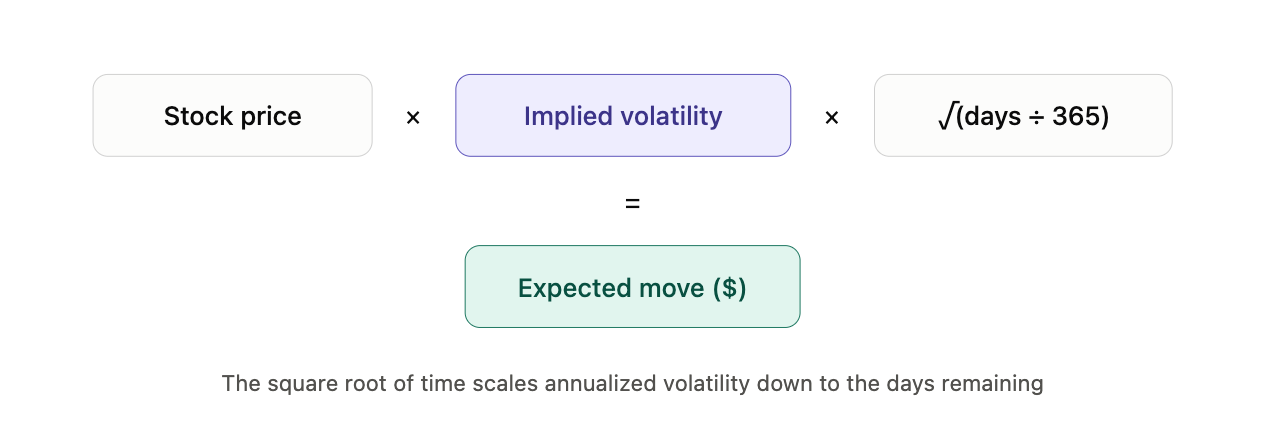
The expected move can be estimated in two ways, with an easy approach using a long straddle, which involves buying a put and a call at the same strike price and same expiration date. Adding the call premium and put premium of an at-the-money straddle, then dividing the total by the underlying share price, provides a commonly used estimate of the expected move. Another method is to take the stock price, multiply it by the implied volatility, and then take the square root of the number of days until expiration divided by 365. The higher the expected move, the more expensive the option premiums and the greater the risk being taken.
(Source: Michael Kramer, Mott Capital Management)
(Past performance is not a reliable indicator of future results)
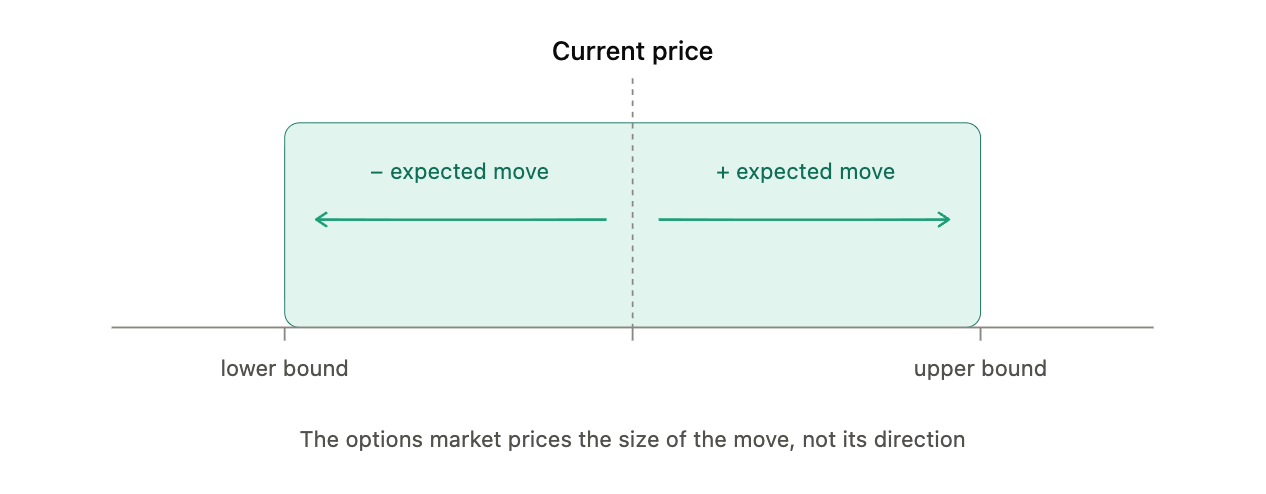
Hypothetically, if there were a stock with an expected 10% post-earnings move, and it was currently trading around $100, it would imply a potential trading range of between $90 and $110.
(Source: Michael Kramer, Mott Capital Management)
(Past performance is not a reliable indicator of future results)
Implied Volatility
Option premiums incorporate implied volatility, and those premiums are commonly used to estimate the expected move. Implied volatility is a measure of the expected future price movement implied by option prices.
Higher implied volatility generally corresponds with higher option premiums, reflecting greater uncertainty being priced into the options market. The higher implied volatility, the more expensive options are, creating a bigger post-earnings expected move, while lower implied volatility is associated with lower option premiums and smaller post-earnings expected moves.
Once a company reports its results and much of the event-related uncertainty has passed, implied volatility falls sharply, which means option premiums reprice lower as well, sometimes regardless of the direction the underlying shares take.
Open Interest
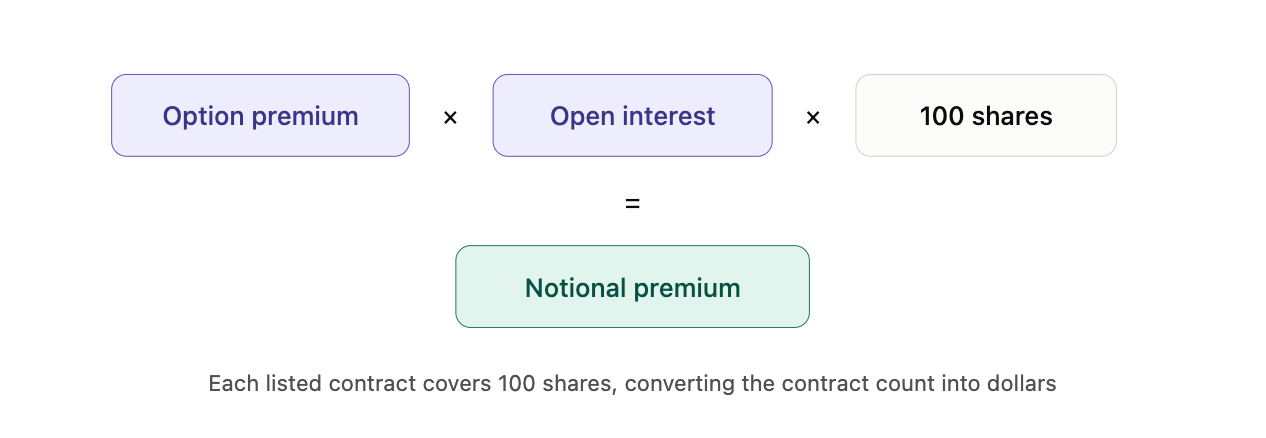
Open interest is the total number of outstanding option contracts for a given strike price and expiration date. Traders often review open interest alongside implied volatility and expected move when assessing activity ahead of an earnings announcement. Open interest is published for both calls and puts and changes as new positions are opened or existing positions are closed. Open interest can show where large concentrations of call and put positions exist. Multiplying the option premium by the number of open contracts and then by 100 provides an estimate of the notional premium at each strike. This may differ from the impression one might get from looking at open interest alone.
(Source: Michael Kramer, Mott Capital Management)
(Past performance is not a reliable indicator of future results)
However, once a company reports its results and that uncertainty is removed, implied volatility typically falls, reducing option premiums and, in turn, the notional premium value of outstanding positions.
The expected move, implied volatility, and open interest are three of the key metrics traders monitor ahead of an earnings announcement. Together, they provide a snapshot of how the options market is pricing risk and uncertainty before the event. While none of these measures predicts the direction of a post-earnings move, together they provide insight into how the options market is pricing the potential magnitude of that move and how option premiums may change before and after an earnings announcement.