

BNB price prediction: Binance breach, withdrawals resume
Explore third-party BNB price targets and technical analysis. Bhutan has authorised its planned Gelephu Central Bank to invest in cryptocurrencies, with BNB named in earlier reserve plans. Past performance is not a reliable indicator of future results.
Binance Coin (BNB/USD) last traded at $698.62 as of 9:03am UTC on 4 November 2026, within an intraday range of $683.57–$703.39. Past performance is not a reliable indicator of future results.
BNB’s recent price moves follow the $6.3bn Binance security breach, which the FBI attributed to North Korea's TraderTraitor group, preceded the exchange's resumption of withdrawals on 1 November. Meanwhile, Bhutan authorised the planned Gelephu Central Bank to invest in cryptocurrencies, following earlier plans to include BNB among the region's strategic reserve assets. No BNB purchases have been confirmed (Reuters, 3 November 2026; Bhutan Broadcasting Service, 2 November 2026; The Block, 8 January 2025).
Third-party BNB outlook: 2026–2030
As of 2 November 2026, third-party BNB price predictions include algorithmic estimates, scenario ranges and conditional outlooks. They use different methodologies and assumptions rather than representing a broker consensus or investment recommendations.
BNB price prediction 2026
- CoinLore estimates BNB at $586.92 by the end of 2026, with bearish and bullish scenarios of $527.22 and $1,837 respectively (CoinLore, 3 November 2026).
- CoinDataFlow forecasts BNB between $502.50 and $765.05 for 2026 (CoinDataFlow, 4 November 2026).
- CoinStats projects a 2026 range of $620–$1,020, with an average price of $820 (CoinStats, 19 October 2026).
- CryptoTicker forecasts BNB between $410.81 and $879.44 for 2026, with an average price of $615.35 (CryptoTicker, accessed 4 November 2026).
BNB price prediction 2027
- CoinLore projects a 2027 trading range of $472.74–$2,103, with a base-case estimate of $651.81 (CoinLore, 3 November 2026).
- CoinDataFlow forecasts BNB between $483.74 and $1,270.80 for 2027, with an average price of $877.27 (CoinDataFlow, 4 November 2026).
- CoinStats projects BNB between $700 and $1,450 for 2027, with an average price of $1,050 (CoinStats, 19 October 2026).
- CryptoTicker forecasts BNB between $308.10 and $1,363.10 for 2027, with an average price of $707.65 (CryptoTicker, accessed 4 November 2026).
BNB price prediction 2030
- CoinLore forecasts a 2030 range of $957.10–$4,522, with a base-case estimate of $1,080 (CoinLore, 3 November 2026).
- CoinDataFlow projects BNB between $1,630.98 and $4,715.65 for 2030, with an average price of $3,173.31 (CoinDataFlow, 4 November 2026).
- CoinStats projects BNB between $1,000 and $2,700 for 2030, with an average price of $1,800 (CoinStats, 19 October 2026).
- CryptoTicker forecasts BNB between $146.66 and $3,468.80 for 2030, with an average price of $915.41 (CryptoTicker, accessed 4 November 2026).
BNB technical analysis
The BNB/USD price traded at $698.62 as of 9:03am UTC on 4 November 2026, below its 20-, 50- and 100-day simple moving averages (SMAs), at approximately $724, $747 and $703 respectively, but above the 200-day SMA near $656.
The 14-day relative strength index (RSI) stood at 39.74, indicating subdued momentum without reaching oversold territory. The 14-day average directional index (ADX) at 28.18 suggested an established trend without indicating its direction. The fast stochastic RSI at 11.61 was near the lower end of its range, while Williams %R at −74.50 approached the conventional oversold threshold of −80.
On the upside, the 100-day SMA near $703 provides an initial resistance reference, followed by the classic pivot at $731. A daily close above the pivot could bring R1 at $782 into view, followed by R2 at $861.
On the downside, the 200-day SMA near $656 provides potential support, with the classic S1 level at $652 just below. The nine-period Hull moving average stood near $695, close to the quoted price. A break below the 200-day average could bring S1 into focus, although technical indicators cannot reliably predict future price movements (TradingView, 2 November 2026).
This is technical analysis for informational purposes only and does not constitute financial advice or a recommendation to buy or sell any instrument.
Binance Coin price history (2024–2026)
BNB/USD’s price began November 2024 near $570, rose to around $796 on 4 December and closed the year at $702.53.
BNB experienced further volatility in 2025, including a sharp decline during the 10 October market sell-off. It subsequently reached a peak near $1,379 on 13 October before retreating towards year-end.
The token opened 2026 near $865 and fell to around $538 on 1 July, before recovering towards $811 in early October. The recovery then faded as wider cryptocurrency markets weakened.
On 29 October, BNB closed near $699, down from approximately $760 the previous day, as news of Binance's $6.3bn security breach emerged. The token closed at $699.07 on 3 November, around 19.2% below its opening level for 2026 and approximately 23% above its price in early November 2024.

Past performance is not a reliable indicator of future results. Prices are indicative and may differ from live market prices.
Latest BNB news and market developments
Binance after $6.3bn breach
Binance resumed withdrawals in phases on 1 November following its $6.3bn security breach, which the FBI attributed to North Korea's TraderTraitor group. During the first nine and a half hours, the exchange processed approximately $4.65bn in withdrawals against $1.01bn in deposits, equivalent to $3.64bn in net outflows, or around 2.1% of its assets (Reuters, 2 November 2026).
By 3 November, Binance said it had replenished 95% of affected tokens, with hourly inflows and outflows largely returning to normal. The exchange had also published an updated proof-of-reserves snapshot on 31 October (Reuters, 3 November 2026).
Bhutan Financial Services Office considers BNB
A royal decree announced on 2 November granted Bhutan's Gelephu Financial Services Office central banking powers, paving the way for its transition into the Gelephu Central Bank. The institution will be authorised to invest in cryptocurrencies alongside conventional reserve assets.
Gelephu Mindfulness City previously identified Bitcoin, Ether and BNB as potential strategic reserve assets, although no BNB allocations have been confirmed (Bhutan Broadcasting Service, 3 November 2026; The Block, 8 January 2025).
37th quarterly BNB burn
BNB Chain completed its 37th quarterly token burn on 19 October, removing 1,646,196.44 BNB worth approximately $1.197bn from circulation and reducing total supply to 131,512,085 BNB (BNB Chain, 19 October 2026).
Capital.com analyst view: Binance Coin
Exchange-related developments, including the Binance security breach and subsequent withdrawal activity, could affect sentiment towards BNB. Security concerns, regulatory changes and further disruption may weigh on demand, while improvements in exchange operations could ease some uncertainty. However, their effect on BNB's price is difficult to establish.
BNB Chain's quarterly token burns reduce supply, although their effect on price depends on demand. Greater network adoption and transaction activity could increase demand for BNB, while competition, regulatory restrictions and weaker cryptocurrency markets could weigh on its value. Bhutan's decision to authorise cryptocurrency investments through Gelephu's planned central bank introduces a potential institutional use case, although no BNB allocation has been confirmed.
Capital.com’s client sentiment for Binance Coin CFDs
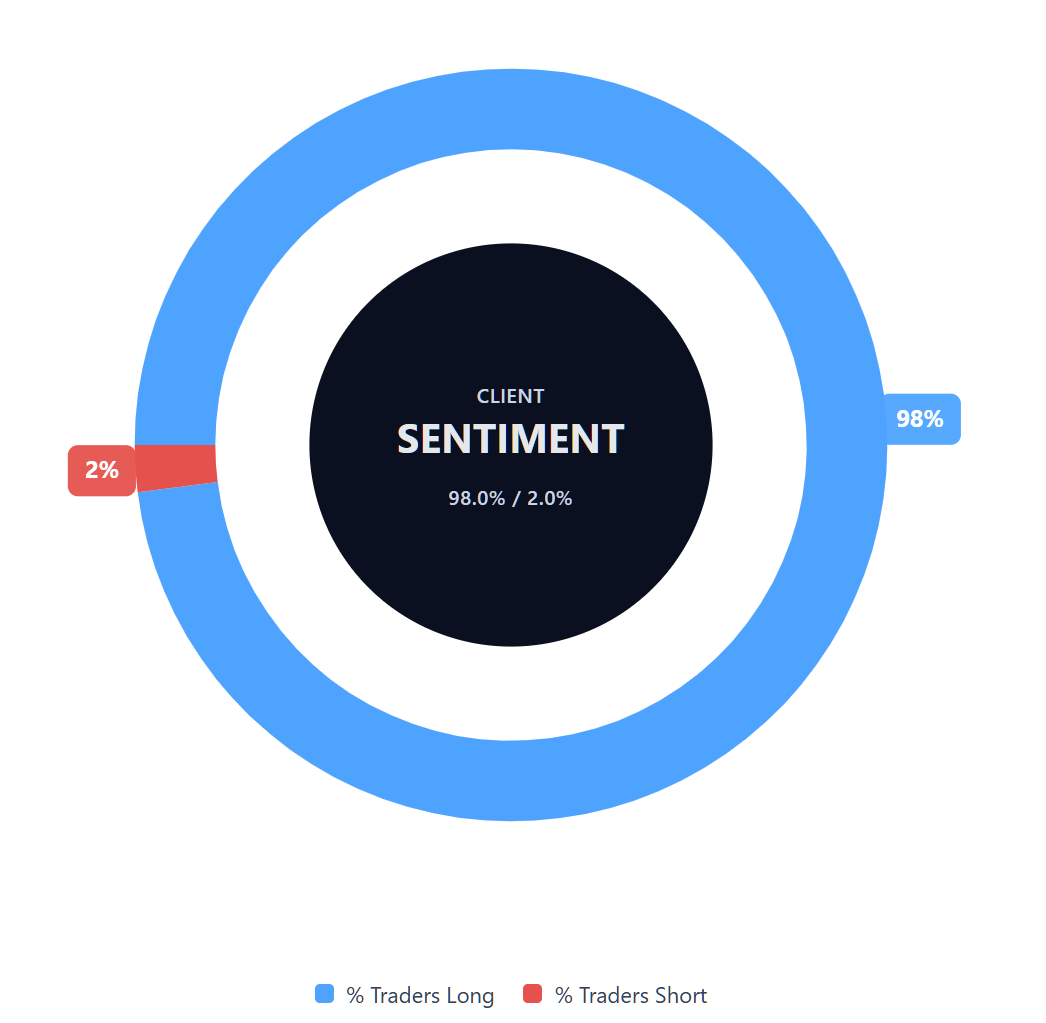
As of 2 November 2026, Capital.com client positioning in Binance Coin CFDs shows 98% buyers and 2% sellers, a difference of 96 percentage points. This snapshot reflects open positions on Capital.com and can change. It does not indicate future price direction.
Summary – Binance Coin (2026)
- Binance Coin traded at $698.62 as of 9:03am UTC on 4 November 2026, within an intraday range of $683.57–$703.39.
- According to TradingView data, the 14-day RSI stood at 39.74, indicating subdued momentum, while the ADX at 28.18 suggested an established trend without specifying its direction.
- Potential price influences include the Binance security breach, withdrawal activity, BNB token burns, Bhutan's cryptocurrency reserve plans and broader market conditions.
- Recent news includes $3.64bn in initial net outflows following Binance's withdrawal resumption and new central banking powers for Gelephu, although no BNB reserve purchases have been confirmed.
Past performance is not a reliable indicator of future results.