

BASF stock forecast: Third-party price targets
BASF SE is one of Europe’s largest chemicals groups, with operations spanning basic chemicals, materials, industrial solutions and agricultural products. Explore BAS’s recent price action, third-party price targets and technical analysis.
BASF SE (BAS) is trading around €44.89 in intraday European dealing on 12 January 2026, moving within a session range of €44.44–€45.15 on Capital.com’s CFD feed as of 4:53pm UTC. Past performance is not a reliable indicator of future results.
Recent BASF updates show Q3 2025 income from operations (EBIT) of €232 million and net income attributable to shareholders of €172 million, with management highlighting subdued volumes and pricing in several basic chemicals and agricultural segments (BASF, 29 October 2025).
BASF stock forecast 2026–2030: Third-party price targets
As of 12 January 2026, third-party BASF stock predictions reflect a range of views on European chemicals demand, energy costs and potential earnings recovery into 2026. Across recent updates, external sources report 12-month targets clustered in the mid-€40s to low-€50s, with differences largely driven by varying assumptions on margins, volumes and cost pressures.
Investing.com (consensus snapshot)
Investing.com cites a 12-month average BAS stock forecast of about €48.1, with individual analyst estimates ranging from roughly €38 at the lower end to €60 at the upper end. The platform reports a 'Buy' consensus rating, reflecting a balance between cyclical earnings sensitivity and the potential for gradual margin improvement across chemicals and agricultural solutions (Investing.com, 12 January 2026).
Fintel (aggregated target data)
Fintel reports an average one-year BAS stock forecast of approximately €49.6, with price targets spanning from €38.4 to €63 in its latest compiled dataset. This spread highlights the degree of uncertainty around volume growth and pricing power across BASF’s core divisions (Fintel, 12 January 2026).
Warburg Research (broker update)
Warburg Research upgraded BASF from Hold to Buy and raised its price target from €43 to €53 per share. The broker cited expectations for improved profitability in the 2026 fiscal year as cost savings progress and demand assumptions are revised, while continuing to flag macroeconomic and energy-price uncertainties affecting European chemicals (MarketScreener, 8 January 2026).
Predictions and third-party forecasts are inherently uncertain, as they cannot fully account for unexpected market developments. Past performance is not a reliable indicator of future results.
BAS stock price: Technical overview
The BAS stock price is around €44.89 as of 4:53pm UTC on 12 January 2026, with price holding just above a tight cluster of daily simple moving averages, where the 20-, 50-, 100- and 200-day SMAs sit around 44.2, 43.8, 43.9 and 43.6 respectively. The 20-day average remains above the 50-day, suggesting short-term support, while the 14-day RSI at about 55.6 sits in the upper-neutral range. The ADX near 9.0 points to a weak and largely non-directional trend environment.
On the upside, the nearest Classic Pivot resistance is R1 around 46.2, with R2 near 47.9 coming into view if prices were to record a sustained daily close above the first resistance level. On the downside, initial support is marked by the Classic Pivot near 44.4, followed by the 100-day SMA close to 43.9, while a move towards S1 around 42.7 would open the lower end of the recent trading range (TradingView, 12 January 2026).
This technical analysis is provided for informational purposes only and does not constitute financial advice or a recommendation to buy or sell any instrument.
BASF share price history (2024–2026)
BAS’s stock price spent much of 2024 trading in the mid-€40s to low-€50s, with the share reaching highs near €55 in early April before easing back towards the high-€40s by year-end. Through 2025, price action became more volatile: BASF began January near €42–€43, rallied to peaks above €53–€54 in March, and then gradually drifted lower into the mid-€40s by late summer. The share finished December 2025 at €44.61. On 12 January 2026, BASF SE closed at €44.89, placing it modestly above early-2025 levels but below the highs recorded during the first half of that year.

Past performance is not a reliable indicator of future results. Share prices are indicative and may differ from live market prices.
BASF (BAS): Capital.com analyst view
BASF’s share price over the past two years has reflected a combination of cyclical market swings and company-specific developments, with the stock moving between the low-€40s and mid-€50s before settling back into the mid-€40s heading into January 2026. Recent quarterly updates have shown earnings under pressure from weaker pricing and currency effects across several chemicals businesses, partly offset by relative resilience in segments such as Agricultural Solutions and Surface Technologies, which has at times helped to stabilise sentiment.
From a driver perspective, BASF’s revised 2025 guidance and commentary on cost savings, gas supply diversification and portfolio reshaping remain key reference points. These measures could support profitability if executed as planned, but may also weigh on the share price if end-market demand, tariffs or energy costs evolve less favourably than expected. Broader trends in the global chemicals industry and macroeconomic conditions also remain influential, with management noting slightly higher expected growth in global chemical production alongside continued softness in Europe and Germany, which could limit upside even as international exposure provides some diversification.
Capital.com’s client sentiment for BASF CFDs
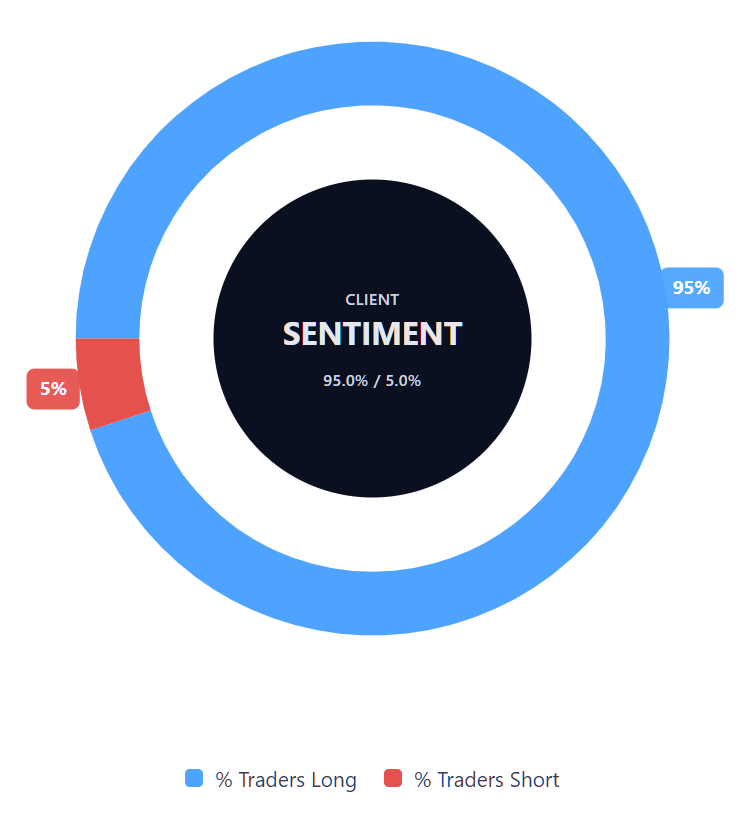
As of 12 January 2026, Capital.com client positioning in BASF CFDs shows 95% buyers versus 5% sellers, representing a one-sided skew towards long positions and a 90 percentage-point difference. This snapshot reflects open BASF share CFD positions on Capital.com and can change over time as positions are opened, reduced or closed.
Summary – BASF stock price
- BASF SE traded mainly in the low- to mid-€40s during 2025, after starting the year near €42–€43 and briefly moving into the low-€50s in March before easing back.
- Price ranges narrowed into the mid-€40s toward year-end, with the share closing at €44.61 on 30 December 2025 and trading around €44–€45 in early January 2026.
- Technical indicators into January 2026 show the share hovering just above key daily moving averages near €44, while a 14-day RSI around 55 points to neutral to mildly positive momentum.
Past performance is not a reliable indicator of future results.
FAQ
Who owns the most BASF stock?
BASF SE has a widely distributed shareholder base, with ownership spread across institutional investors, asset managers and retail shareholders. Large global investment funds and pension managers hold meaningful stakes, while BASF also has a long-standing retail shareholder presence in Germany. No single shareholder is reported to hold a controlling interest, meaning the share price tends to be influenced more by broader market sentiment, sector trends and company performance than by individual ownership decisions.
What is the five-year BASF share price forecast?
There is no single agreed five-year forecast for BASF’s share price, as long-term projections depend on assumptions around global chemicals demand, energy costs, regulation and the execution of cost-saving measures. Analyst estimates typically focus on shorter, 12-month horizons, while longer-term views are generally indicative rather than predictive. Over extended periods, BASF’s share price has tended to move in cycles, reflecting both macroeconomic conditions and shifts in earnings expectations.
Is BASF a good stock to buy?
Whether BASF is a suitable stock depends on individual objectives, risk tolerance and time horizon. Analysts assess BASF by weighing its global scale, diversified operations and restructuring efforts against exposure to cyclical demand, energy prices and regulatory pressures. Share price targets and ratings vary, reflecting differing assumptions rather than a shared outlook. Any decision should consider both potential opportunities and the risk of losses, particularly given the volatility often seen in the chemicals sector.
Could BASF stock go up or down?
BASF’s share price can move higher or lower in response to a range of factors, including earnings updates, changes in energy costs, shifts in global demand and broader market conditions. External influences such as tariffs, currency movements and macroeconomic data may also affect performance. As with all listed shares, price movements are uncertain and may diverge from expectations, meaning outcomes can differ materially from forecasts over both short and longer timeframes.
Should I invest in BASF stock?
This page does not provide investment advice. Investing in BASF shares involves exposure to market risk, company-specific developments and sector-wide trends. Investors typically consider factors such as financial performance, balance sheet strength, dividends, valuation and macroeconomic conditions before making decisions. It may also be important to account for diversification and the potential for capital loss, particularly when investing in cyclical industries such as chemicals.
How can I trade BASF CFDs on Capital.com?
Yes, you can trade BASF CFDs on Capital.com. Trading share CFDs lets you speculate on price movements without owning the underlying asset and to take long or short positions. However, contracts for difference (CFDs) are traded on margin, and leverage amplifies both profits and losses. You should ensure you understand how CFD trading works, assess your risk tolerance, and recognise that losses can occur quickly.