

RBA tipped to hold rates steady as policy reaches possible inflection point
The RBA all but certain to keep policy unchanged as markets price in future rate hikes
The RBA is tipped to keep policy unchanged when it meets for the final time for the year on the 9th of December, 2025.
Rising inflation forces the RBA’s hand as markets price in hikes
The RBA is expected to keep the cash rate unchanged at 3.60%. The move comes off the back of inflation data that points to above target and accelerating price pressures in the Australian economy. The last official quarterly CPI data, released at the end of October, revealed both headline and underlying inflation rose above the central bank’s 2 - 3% target band in the September quarter. Meanwhile, the first official monthly CPI data, which launched in November, revealed annual inflation surged to 3.8% in October, with the RBA’s preferred trimmed mean figure edging higher to 3.3%.
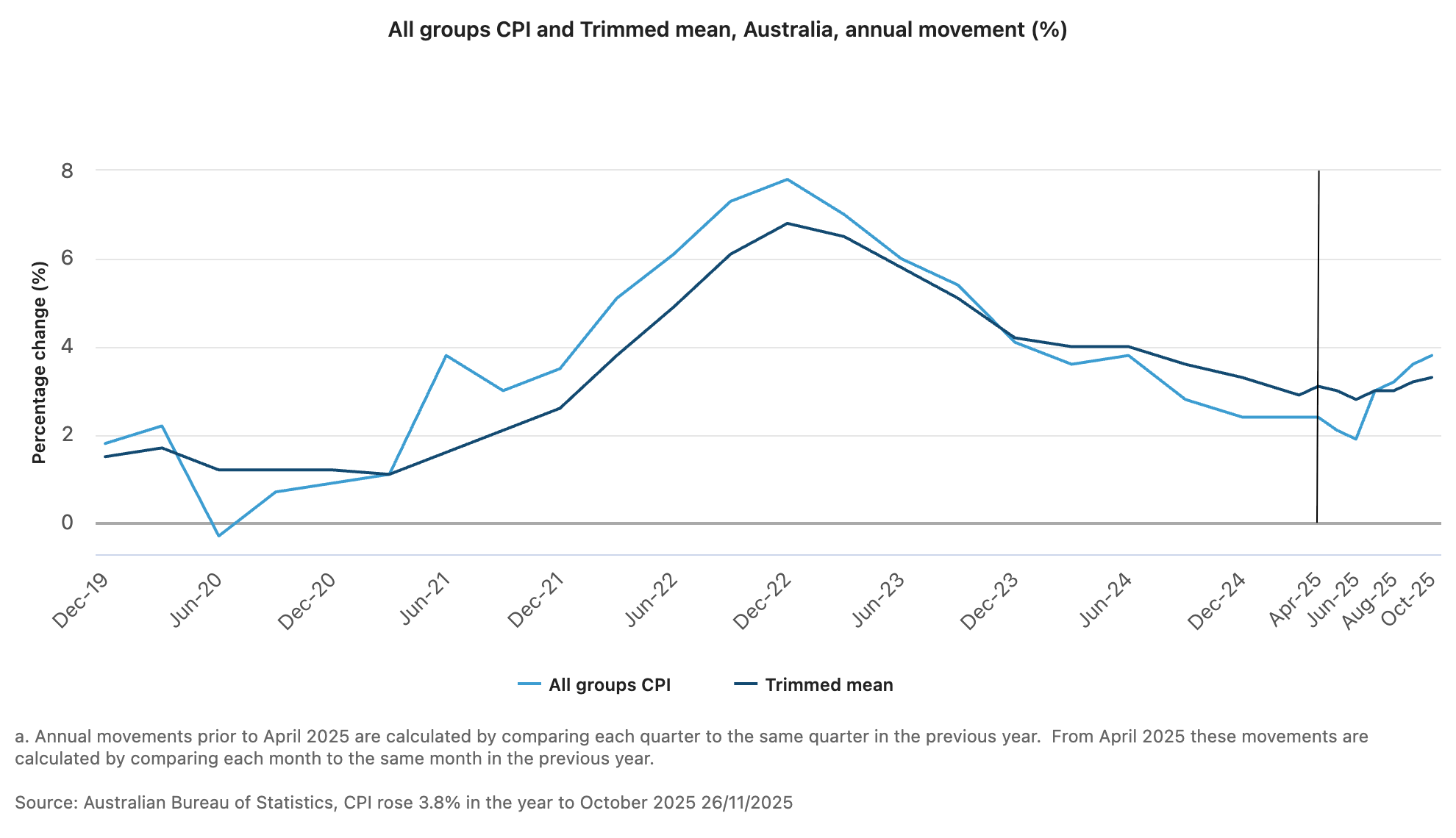
(Source: ABS)
The lift in inflation exceeds the rise that the RBA had projected in its updated Statement on Monetary Policy in November. In those forecasts, the RBA estimated that the re-acceleration in price pressures would push trimmed mean inflation above target until the end of 2026 and headline inflation above target until the middle of 2027. The dynamic has seen the markets turn 180-degrees on policy expectations, pricing-out any further rate cuts from the central bank and discounting that its next move could be a rate hike. Potentially implying that some of the recent easing may have been a policy error, the markets are pricing-in the chance of two rate hikes in the next 18 months.
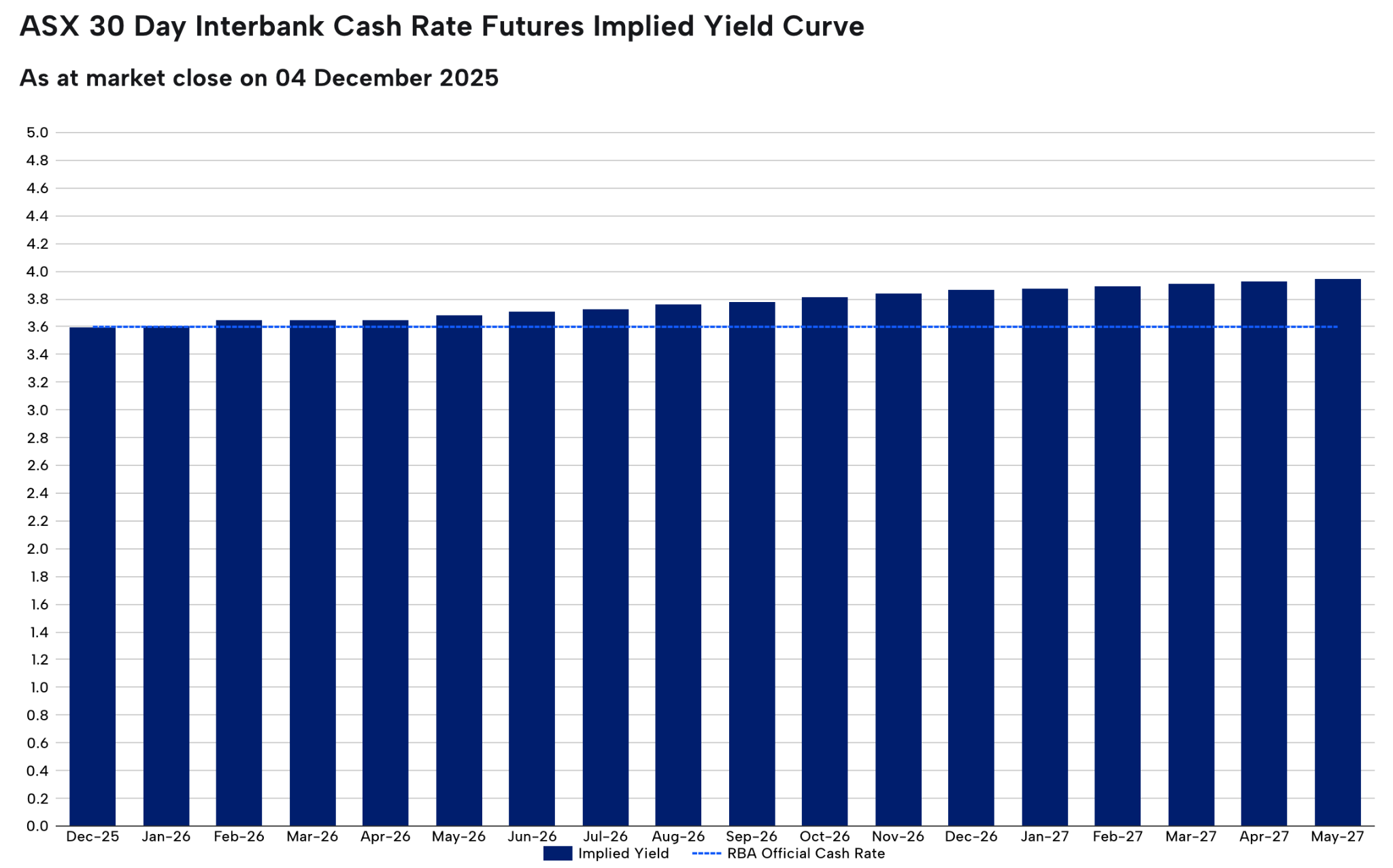
(Source: ASX)
There are some silver linings in the Australian economy. Recent jobs data revealed a high degree of labour market resilience, with employment increasing by 42,200 workers in October. That pushed the unemployment rate to 4.3%, with joblessness trading below the RBA’s projections for where it would finish 2025. Household activity is also picking up, courtesy of rising real wages, supportive fiscal policy and previous rate cuts, helping boost GDP growth.
Despite this, growth remains below trend in Australia, with recent GDP figures revealing an underwhelming and lower than expected rise in quarterly growth of 0.4%. Added to that very weak productivity growth, the Australian economy remains mired in a mix of lukewarm growth and too hot inflation.
AUD/USD at risk of volatility going into RBA and FOMC meetings
The AUD/USD confronts the risk of heightened volatility to round the year, with the RBA decision being followed by the final FOMC meeting of 2025. The pair has pushed higher as the markets priced in hikes from the RBA and a Fed rate cut at its upcoming meeting. That trend could continue if the RBA backs up market pricing with hawkish language, or if the Fed cuts and delivers dovish guidance. Conversely, a watering down of market expectations for rate hikes by the RBA and rate cuts by the Fed could reverse the trend.
A hawkish-RBA/dovish-Fed scenario could push the AUD/USD towards the top of its range just above 0.6700. Meanwhile, a more neutral RBA followed by a more neutral or even hawkish Fed could see the AUD/USD pull back. Notable downside levels include the 50-day moving average, with the bottom of the pair’s range around 0.6420.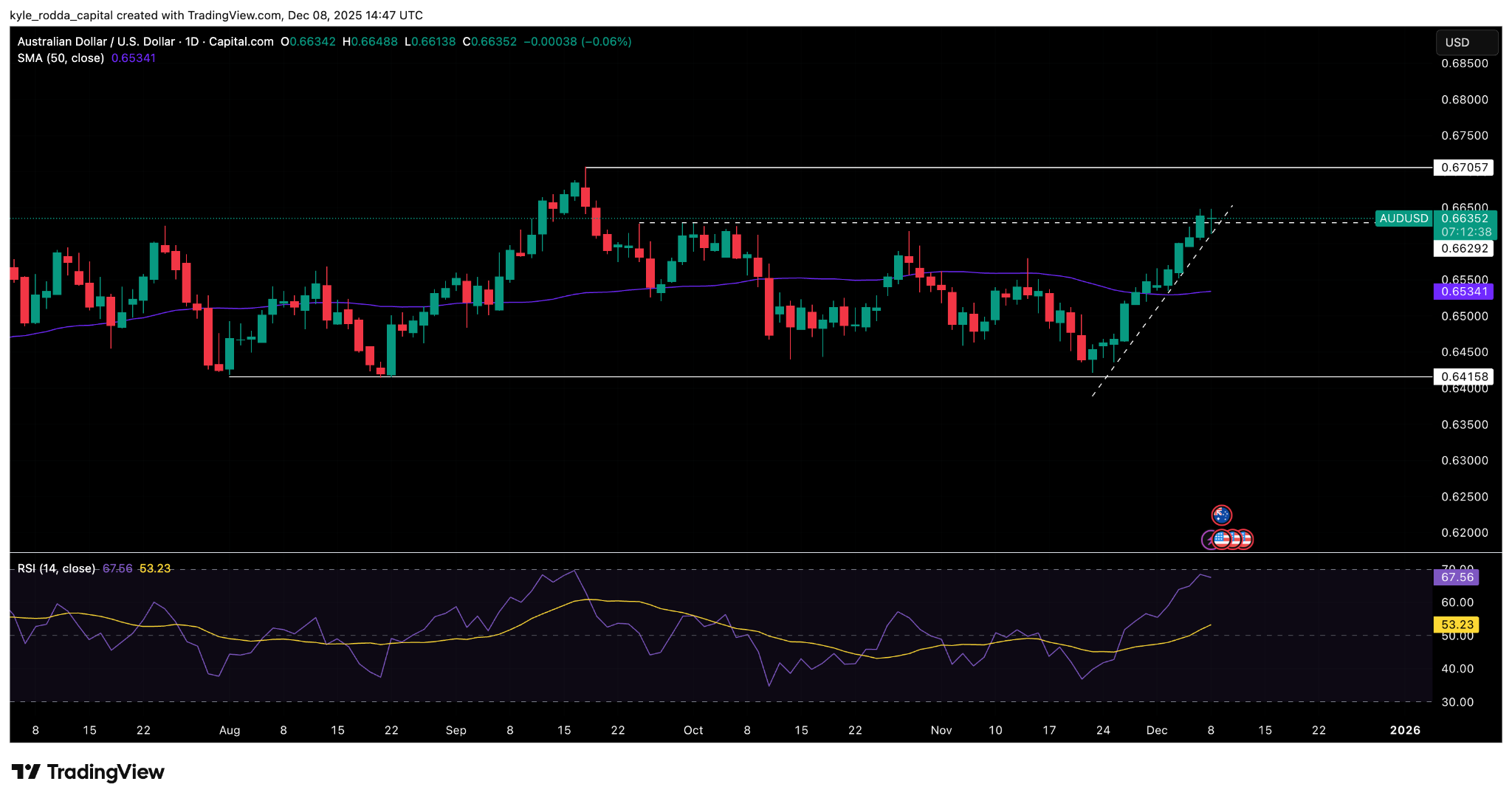
(Source: Trading View)
(Past performance is not a reliable indicator of future results)