
BAE Systems stock forecast: Third-party price targets
BAE Systems is a UK-listed defence contractor operating across air, land, maritime and cyber domains, with long-term programmes, government contracts and global operations shaping its share price behaviour. Explore third-party BA price targets and technical analysis.
BAE Systems plc (BA) is trading around £18.64 in early Thursday dealings, moving between an intraday low of £18.38 and a high of £19.50 on Capital.com’s platform as of 11:50am on 5 February 2026 (UTC). The price action comes after several recent sessions of active trading around the mid-£18 to £19 area on the London Stock Exchange, where on-exchange prints have included trades near £18.49 to £18.63 earlier in the day. Past performance is not a reliable indicator of future results.
The move takes place amid reports that BAE staff have begun a new three-week strike in a pay dispute (BBC, 2 February 2026), and on company capital management following recent regulatory disclosures of daily share buyback transactions (London Stock Exchange, 26 January 2026).
BAE Systems stock forecast 2026–2030: Third-party price targets
As of 5 February 2026, third-party BAE Systems stock predictions cluster around 12-month price targets in the low-to-mid £20 area. These targets are typically framed as 12-month objectives from the publication date rather than specific year-end levels, and they sit against a backdrop of strong recent share-price performance and elevated interest across the defence sector.
MarketBeat (brokerage poll)
A 2 February 2026 MarketBeat update reports that six brokerages covering BAE Systems have assigned a consensus 'Moderate Buy' rating, with an average 12-month target price of £20.21. The article notes that this average is calculated from broker targets issued over the prior year, as firms weigh BAE’s earnings outlook, order book and sector-specific developments (MarketBeat, 2 February 2026).
Jefferies Financial Group (single-broker view)
A MarketBeat alert summarises a Jefferies Financial Group research report that maintains a Hold rating on BAE Systems and raises its 12-month target price to £21.20 from £20.60. According to the summary, Jefferies’ revised target implies an estimated 7.40% upside from the contemporaneous share price used in the note, with the bank referencing company guidance and segment-level outlooks (MarketBeat, 2 February 2026).
The Motley Fool UK (analyst target survey)
The Motley Fool UK reports that 17 analysts currently have ratings on BAE Systems, with an average share price target of £21.22, which the piece says is about 10.4% above the market level used in its calculations. The article describes this average as coming from City analysts and frames it against recent performance and ongoing demand for defence equipment (The Motley Fool, 4 February 2026).
Predictions and third-party forecasts are inherently uncertain, as they cannot fully account for unexpected market developments. Past performance is not a reliable indicator of future results.
BA stock price: Technical overview
The BA stock price trades around £18.64 on Capital.com as of 11:50am on 5 February 2026 (UTC), with the broader daily setup shaped by a cluster of simple moving averages between roughly 1,833 and 2,007 on the provided framework. The 20-, 50-, 100- and 200-day SMAs sit near 2,007, 1,833, 1,866 and 1,846 respectively, leaving shorter-dated averages above the longer-term band without a clear crossover signal, while the 14-day RSI around 40.8 remains in neutral territory and the ADX near 30.5 points to an established trend backdrop.
On the topside, the nearest classic pivot resistance is marked at R1 around 2,185, with R2 near 2,396 only coming into focus following a sustained daily close above the initial level. The central classic pivot at 1,948 represents the first area to watch on pullbacks, with the 100- and 200-day SMAs around 1,866 and 1,846 forming a nearby moving-average support zone. A sustained move below this area could bring the S1 region near 1,737 into view on this framework (TradingView, 5 February 2026).
This technical analysis is provided for informational purposes only and does not constitute financial advice or a recommendation to buy or sell any instrument.
BAE Systems share price history (2024–2026)
BA’s stock price has climbed from around £11.54 at the start of 2025 to about £18.65 by 5 February 2026, marking a notable two-year upswing in this CFD price series. Over that period, the stock moved through the mid-teens in early 2025, continued higher through the £13–£15 range into mid-2024, and then accelerated into the high-teens and low-£20s by late 2025 before easing back slightly into early 2026.
In 2025, BA spent much of the first quarter consolidating near £12–£13 before trending higher through spring and summer, finishing the year around £17.12 on 31 December 2025. Early 2026 has seen increased volatility, with the price briefly trading above £21 in mid-January before retreating into the high-£18s by 5 February 2026, leaving it higher on both one- and two-year comparisons within this dataset.

Past performance is not a reliable indicator of future results. Share prices are indicative and may differ from live market prices.
BAE Systems (BA): Capital.com analyst view
BAE Systems’ price performance over the past two years has been notably strong, with the share moving from the low-£11 area in early 2025 to the high-£18s by early February 2026 on Capital.com’s feed, including a brief move above £21 in mid-January 2026. This upswing broadly aligns with sustained attention on defence and security spending, as well as interest in large, established contractors, but it has also featured sharp swings and pullbacks that highlight the influence of short-term sentiment, profit-taking and event-driven news flow. The same factors supporting recent gains could also weigh on the price if expectations change, contracts are delayed or risk appetite shifts away from the sector.
From a trading perspective, BAE Systems’ recent range in the high-teens to low-£20s illustrates both opportunity and risk for CFD traders, as leverage can amplify exposure to price movements in either direction. Strong historical performance and higher analyst targets may shape expectations, yet they also increase sensitivity to earnings, margin or cash-flow outcomes, where deviations from forecasts could prompt sharp reactions.
Capital.com’s client sentiment for BAE Systems CFDs
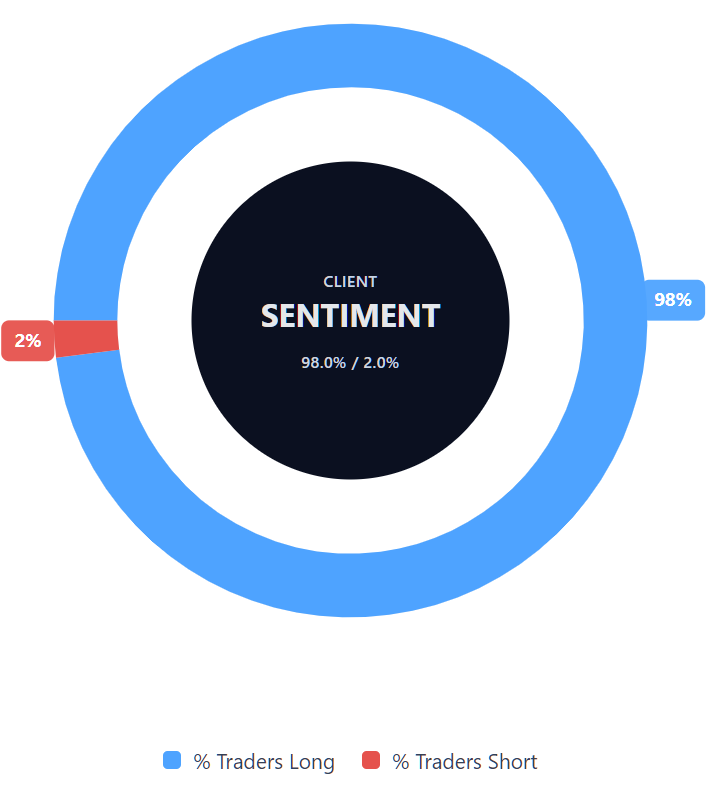
As of 5 February 2026, Capital.com client positioning in BAE Systems CFDs is currently skewed toward long positions, with buyers accounting for 98% versus sellers at 2%, placing the balance firmly on the long side at this snapshot. This data reflects open CFD positions on Capital.com and can change as traders open, close or adjust positions.
Summary – BAE Systems 2026
- BAE Systems (BA) is trading around £18.64 on 5 February 2026, following an intraday range between approximately £18.40 and £19.50 on Capital.com’s feed.
- Over the past two years, the price has risen from roughly £11.50 at the start of 2025 into the high-£18s, with a brief move above £21 in mid-January 2026.
- Technical readings show the price trading above a broad long-term moving-average band, with RSI(14) in neutral territory and ADX(14) indicating an established trend on the provided framework.
Past performance is not a reliable indicator of future results.
FAQ
Who owns the most BAE Systems stock?
BAE Systems has a widely distributed shareholder base, with ownership spread across institutional investors, asset managers and individual shareholders. Large UK and global fund managers typically feature among the largest holders, reflecting BAE’s inclusion in major indices and its long-standing role in the defence sector. Ownership levels can change over time as institutions rebalance portfolios, respond to index adjustments or adjust exposure based on sector outlook and company-specific developments.
What is the 5-year BAE Systems share price forecast?
There is no single, reliable five-year BA stock forecast, as most analyst projections focus on 12-month horizons rather than longer-term targets. Over multi-year periods, the share price has historically been influenced by defence spending trends, contract awards, execution on existing programmes and broader market conditions. Longer-term outcomes remain uncertain and are sensitive to geopolitical developments, fiscal priorities and company performance relative to expectations.
Is BAE Systems a good stock to buy?
Whether BAE Systems is considered attractive depends on individual objectives, time horizons and risk tolerance. Analysts often assess the company based on factors such as its order book, cash generation, exposure to defence budgets and dividend policy. However, share prices already reflect many known expectations, and outcomes can differ from forecasts. This content is not a recommendation, and traders or investors should assess risks alongside potential opportunities.
Could BAE Systems stock go up or down?
BAE Systems’ share price can move in either direction, influenced by earnings results, contract news, defence spending decisions, labour developments and wider market sentiment. Positive developments may support upward moves, while delays, cost pressures or shifts in risk appetite could weigh on the price. Like all equities, the stock is subject to volatility, and short-term price movements may not always reflect longer-term fundamentals.
Should I invest in BAE Systems stock?
This article does not provide investment advice. Deciding whether to invest in BAE Systems depends on personal financial circumstances, objectives and risk tolerance. Share prices can be affected by factors beyond a company’s control, and past performance does not guarantee future results. Individuals may consider conducting their own research or seeking independent professional advice before making any investment-related decisions.
Can I trade BAE Systems CFDs on Capital.com?
Yes, you can trade BAE Systems CFDs on Capital.com. Trading share CFDs lets you speculate on price movements without owning the underlying asset and to take long or short positions. However, contracts for difference (CFDs) are traded on margin, and leverage amplifies both profits and losses. You should ensure you understand how CFD trading works, assess your risk tolerance, and recognise that losses can occur quickly.