
Allianz stock forecast: Third-party price targets
Allianz SE is a Germany-based financial services group listed on Xetra, operating across insurance and asset management with a broad international presence and diversified revenue streams. Explore third-party ALV price targets and technical analysis.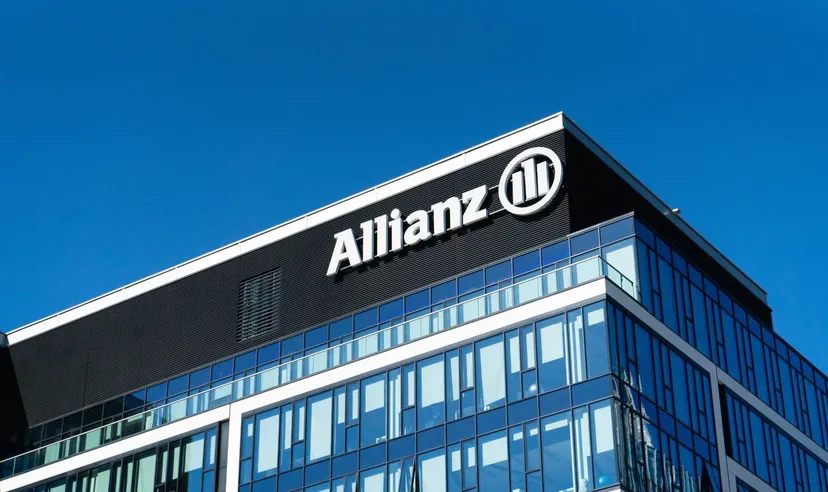
Allianz SE (ALV) is trading around €372.70 in late European dealing on 17 February 2026, holding within an intraday range of approximately €368.50-€373.60, according to Capital.com’s price feed at 11:28am (UTC). Past performance is not a reliable indicator of future results.
The stock is trading against a backdrop of Allianz’s latest reported quarterly results, in which the group highlighted record 2025 operating profit and double-digit growth in shareholders’ core net income, alongside solid business volume growth across segments (Allianz, 13 November 2025). Investors are now looking ahead to the scheduled release of Allianz Group’s preliminary 2025 results later in February 2026 (MarketScreener, 17 February 2026).
Allianz stock forecast 2026–2030: Third-party price targets
As of 12 February 2026, third-party Allianz stock predictions reflect a broad range of views, with many sitting above the current spot level. Brokers have adjusted their models following recent earnings updates and management guidance. These targets are indicative assessments, not guarantees, and may change as market, macroeconomic and company-specific conditions evolve.
RBC Capital Markets (coverage initiation)
RBC Capital Markets sets a 12-month Allianz price target of €405 alongside a Sector Perform-type rating. The bank stated that the shares appear fairly valued relative to peers at current levels. The analyst noted that Allianz trades at a premium to many competitors after several years of above-average operational performance, and suggested that much of this delivery is already reflected in the valuation at the time of publication (MarketScreener, 16 February 2026).
Berenberg (target raised)
Berenberg raises its ALZ stock forecast to €459 and reiterates a Buy-type recommendation. This places its target toward the upper end of the published range. The bank expects Allianz to report stronger-than-expected 2025 operating profit, citing capital generation and the potential for additional capital returns as factors underpinning its revised assumptions, within the context of broader sector earnings updates (MarketScreener, 9 February 2026).
Goldman Sachs (rating update)
Goldman Sachs maintains a Neutral stance on Allianz with a price target of €404 as part of its European financials review. The firm states that current pricing reflects a substantial portion of the insurer’s projected earnings trajectory. Its target balances potential upside from capital deployment with downside risks linked to macroeconomic conditions and financial market volatility affecting the investment portfolio, as assessed at that time (MarketScreener, 21 January 2026).
Predictions and third-party forecasts are inherently uncertain, as they cannot fully account for unexpected market developments. Past performance is not a reliable indicator of future results.
ALV stock price: Technical overview
The ALV stock price trades around €372.70 as of 11:28am (UTC) on 17 February 2026, just below a near-term moving-average cluster. The 20-, 50-, 100- and 200-day simple moving averages (SMAs) are grouped near €374, €379, €370 and €361 respectively. The 14-day relative strength index (RSI) sits near 47, indicating neutral momentum, while an average directional index (ADX) reading around 23 suggests a modest trend rather than a strongly directional phase.
On the upside, the nearest classic resistance level is around €391 (R1). A sustained daily close above this area could bring the €410 zone (R2) into focus as a further reference level. On the downside, the pivot level around €377 (P) and the 100-day SMA near €370 may act as technical reference points. A decisive move below this zone could expose the lower support area near €357 (S1) (TradingView, 12 February 2026).
Technical analysis is provided for informational purposes only and does not constitute financial advice or a recommendation to buy or sell any instrument.
Allianz share price history (2024–2026)
ALV’s stock price has risen over the past two years, moving from around €249 at the close on 19 February 2024 to €373.60 on 17 February 2026. The advance developed in phases: the stock moved through the high-€200s in mid-2024, progressed into the low-€300s in early 2025, and later reached the mid-€370s by early 2026.
The trajectory was not linear. The price retraced into the €260-€280 range in mid-2024 and consolidated around €330-€360 during spring and summer 2025 before resuming its upward movement toward year-end. By 17 February 2026, Allianz traded near the upper end of its two-year range, with the latest close at €373.60 highlighting the scale of the recovery from 2024 levels.

Past performance is not a reliable indicator of future results. Share prices are indicative and may differ from live market prices.
Allianz (ALV): Capital.com analyst view
Over the past two years, Allianz’s share price has followed a broadly upward path, rising from the mid-€200s in 2024 to the high-€300s by early 2026. This development coincided with company disclosures of record operating profit for 2025, higher core net income and solid solvency metrics. These fundamentals have contributed to sector sentiment, although price movements have also reflected broader macroeconomic and market dynamics.
Historical data also shows periods of consolidation and short-term pullbacks, illustrating that the stock can respond quickly to changes in economic data, sector developments or revised expectations for growth and capital returns.
Several structural and cyclical factors may influence Allianz’s share price over time. These include trends in global insurance demand, interest-rate levels that affect investment income, and management’s approach to profitability and capital allocation. Conversely, weaker economic conditions, financial market volatility, elevated claims from natural catastrophes, emerging cyber or AI-related risks, and regulatory changes could weigh on earnings or capital strength if they occur. As a result, Allianz’s valuation remains sensitive to how these factors develop, rather than moving in a single direction.
Summary – Allianz 2026
- Allianz’s share price has trended higher over the past two years, rising from the mid-€200s in 2024 to around €373.60 by 17 February 2026.
- Company disclosures for 2025 report record operating profit, higher net income attributable to shareholders and solid solvency metrics, which have supported broader market sentiment.
- Technical indicators show the price trading near a cluster of medium- and long-term moving averages, with the 100- and 200-day SMAs in the high-€300s to low-€360s acting as reference levels.
- Key drivers include global insurance demand, interest-rate and bond-market conditions, regulatory developments, and the frequency and severity of large claims or catastrophe events.
Past performance is not a reliable indicator of future results.
FAQ
Who owns the most Allianz stock?
Allianz SE’s shareholder base consists primarily of institutional investors, including asset managers, pension funds and insurance-related investment vehicles. Large global investment firms often hold significant stakes through diversified managed funds rather than through direct strategic ownership. Allianz also holds treasury shares, and retail investors own a portion of the free float. Shareholder structures can change over time as funds rebalance portfolios, so the identity and size of the largest holdings may vary according to the most recent regulatory disclosures.
What is the 5 year Allianz share price forecast?
There is no single, agreed five-year ALZ stock forecast. Most publicly available analyst targets focus on 12-month horizons and can change as earnings expectations, interest rates and market conditions evolve. Longer-term projections depend on assumptions about insurance demand, capital allocation, claims trends and macroeconomic stability. As these forecasts rely on forward-looking estimates, they are inherently uncertain and should not be treated as guarantees of future performance.
Is Allianz a good stock to buy?
Whether Allianz is considered ‘good’ depends on an individual’s objectives, risk tolerance and time horizon. The company has reported record operating profit and solid solvency metrics in recent disclosures, which some analysts view as supportive factors. However, the share price also reflects valuation considerations, macroeconomic risks and broader sector dynamics. Any investment decision requires weighing potential upside against the possibility of capital loss, in line with your overall financial strategy.
Could Allianz stock go up or down?
Should I invest in Allianz stock?
Deciding whether to invest in Allianz shares depends on your financial circumstances, investment goals and tolerance for risk. Shares can provide exposure to dividend income and potential capital growth, but they also carry the risk of loss if the price declines. You may wish to conduct your own research and consider seeking independent financial advice before making an investment decision. This information is for educational purposes only and does not constitute investment advice.
Can I trade Allianz CFDs on Capital.com?
Yes, you can trade Allianz CFDs on Capital.com. Trading share CFDs lets you speculate on price movements without owning the underlying asset and to take long or short positions. However, contracts for difference (CFDs) are traded on margin, and leverage amplifies both profits and losses. You should ensure you understand how CFD trading works, assess your risk tolerance, and recognise that losses can occur quickly.