
Gevo stock forecast: Third-party price targets
Gevo, Inc. is a US-listed renewable fuels company developing sustainable aviation fuel and carbon-management solutions. Explore third-party GEVO price targets and technical analysis.
Gevo, Inc. (GEVO) is trading around $2.02 per share in intraday dealings on 22 January 2026 as of 11:43am (UTC), within a session range of roughly $1.94–$2.04 on Capital.com’s platform. Past performance is not a reliable indicator of future results.
The stock is moving amid a series of company developments, including a leadership transition in which President Paul Bloom is set to succeed long-time CEO Patrick Gruber in 2026, alongside recent communications around a virtual fireside chat scheduled for 23 January 2026 featuring both executives (GlobeNewswire, 21 January 2026). Gevo has also highlighted progress in its carbon management strategy, such as issuing 500,000 carbon-removal credits from its North Dakota project (Investing.com, 21 January 2026).
Gevo stock forecast 2026–2030: Third-party price targets
As of 22 January 2026, third-party Gevo stock predictions cluster in the mid-single-digit dollar range on a 12-month horizon, based on broker and data-vendor summaries published in late December 2025 and January 2026. These estimates reflect third-party analyst views rather than Capital.com’s own analysis and may change as new information emerges.
MarketBeat (consensus view)
MarketBeat reports that six analysts covering Gevo have an average 12-month price target of about $6.42 per share, with individual targets ranging from low single digits to the low teens. The report pairs this with a 'Moderate Buy' consensus rating, while noting ongoing losses alongside revenue growth and a market capitalisation below $0.5bn (MarketBeat, 20 January 2026).
Investing.com (consensus estimates)
Investing.com shows that the average 12-month price target from four analysts stands around $5.31 per share, with forecast lows of $2 and highs of $14. The site notes that these projections imply material variance relative to then-prevailing prices, amid volatility linked to project milestones and funding conditions (Investing.com, 22 January 2026).
WallStreetZen (forecast snapshot)
WallStreetZen shows that the average 12-month price target for Gevo is $2.63 per share, with a low forecast of $2.02 and a high forecast of $3.25. The service notes this comparatively narrow range versus some peers, reflecting caution amid ongoing losses and uncertainty around long-term project economics (WallStreetZen, 21 January 2026).
Public.com (analyst summary)
Public.com reports that three analysts provide a Gevo 2026 price forecast centred near $6.42 per share, accompanied by an overall Buy-leaning rating mix. The platform adds that these views incorporate expectations for revenue growth from sustainable fuels projects, while continuing to acknowledge operating losses and execution risk (Public.com, 20 January 2026).
Fintel (one-year target range)
Fintel reports that the average one-year price target for Gevo is approximately $5 per share, with individual forecasts spanning from $2.02 to $14.70. The dataset highlights that this dispersion reflects uncertainty around project execution, capital requirements and broader clean-energy sector risk appetite (Fintel, 22 January 2026).
Predictions and third-party forecasts are inherently uncertain, as they cannot fully account for unexpected market developments. Past performance is not a reliable indicator of future results.
GEVO stock price: Technical overview
The GEVO stock price is trading near $2.02 as of 11:43am (UTC) on 22 January 2026, holding just above the 10-day simple moving average around $2.01 while remaining below the 20-, 50- and 100-day SMAs clustered near $2.04, $2.09 and $2.09 respectively, and above the 200-day SMA near $1.70. The 200-day EMA sits higher, around $1.84, reinforcing a longer-term base below spot, while the Hull moving average near $1.99 tracks short-term fluctuations close to price. The 14-day RSI at roughly 45.8 sits in neutral territory, and the ADX near 12.6 suggests a weak trend environment rather than a strong directional phase.
On the topside, the nearest classic resistance sits around $2.31 (R1), with a sustained daily close above that level potentially bringing the $2.62 (R2) area into view. The classic pivot near $2.13 marks initial support on pullbacks, followed by the 200-day SMA around $1.70 as a longer-term reference level. Meanwhile, S1 near $1.82 defines a lower zone that could come into focus if the pivot area gives way on a closing basis (TradingView, 22 January 2026).
This technical analysis is provided for informational purposes only and does not constitute financial advice or a recommendation to buy or sell any instrument.
Gevo share price history (2024–2026)
GEVO’s stock price has been volatile over the past two years, moving from sub-$1 territory in 2024 to trading back above $2 in early 2026. The stock ended 2024 at $2.08 on 31 December after a sharp October rally that saw it spike to around $3.40 on 22 October 2024, before easing back below $2 into November and stabilising in the mid-$1 range through much of late 2024.
Through 2025, GEVO’s price initially trended lower, dipping to around $0.54 in early August 2025 before recovering and gradually moving higher, closing the year at $2 on 31 December 2025. In the opening weeks of 2026, the stock has remained near that recovery zone, trading within a relatively tight $1.96–$2.12 range and last closing at $2.02 on 21 January 2026, broadly in line with late-2025 levels.

Past performance is not a reliable indicator of future results. Share prices are indicative and may differ from live market prices.
Gevo: Capital.com analyst view
Gevo’s share price has completed a notable round-trip over the past two years, falling below $1 in 2024 before rebounding to trade just above $2 as of 22 January 2026. This recovery has coincided with a period of strong revenue growth and improving adjusted EBITDA metrics, including a positive adjusted EBITDA of around $6.7m in the third quarter of 2025, alongside continued operating losses and earnings volatility. For some traders, this combination may be interpreted as a sign of improving business momentum, while others may view the historical drawdowns as a reminder of the stock’s sensitivity to shifts in sentiment.
From a fundamental perspective, Gevo positions itself as a developer of low-carbon ‘drop-in’ fuels and carbon solutions, targeting sustainable aviation fuel, renewable gasoline and diesel, and carbon credit markets. These areas may offer structural support if policy incentives and customer demand remain in place. At the same time, the company operates in a capital-intensive sector, where large-scale projects and tax-credit-linked revenues can leave earnings exposed to delays, financing conditions and changes in climate policy. As a result, both positive and negative developments around execution or regulation may influence future cash flows and share-price performance.
Capital.com’s client sentiment for Gevo CFDs
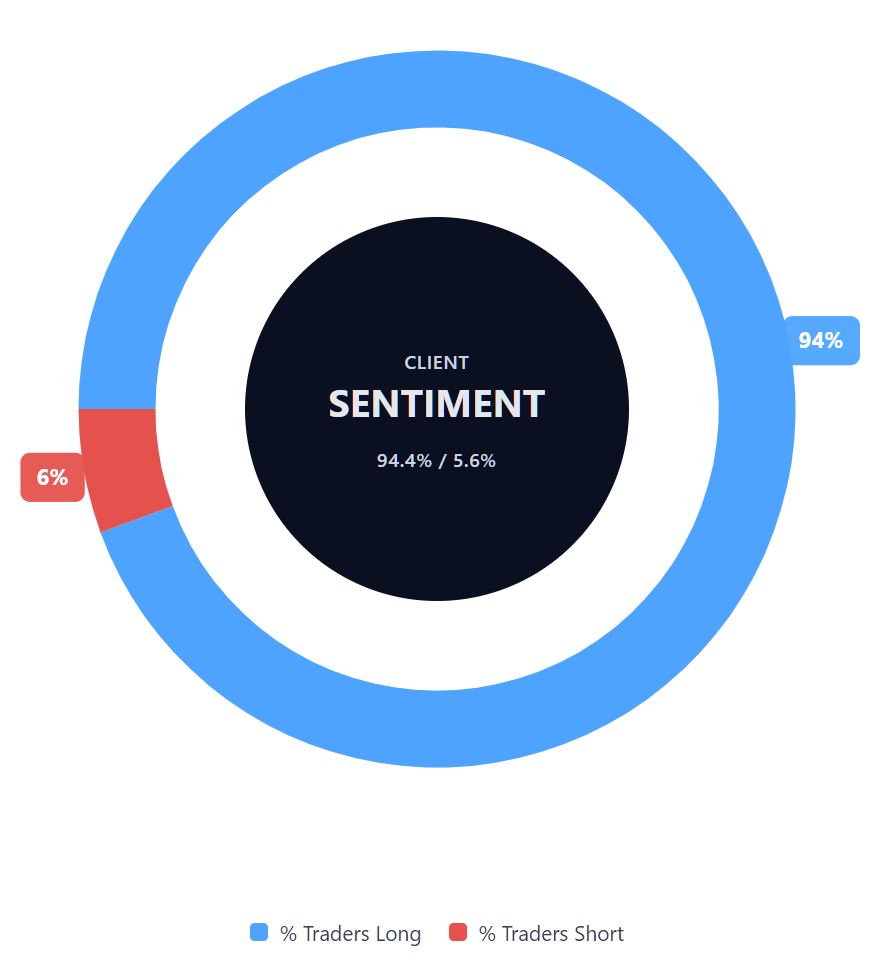
As of 22 January 2026, Capital.com client positioning in Gevo CFDs is heavily skewed toward long positions, with 94.4% of open trades on the buy side and 5.6% on the sell side, leaving buyers ahead by roughly 88.9 percentage points. This places sentiment firmly in buy-dominant territory, although this snapshot reflects current open positions only and may change over time.
Summary – Gevo 2026
- Gevo (GEVO) is trading around $2.02 as of 11:43am (UTC) on 22 January 2026, within an intraday range of roughly $1.94–$2.04 on Capital.com’s platform.
- Over the past two years, the share price fell below $1 in 2024 before rebounding, ending 2025 near $2 and remaining close to that level in early 2026.
- Technical indicators show the price sitting just above short-term averages but below the 20- to 100-day moving-average cluster around $2.04–$2.09, with RSI in neutral territory and ADX pointing to a weak trend environment.
- Third-party 12-month analyst price targets published from late 2024 to January 2026 generally cluster between $5 and $6.50 per share, although individual forecasts span roughly $2 to $14, highlighting wide divergence in expectations.
- Recent corporate developments have centred on leadership changes, sustainable aviation fuel and carbon-credit offtake strategies, and efforts to improve adjusted EBITDA, while the company continues to operate at a loss.
Past performance is not a reliable indicator of future results.
FAQ
Who owns the most Gevo stock?
Gevo’s shareholder base is made up primarily of institutional investors, investment funds and company insiders. Public filings referenced by third-party data providers indicate that no single shareholder holds a controlling stake. Instead, ownership is relatively dispersed across institutions, management and retail investors. This structure means that changes in institutional positioning or insider holdings can influence market sentiment, although such disclosures are periodic and may not reflect real-time ownership dynamics.
What is the five-year Gevo share price forecast?
There is no widely agreed five-year share price forecast for Gevo. Most publicly available projections focus on a 12-month horizon, while longer-term estimates are less common due to uncertainty around project execution, funding requirements and policy support for sustainable fuels. As a result, any five-year outlook varies significantly between analysts and is generally considered speculative rather than a dependable indicator of future performance.
Is Gevo a good stock to buy?
Whether Gevo is considered a ‘good’ stock depends on an individual’s risk tolerance, time horizon and view of the clean-energy sector. The company operates in a capital-intensive industry and remains loss-making, which may appeal to traders seeking exposure to higher-risk themes, while others may place greater weight on volatility and execution risks. This information is provided for context only and does not constitute investment advice.
Could Gevo stock go up or down?
Gevo’s share price could move in either direction and has historically shown significant volatility. Price movements may be influenced by factors such as project milestones, funding developments, policy changes, broader energy-market conditions and overall market sentiment. As with many smaller-cap stocks, price swings can be pronounced, meaning both upside and downside scenarios are possible over short and longer timeframes.
Should I invest in Gevo stock?
Deciding whether to invest in Gevo is a personal decision that depends on individual financial circumstances, objectives and risk appetite. Gevo operates in an emerging segment of the energy market, which may present potential opportunities alongside material risks, including ongoing losses and reliance on future project delivery. Traders and investors typically assess a range of information sources and, where appropriate, seek independent advice before making decisions.
Can I trade Gevo CFDs on Capital.com?
Yes, you can trade Gevo CFDs on Capital.com. Trading share CFDs lets you speculate on price movements without owning the underlying asset and to take long or short positions. However, contracts for difference (CFDs) are traded on margin, and leverage amplifies both profits and losses. You should ensure you understand how CFD trading works, assess your risk tolerance, and recognise that losses can occur quickly.