
Uniper stock forecast: Third-party price targets
Uniper SE is a Germany-based energy company listed in Frankfurt, operating across power generation and gas supply, and a share price influenced by regulation, state ownership and energy-market developments. Explore third-party UN0 price targets and technical analysis.
Uniper SE (UN0) is trading around €36.29 as of 3:55pm UTC on 2 February 2026, near the top of its intraday range between €33.77 and €36.29 on Capital.com’s EUR-denominated Stock CFD feed. Past performance is not a reliable indicator of future results.
Trading is unfolding amid ongoing developments around Uniper’s post-bailout restructuring and reprivatisation process, including EU acceptance that the group cannot divest its Russian Unipro unit, which had been a key condition of its €13.5bn state rescue (Reuters, 28 January 2026). This sits alongside continued preparations for participation in Germany’s planned power-plant capacity tenders, where the company has indicated it is ready to offer two of the proposed 12 gigawatts (Reuters, 27 January 2026). These stock-specific factors intersect with the German government’s majority ownership following earlier stabilisation measures, with policymakers working on options to reduce the state’s 99% stake over time (Reuters, 13 January 2026).
Uniper stock forecast 2026–2030: Third-party price targets
As of 2 February 2026, third-party Uniper stock predictions span a wide range as markets digest the company’s post-bailout profile, German state ownership and evolving power-market policy in Europe. The following mini-briefs summarise selected third-party 12-month and medium-term views, based on public consensus and model-driven estimates.
Investing.com (consensus update)
Investing.com reports that three analysts covering Uniper SE see an average 12-month target of €29.50, with a high estimate of €31 and a low of €27.50, framed explicitly as one-year price objectives rather than end-2026 marks. The platform notes that this consensus reflects expectations for earnings trends and perceived downside relative to the then-prevailing market price, amid ongoing normalisation after the group’s bailout period (Investing.com, 28 January 2026).
MarketScreener (consensus snapshot)
MarketScreener’s UN0 stock forecast consensus summary shows an average target price of €29.50, implying roughly a 16% discount to a last close around €35.20 at that date and an ‘underperform’ mean recommendation across three analysts. The service explains that this target and stance are based on aggregated broker estimates for revenue, earnings and valuation metrics, with sentiment remaining cautious after a period of significant state intervention in the company (MarketScreener, 28 January 2026).
Simply Wall St (update)
Simply Wall St states that Uniper’s consensus price target was reduced by 9.6% to €30.50, following an earlier cut to €38.36 at the end of December 2025. The commentary links these adjustments to changes in analysts’ growth and profitability assumptions amid evolving expectations for European power prices, regulatory developments and the company’s capital structure (Simply Wall St, 10 January 2026).
Predictions and third-party forecasts are inherently uncertain, as they cannot fully account for unexpected market developments. Past performance is not a reliable indicator of future results.
UN0 stock price: Technical overview
The UN0 stock price is trading around €36.29 as of 3:55pm UTC on 2 February 2026, holding just above the Classic pivot at €35.33 and near the R1 area around €38.02 on the daily roadmap. On the simple moving-average cluster, the 20/50/100/200-day SMAs come in around €35.34 / €34.46 / €33.42 / €35.89, leaving price modestly extended above the short- and medium-term averages while sitting close to the longer-term band. The 14-day RSI near 53.6 sits in mid-range, while the ADX around 14.7 points to a weak underlying trend and a market that appears to be consolidating rather than trending strongly.
On the topside, the immediate area to watch is the €38.02 R1 region on the classic pivot set; a sustained daily close above that level would place the €40.83 R2 band back in view as the next resistance zone. On pullbacks, initial support is defined by the €35.33 classic pivot, with the 100-day simple moving average near €33.42 marking the first notable moving-average shelf on the downside. A break and close below this zone would risk exposing the S1 area around €32.52 on the classic framework (TradingView, 2 February 2026).
This technical analysis is provided for informational purposes only and does not constitute financial advice.
Uniper share price history (2024–2026)
UN0’s stock price has experienced significant variation over the past two years, moving from the low-€50s and mid-€40s area in early 2024 to the mid-€30s by early 2026. The stock closed at €56.32 on 5 February 2024, then climbed into the low-€60s later that month before rolling over through the rest of 2024, with notable volatility around the €50–€45 band as sentiment towards the stock and the wider energy sector shifted. By the end of 2024, Uniper was trading closer to €39–€40, and that softer tone continued into 2025 as the price trended down from the low-€50s in April to levels in the low-to-mid-€30s by late autumn.
In 2025, Uniper’s share price briefly pushed above €45 in March before gradually easing back, closing at €41.95 on 2 May 2025 and then slipping towards the high-€30s and mid-€30s into the final quarter. The stock finished 2025 near €32.64 on 30 December and has since recovered some ground in early 2026, with a series of prices in the mid-€30s during January and a last price of €36.29 on 2 February 2026. Past performance is not a reliable indicator of future results.

Past performance is not a reliable indicator of future results. Share prices are indicative and may differ from live market prices.
Uniper (UN0): Capital.com analyst view
Uniper’s share price over the past two years reflects a market still digesting its rescue, nationalisation and subsequent stabilisation, with the stock moving from levels above €50 in early 2024 to the mid-€30s as of 2 February 2026. The current price around €36.29 sits below the peaks seen shortly after the recapitalisation phase, suggesting that investors remain sensitive to headlines on state ownership, regulation and power-market design, even as day-to-day trading has become more orderly compared with the height of the energy crisis.
A key driver for sentiment now is the path of Germany’s energy policy and Uniper’s potential role in new capacity. The company has stated that it is prepared to contribute two gigawatts to Germany’s planned 12-gigawatt power-plant tender, which some participants may view as a source of earnings visibility, while others focus on execution and policy risk. At the same time, the requirement under EU state-aid rules for Berlin to reduce its stake from around 99% to at least 25% plus one share by 2028 could, depending on how reprivatisation is managed, either broaden the investor base or weigh on prices if large placements add supply to the market.
Capital.com’s client sentiment for Uniper CFDs
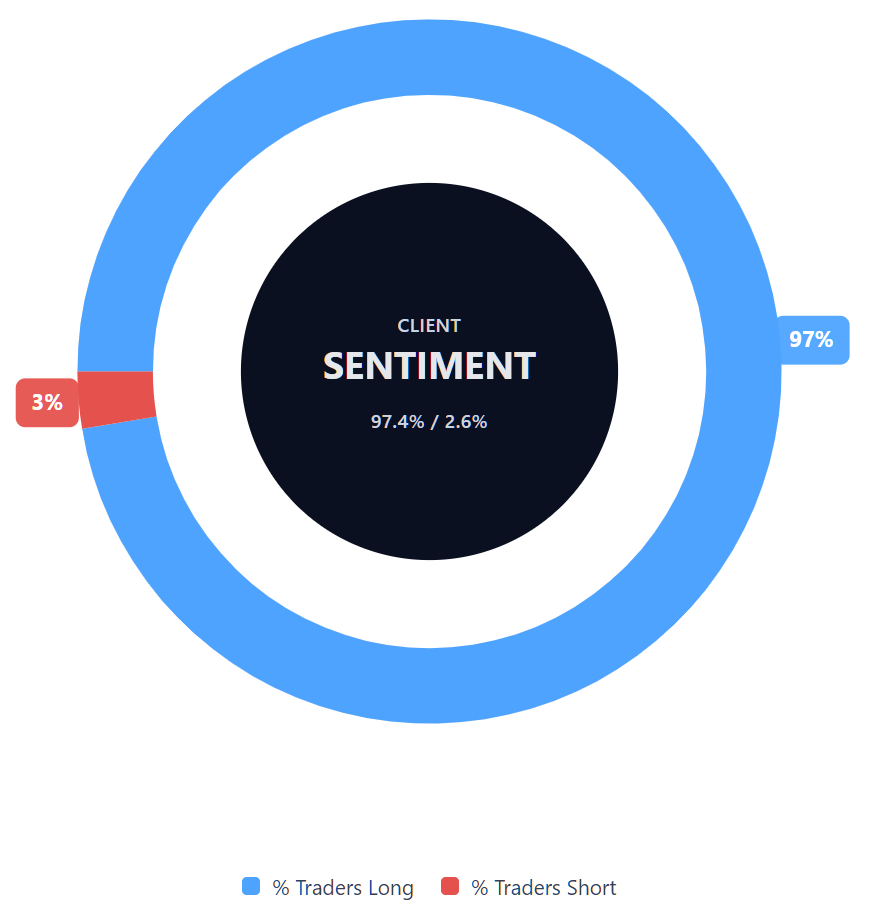
As of 2 February 2026, Capital.com client positioning in Uniper CFDs is highly one-sided towards longs, with buyers at 97.4% versus sellers at 2.6%, placing buyers ahead by around 94.8 percentage points. This heavy buy skew suggests that most existing positions are positioned for upside rather than hedging or short exposure. This snapshot reflects open positions on Capital.com at a specific point in time and can change.
Summary – Uniper 2026
- Uniper’s share price has moved from the low-€50s in early 2024 to the mid-€30s by early 2026, reflecting a comedown from post-recapitalisation highs and a more cautious market tone.
- The stock spent much of early to mid-2025 trading in the low-€40s to low-€50s range before trending down into the low-to-mid-€30s by late 2025, closing near €32.64 on 30 December 2025.
- As of 2 February 2026, Uniper trades around €36.29, near the top of its intraday range between €33.77 and €36.29, with technicals showing price slightly above key short- and medium-term moving averages but broadly aligned with longer-term levels.
- Technical indicators are mixed, with a mid-range RSI around 53.6 and a weak ADX near 14.7 signalling a consolidating rather than strongly trending market backdrop.
Past performance is not a reliable indicator of future results.
FAQ
Who owns the most Uniper stock?
The largest shareholder in Uniper is the German federal government, which holds around 99% of the company following its bailout and nationalisation during the energy crisis. This majority stake was acquired as part of stabilisation measures and is expected, under EU state-aid rules, to be reduced over time. Smaller portions of the remaining free float are held by institutional and retail investors, although liquidity remains limited while state ownership is high.
What is the five-year Uniper share price forecast?
There is no widely agreed five-year UN0 stock forecast. Most publicly available third-party estimates focus on 12-month or medium-term horizons, reflecting uncertainty around energy policy, regulation and the company’s reprivatisation path. Longer-term outcomes depend on factors such as Germany’s power-market design, Uniper’s post-bailout earnings profile and how the government reduces its stake, all of which remain subject to change.
Is Uniper a good stock to buy?
Whether Uniper is considered a good stock depends on individual objectives, risk tolerance and market outlook. The company operates in a highly regulated sector and remains majority-owned by the German state, which can influence valuation and liquidity. While some market participants focus on potential stabilisation and longer-term normalisation, others highlight policy risk and uncertainty around reprivatisation. This information is provided for educational purposes only and is not investment advice.
Could Uniper stock go up or down?
Like any listed share, Uniper’s price can move both higher and lower. Its stock may react to changes in energy policy, power-market reforms, earnings updates, analyst revisions and developments around state ownership. Broader market conditions and sector sentiment can also play a role. Past price movements are not a reliable indicator of future performance, and share prices can be volatile, particularly in industries exposed to regulatory and political factors.
Should I invest in Uniper stock?
Deciding whether to invest in Uniper stock requires careful consideration of personal financial circumstances and risk appetite. The company’s share price is influenced by factors such as government ownership, regulatory decisions and energy-market dynamics, which can add uncertainty. This article provides factual and educational information only and does not constitute financial advice or a recommendation. You may wish to seek independent advice before making any investment decisions.
Can I trade Uniper CFDs on Capital.com?
Yes, you can trade Uniper CFDs on Capital.com. Trading share CFDs lets you speculate on price movements without owning the underlying asset and to take long or short positions. However, contracts for difference (CFDs) are traded on margin, and leverage amplifies both profits and losses. You should ensure you understand how CFD trading works, assess your risk tolerance, and recognise that losses can occur quickly.