
Thyssenkrupp stock forecast: Q1 Results & Restructuring
Thyssenkrupp is a German industrial conglomerate that, in its first-quarter 2025/2026 results published in February 2026, reported €7.2bn in sales, higher adjusted EBIT, and is reviewing strategic options for its Materials Services division. Explore third-party TKA price targets.
Thyssenkrupp AG (TKA) is trading around €10.48 in intraday European dealings on 26 February 2026, moving within a session range between €10.33 and €10.71 based on Capital.com pricing as of 2:48pm UTC. The share is consolidating within this relatively tight intraday band after recent sessions in which it has continued to trade close to the lower end of the range observed so far in the 2025/2026 financial year. Past performance is not a reliable indicator of future results.
Price action comes amid ongoing restructuring and portfolio streamlining (Financial Times, 1 December 2025). In its first-quarter 2025/2026 update, Thyssenkrupp confirmed that sales declined year on year to about €7.2bn, while adjusted EBIT rose to roughly €211m, and it maintained full-year guidance (Thyssenkrupp, 12 February 2026). The stock is also reacting to reports that the group is exploring strategic options for its Materials Services division – including a potential spin-off, listing, or divestment – as part of a broader transformation . Earlier steps have included separating its defence business and evaluating options for its steel unit (Reuters, 18 February 2026).
Thyssenkrupp stock forecast 2026–2030: Third-party price targets
As of 26 February 2026, third-party Thyssenkrupp stock predictions reflect differing views on restructuring progress and cyclical exposure. The following third-party forecasts summarise selected broker and consensus views released during February 2026.
Investing.com (analyst target summary)
Investing.com states that the consensus TKA stock forecast from 10 analysts stands at around €11.78, with individual targets spanning €8.70 to €15 and the average rating described as ‘buy’. This suggests that forecasts balance expectations of gradual margin improvement against uncertainties surrounding asset divestments and macroeconomic conditions (Investing.com, 25 February 2026).
MarketScreener (detailed consensus grid)
MarketScreener reports an average target of €11.60 for Thyssenkrupp, bounded by a €9.70 low estimate and a €15.20 high, with most contributors assigning ‘hold’ or equivalent neutral ratings. The site outlines that more constructive scenarios assume effective execution of portfolio streamlining, whereas more cautious views emphasise cyclical risk and restructuring costs (MarketScreener, 22 February 2026).
TipRanks (analyst rating compilation)
TipRanks notes that eight tracked analysts set an average 12-month price target of €11.47 for Thyssenkrupp, within a corridor of €8.70 to €15, paired with a consensus ‘hold’ stance. The compilation references expectations of moderate earnings improvement following recent cost measures, alongside uncertainty over the timing and terms of potential asset sales (TipRanks, 25 February 2026).
Predictions and third-party forecasts are inherently uncertain, as they cannot fully account for unexpected market developments. Past performance is not a reliable indicator of future results.
TKA stock price: Technical overview
The TKA stock price is trading near €10.48 as of 2:48pm UTC on 26 February 2026, sitting just below the classic pivot at 10.78 and remaining beneath its short- and medium-term simple moving averages. On the daily chart, the 20-, 50-, 100- and 200-day SMAs stand at approximately 11.1, 10.5, 9.8 and 8.2 respectively. This positioning leaves the price between the 50-day and 100-day averages, while the longer-term averages continue to slope higher. The 14-day RSI, at around 46, remains in neutral territory, and the ADX near 16 indicates a relatively weak trend backdrop, consistent with range-bound conditions rather than a sustained directional phase.
On the upside, the first area to monitor is the classic R1 pivot near 12.13. R2 around 12.98 would come into focus only on a decisive daily close above that initial resistance zone. On pullbacks, initial support aligns with the 10.78 pivot, followed by the 100-day SMA area just below 9.8. A move towards S1 near 9.93 could expose the price to further tests of longer-term moving-average support (TradingView, 26 February 2026).
This technical analysis is provided for informational purposes only and does not constitute financial advice or a recommendation to buy or sell any instrument.
Thyssenkrupp share price history (2024–2026)
TKA’s stock price has undergone a marked repricing over the past two years, rising from around €4.72 at the close on 28 February 2024 to about €10.53 on 26 February 2026. After trading broadly sideways just below €5 for much of early 2024, the stock accelerated higher through late 2024 and into 2025, moving from roughly €3.90 in December 2024 towards the €8–€10 range by mid-2025 as volatility increased around earnings releases and restructuring developments.
In late 2025, the share price briefly moved into the low-teens, peaking above €13 in October 2025 before easing back towards the €9–€11 range into year-end. In early 2026, trading remained choppy within that band, with TKA fluctuating between lows near €9.60 in early January and highs above €12 in mid-February, before settling back just above €10.50 as of 26 February 2026.

Past performance is not a reliable indicator of future results. Share prices are indicative and may differ from live market prices.
Thyssenkrupp (TKA): Capital.com analyst view
Thyssenkrupp’s share price has more than doubled over the past two years, moving from below €5 in early 2024 to the €10–€12 range in early 2026. Market participants continue to assess a combination of restructuring measures, portfolio changes, and evolving expectations for European industrial activity.
The latest quarterly figures show adjusted EBIT improving year on year, even as the group reported a net loss of about €334m, largely linked to restructuring charges in Steel Europe. Some investors interpret these charges as part of a longer-term effort to streamline operations, while others focus on the potential impact on cash flow and near-term earnings visibility.
Alongside internal restructuring, sentiment also reflects potential portfolio actions, including discussions regarding the steel unit and the exploration of strategic options for the Materials Services division. These measures could alter the group’s structure and earnings profile. At the same time, execution risk, transaction timing, and broader macroeconomic conditions in steel and capital goods markets may continue to influence the share price.
Capital.com’s client sentiment for Thyssenkrupp CFDs
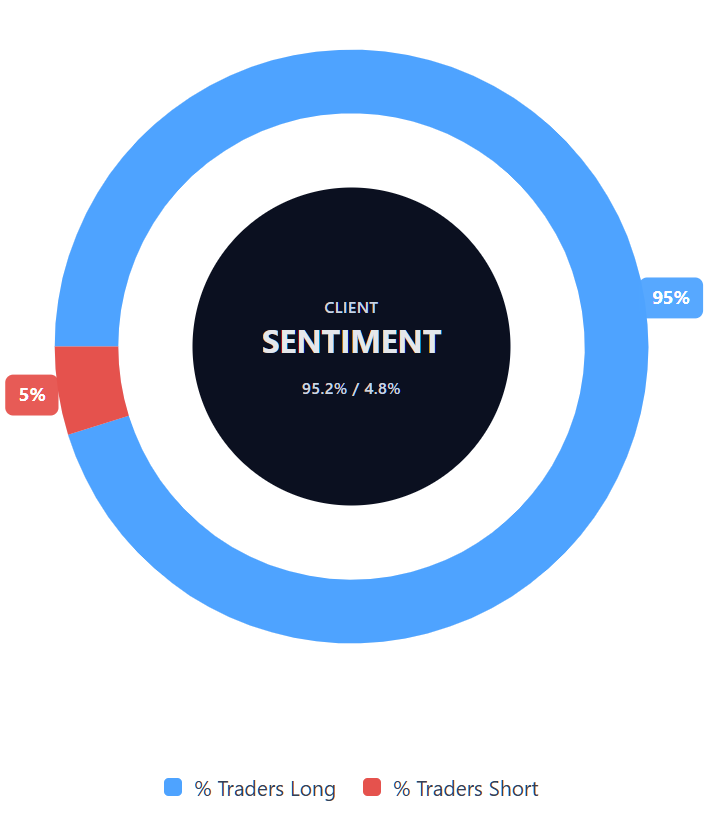
As of 26 February 2026, Capital.com client positioning in Thyssenkrupp CFDs is currently skewed towards long positions, with 95.2% buyers compared with 4.8% sellers, a difference of 90.5 percentage points. This snapshot reflects open positions on the Capital.com platform at the time of writing and can change.
Summary – Thyssenkrupp 2026
- As of 2:48pm UTC on 26 February 2026, Thyssenkrupp traded near €10.48, more than doubling from sub-€5 levels in early 2024.
- Technical indicators show the price hovering near the main daily pivot while remaining below several short- and medium-term moving averages, with momentum readings in neutral territory and trend strength limited.
- Key drivers include ongoing restructuring and portfolio measures across steel and industrial units, alongside broader European industrial and steel demand conditions, which may influence earnings performance.
- Recent updates highlight higher adjusted EBIT despite restructuring-related losses, as well as continued exploration of strategic options for selected divisions. Market participants appear to weigh potential structural changes against cyclical and execution-related risks.
Past performance is not a reliable indicator of future results.
FAQ
Who owns the most Thyssenkrupp stock?
Thyssenkrupp’s shareholder base includes a mix of institutional investors, strategic stakeholders and retail shareholders. Historically, foundations linked to the company’s legacy industrial owners have held significant stakes, alongside global asset managers and index funds. Ownership levels can change over time as institutions adjust their exposure or rebalance portfolios. Investors may consult the latest annual report or regulatory filings for the most up-to-date breakdown of major shareholdings.
What is the 5-year Thyssenkrupp share price forecast?
There is no single agreed five-year TKA stock forecast. Most publicly available analyst estimates focus on a 12-month horizon, reflecting shorter-term earnings visibility and restructuring milestones. Longer-term projections depend on factors such as execution of portfolio changes, steel market conditions, capital goods demand and cost control. Over extended periods, forecasts carry greater uncertainty and are generally presented as indicative scenarios rather than firm predictions.
Is Thyssenkrupp a good stock to buy?
Whether Thyssenkrupp is considered a ‘good’ stock depends on an individual’s objectives, time horizon and risk tolerance. The company is undergoing restructuring, which may alter its earnings profile, while it remains exposed to cyclical sectors such as steel and industrial goods. Some investors focus on potential operational improvements, while others emphasise execution risks and macroeconomic uncertainty. Reviewing financial statements, strategy updates and sector developments can help form an independent assessment, but this does not constitute investment advice.
Could Thyssenkrupp stock go up or down?
Like any listed share, Thyssenkrupp’s price can move in either direction. Factors that may influence performance include quarterly results, progress on restructuring, developments in steel pricing and broader European industrial demand. Market sentiment and global economic conditions can also affect volatility. Technical indicators currently suggest range-bound trading, but price action may change as new information becomes available. Past performance does not guarantee future outcomes.
Should I invest in Thyssenkrupp stock?
Investing in Thyssenkrupp shares involves exposure to both company-specific developments and wider industry cycles. Before making any investment decision, it is important to consider your financial circumstances, risk appetite and investment horizon. Shares can rise or fall in value, and losses are possible. Reviewing independent research and, where appropriate, seeking professional advice may support a more informed decision.
Can I trade Thyssenkrupp CFDs on Capital.com?
Yes, you can trade Thyssenkrupp CFDs on Capital.com. Trading share CFDs lets you speculate on price movements without owning the underlying asset and to take long or short positions. However, contracts for difference (CFDs) are traded on margin, and leverage amplifies both profits and losses. You should ensure you understand how CFD trading works, assess your risk tolerance, and recognise that losses can occur quickly.