
SMCI stock forecast: Q2 Revenue up 123%, margins narrow
Super Micro Computer is a US-based AI server and data centre hardware provider that reported Q2 FY2026 revenue of about $12.7bn, up 123% year on year, alongside a decline in gross margin. Past performance is not a reliable indicator of future results.
Super Micro Computer (SMCI) is trading around $32.27 in intraday action on 27 February 2026, within a $31.35–$33.70 session range as of 11:35am UTC, following volatility after its early February earnings update and guidance revision. The stock has fluctuated in recent sessions as markets digest a sharp year-on-year increase in revenue alongside thinner margins and shifting expectations for AI hardware demand. Past performance is not a reliable indicator of future results.
The move follows Super Micro’s fiscal Q2 2026 results, where the company reported approximately $12.7bn in quarterly revenue, up roughly 123% year on year, and earnings per share of $0.69, which exceeded prior forecasts, while gross margin declined from about 9.5% to 6.4% (Reuters, 3 February 2026). AI infrastructure newsflow has also influenced price action, including the recent launch of new blade servers and AI data centre platform offerings with major chip partners (Investing.com UK, 26 February 2026).
Super Micro Computer stock forecast 2026–2030: Third-party price targets
As of 27 February 2026, third-party Super Micro Computer stock predictions show a wide 12-month range, reflecting differing assessments of how AI server growth prospects balance against margin, valuation and execution risks.
Rosenblatt Securities (broker target)
Rosenblatt reiterates a buy rating on Super Micro Computer with a 12-month price target of $50, implying upside from the late January trading level cited in the report. The broker bases its view on continued adoption of Super Micro’s AI-focused data centre platforms and the potential for margin expansion as its ‘One-Stop Shop’ solutions scale, while acknowledging recent share price volatility (Investing.com, 4 February 2026).
Barclays (broker target)
Barclays reduces its 12-month SMCI stock forecast from $43 to $38 and maintains an equal-weight rating. The bank highlights strong revenue growth and AI server demand as supportive factors, while lowering its target to reflect ongoing gross margin pressure and exposure to a limited number of large customers (Investing.com, 4 February 2026).
MarketBeat (consensus snapshot)
MarketBeat update states that Super Micro Computer carries a consensus Hold recommendation from 18 covering analysts, with an average 12-month price target of $45.31 and individual targets spanning lower and higher levels. The update attributes this configuration to strong recent quarterly performance alongside debate over the durability of growth and profitability trends in an increasingly competitive AI infrastructure market (MarketBeat, 5 February 2026).
Public.com (consensus overview)
Public.com reports that 13 analysts assign SMCI a consensus Hold rating with an average 12-month price target of $42.38, based on recommendations ranging from Strong Buy to Strong Sell. The platform notes that this blended target incorporates expectations for continued AI server demand and revenue growth, while accounting for margin variability and broader conditions affecting high-beta technology shares (Public.com, 19 February 2026).
Futunn (consensus summary)
Futunn shows an average 12-month price target of approximately $39.50 for SMCI, with published estimates extending to a higher maximum level. The summary suggests that analysts continue to balance AI-driven growth potential against valuation considerations, execution risks and recent share price volatility (Futunn, 22 February 2026).
Takeaway: Across these Super Micro Computer stock predictions, 12-month price targets generally cluster between the $38 and $50. Most analysts maintain neutral-to-positive ratings as they weigh AI server demand and revenue growth against margin pressure, customer concentration and competitive risks.
Predictions and third-party forecasts are inherently uncertain, as they cannot fully account for unexpected market developments. Past performance is not a reliable indicator of future results.
SMCI stock price: Technical overview
The SMCI stock price trades near $32.27 as of 11:35am UTC on 27 February 2026 and remains above a short-term moving average cluster, with the 20-, 50-, 100- and 200-day simple moving averages (SMAs) near 31.5, 30.9, 37.1 and 41.7 respectively. The 14-day relative strength index (RSI) stands around 52, placing it in neutral territory, while an average directional index (ADX) reading near 13 indicates a weak underlying trend rather than a sustained directional phase.
On the upside, the nearest classic pivot resistance (R1) sits around 32.6. A sustained move above this level could bring the R2 region near 36.1 into focus. On the downside, the classic pivot near 30.2 marks initial support. A break below this area could expose the S1 zone around 26.7, if selling pressure increases (TradingView, 27 February 2026).
This technical analysis is provided for informational purposes only and does not constitute financial advice or a recommendation to buy or sell any instrument.
Super Micro Computer share price history (2024–2026)
SMCI’s stock price has experienced significant swings over the past two years, moving from sub-$30 levels to triple digits and back. In early 2024, the stock accelerated higher, rising from about $86.60 on 29 February 2024 to intraday peaks above $120 in March. It then traded broadly between $90 and $105 into late April as volatility increased around large single-day moves.
Through mid-2024, SMCI closed around $103.80 on 1 April 2024 before oscillating in a wide $70–$90 range during the summer. The stock later declined from above $60 in August to the mid-$40s by late September. After another sell-off from the low $50s in October 2025 to around $29.30 at year end, the share price has traded within a narrower $28–$35 band in early 2026, closing near $32.27 on 27 February 2026.

Past performance is not a reliable indicator of future results. Share prices are indicative and may differ from live market prices.
Super Micro Computer (SMCI): Capital.com analyst view
Super Micro Computer’s share price has consolidated in the low $30s in early 2026, well below its triple-digit highs from early 2025, reflecting a shift in market expectations as rapid AI-related revenue growth coincides with lower profitability metrics.
Record Q2 FY2026 revenue of approximately $12.7bn, up roughly 123% year on year and supported by orders for AI-optimised servers and liquid-cooled racks, underlines the company’s role in AI infrastructure buildouts. At the same time, a reported non-GAAP gross margin of about 6.4%, compared with roughly 9.5% previously, has kept attention on cost control, pricing dynamics and operational execution.
Looking ahead, one perspective is that sustained AI capital expenditure and product innovation could support revenue visibility, particularly if the company improves margins and manages inventory and customer concentration effectively. Alternatively, any moderation in hyperscaler spending, further margin compression or renewed volatility in high-beta technology shares could maintain pressure on the stock.
Capital.com’s client sentiment for Super Micro Computer CFDs
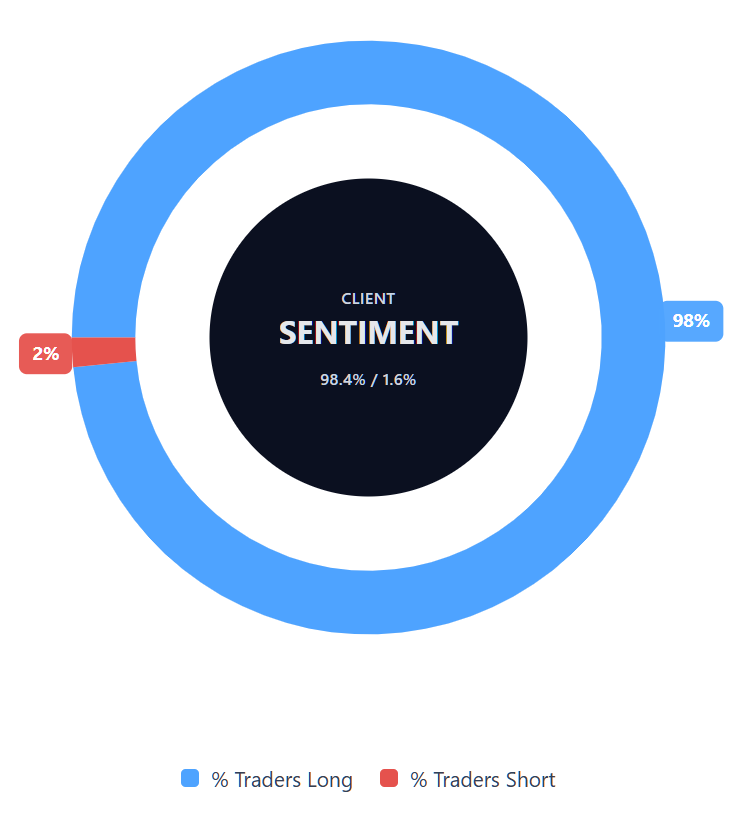
As of 27 February 2026, Capital.com client positioning in Super Micro Computer CFDs is currently weighted towards long positions, with 98.4% buyers and 1.6% sellers, leaving buyers ahead by approximately 96.8 percentage points. This data reflects open positions on the Capital.com platform at the time of writing and may change.
Summary – Super Micro Computer 2026
- As of 11:35am UTC on 27 February 2026, Super Micro Computer trades near $32.27, significantly below its early 2025 highs and within a relatively contained 2026 range.
- Technical indicators show the price holding above short-term SMAs in the low $31 area, with RSI in neutral territory and ADX suggesting a weak, non-directional trend.
- Key drivers include AI server and data centre demand, set against margin compression, customer concentration and broader risk appetite for high-beta technology shares.
- Recent coverage has highlighted revenue growth above 120% year on year in Q2 FY2026, a revised full-year sales outlook and continued scrutiny of gross margin trends.
Past performance is not a reliable indicator of future results.
FAQ
Who owns the most Super Micro Computer stock?
Public filings show that institutional investors, including asset managers and mutual funds, hold a significant proportion of Super Micro Computer shares, alongside company insiders such as executives and directors. Large investment firms often rank among the largest shareholders because they manage index-tracking and actively managed funds with broad market exposure. Ownership structures can change over time as funds rebalance portfolios, insiders transact, or new investors build positions.
What is the 5-year Super Micro Computer share price forecast?
There is no single agreed five-year SMCI stock forecast, as most published analyst targets focus on a 12-month horizon. Longer-term projections depend on variables such as AI infrastructure demand, margin trends, competitive dynamics and broader equity market conditions. As a result, multi-year forecasts are typically scenario-based rather than fixed estimates, and they involve considerable uncertainty, particularly in fast-moving technology segments where revenue growth and profitability can shift quickly.
Is Super Micro Computer a good stock to buy?
Whether Super Micro Computer is considered a ‘good’ stock depends on an individual investor’s objectives, time horizon and tolerance for volatility. The company has reported strong revenue growth linked to AI server demand, but it has also faced margin pressure and share price swings. Investors typically assess fundamentals, valuation, balance sheet strength and sector risks before making a decision, rather than relying on a single metric or forecast. This balanced approach helps account for both potential opportunities and downside risks.
Could Super Micro Computer stock go up or down?
Super Micro Computer’s share price could move in either direction, depending on company performance, AI-related capital expenditure trends, earnings updates and broader market sentiment. Positive developments in revenue growth, margins or product adoption may support the price, while weaker margins, demand shifts or wider equity market volatility could weigh on it. Technology shares, particularly those linked to high-growth themes, often experience higher-than-average volatility, which can result in sharp price movements over short periods.
Should I invest in Super Micro Computer stock?
Deciding whether to invest in Super Micro Computer stock requires careful consideration of your financial situation, risk profile and investment goals. Shares can provide exposure to AI infrastructure growth, but they also carry equity market risk and company-specific uncertainties. Only you can determine whether this exposure aligns with your strategy and risk tolerance. If you are unsure, you may wish to conduct further research or seek independent financial advice before making any investment decision.
Can I trade Super Micro Computer CFDs on Capital.com?
Yes, you can trade Super Micro Computer CFDs on Capital.com. Trading share CFDs lets you speculate on price movements without owning the underlying asset and to take long or short positions. However, contracts for difference (CFDs) are traded on margin, and leverage amplifies both profits and losses. You should ensure you understand how CFD trading works, assess your risk tolerance, and recognise that losses can occur quickly.