
PepsiCo stock forecast: Third-party price targets
PepsiCo is a US-listed multinational food and beverage company whose shares trade on the NASDAQ, with performance shaped by global consumer demand, pricing trends, input costs and earnings guidance. Explore third-party PEP price targets and technical analysis.
PepsiCo, Inc. (PEP) is trading around $167.01 in intraday activity as of 2:16pm UTC on 11 February 2026, within a session range of $164.66–$168.34 on Capital.com’s USD-denominated stock CFD feed. Past performance is not a reliable indicator of future results.
The move follows PepsiCo’s fourth-quarter 2025 results, where the company reported adjusted earnings per share of $2.26 on revenue of about $29.3bn, modestly above consensus estimates, alongside organic revenue growth of just over 2% for the quarter (Nasdaq, 4 February 2026). The shares are trading against a backdrop of mixed broader US equity performance, with the S&P 500 recently easing by around 0.3% (Reuters, 10 February 2026) and the VIX volatility index edging towards the high teens, suggesting a more cautious risk backdrop at the index level (Reuters, 16 January 2026).
PepsiCo stock forecast 2026–2030: Third-party price targets
As of 11 February 2026, third-party PepsiCo stock predictions reflect differing assumptions about earnings growth, capital returns and consumer demand. The summaries below outline six recent broker and consensus updates, focusing on stated targets and the reasoning provided.
Barclays (broker update)
Barclays lifts its 12-month price target to $160 from $148 and maintains an ‘equal weight’ rating. The revised target implies limited downside versus the prior close at the time. The bank references the Q4 2025 earnings beat, FY 2026 EPS guidance of $8.55–$8.71, and a $10bn share buyback alongside a dividend increase, as it reassesses valuation within a mixed sector environment (MarketBeat, 4 February 2026).
TD Cowen (rating reaffirmation)
TD Cowen raises its price target to $162 from $155 and reiterates a Hold rating. The updated 12-month objective sits slightly below the prevailing share price at publication. The broker points to organic sales growth of around 2%, reaffirmed FY 2026 guidance, and improving sequential performance at Frito-Lay, while noting ongoing price investment, product launches and distribution initiatives (Investing.com, 4 February 2026).
MarketBeat-tracked consensus (5 February 2026)
MarketBeat indicates that 21 brokerages collectively assigned a ‘Hold’ rating, with an average 12-month price target of $165.28. The breakdown includes one Sell, 11 Hold and nine Buy recommendations, reflecting a broadly balanced stance as analysts assessed guidance, cost pressures and demand trends (MarketBeat, 5 February 2026).
UBS and JP Morgan (target revisions)
JP Morgan raises its price target to $176. Separately, UBS maintains a Buy rating but trimmed its PEP stock forecast from $172 to $170. These revisions reflected updated valuation frameworks following recent results, with analysts weighing brand strength and cash generation against macroeconomic and execution risks (GuruFocus, 4 February 2026).
Predictions and third-party forecasts are inherently uncertain, as they cannot fully account for unexpected market developments. Past performance is not a reliable indicator of future results.
PEP stock price: Technical overview
On the daily chart for 11 February 2026, the PEP stock price trades above its main moving-average cluster, with the 20-, 50-, 100- and 200-day simple moving averages (SMAs) near $153, $149, $147 and $142 respectively. Price remains above this band, and the 20-day SMA continues to sit above the 50-day SMA. The 10-day SMA, around $161, lies just below recent highs, supporting the current short-term upward structure within a broader rising 200-day base.
Momentum indicators suggest extended conditions. The 14-day relative strength index (RSI) is around 74 and the average directional index (ADX) is near 35, levels often associated with strong directional moves rather than range-bound trading. On pullbacks, traders may monitor the central pivot area in the mid-$150s, followed by the 100- to 200-day SMA zone in the high-$140s to low-$140s. A sustained break below that region on a closing basis could shift the technical structure towards prior breakout levels (TradingView, 11 February 2026)
Technical analysis reflects historical price data and does not guarantee future performance. It is provided for informational purposes only and does not constitute financial advice.
PepsiCo share price history (2024–2026)
Over the past two years, PEP’s stock price has traded within a relatively broad but defined range, punctuated by shorter-term swings. On 11 February 2025, PEP closed at approximately $145.73. By 10 February 2026, it closed near $167.01, representing an increase of roughly $21 per share over the 12-month period.
During 2024, the stock largely fluctuated between the low-$160s and high-$170s, reaching the high-$170s in September before easing. In early 2025, price action centred on the mid-$140s to low-$150s, before moving higher into late 2025 and early 2026. January 2026 prices were generally in the mid-$140s to mid-$150s, with February marking a move into the high-$160s.

Past performance is not a reliable indicator of future results. Share prices are indicative and may differ from live market prices.
PepsiCo (PEP): Capital.com analyst view
PepsiCo’s share price has shown relative stability over the past two years, with recent trading around $167.01 as of 10 February 2026, compared with levels in the mid-$140s a year earlier. This period included Q4 2025 revenue growth of approximately 5.6% year on year to around $29.3bn and adjusted EPS of $2.26, which some outlets reported as exceeding consensus expectations.
While earnings outperformance can support valuations, market participants also consider whether current pricing already reflects anticipated improvements in margins and execution. If future results or guidance diverge from expectations, volatility may increase.
Looking ahead, coverage highlights a combination of supportive and cautionary factors. Management has reaffirmed expectations for organic revenue growth of around 2–4% and core constant-currency EPS growth of approximately 4–6% for 2026. The company continues to pursue productivity initiatives, brand investment and selective pricing adjustments, including on snack products. At the same time, softer North American volumes, consumer sensitivity to pricing, regulatory scrutiny of sugar-sweetened beverages and evolving health trends are cited as potential constraints on pricing power and margins.
Capital.com’s client sentiment for PepsiCo CFDs
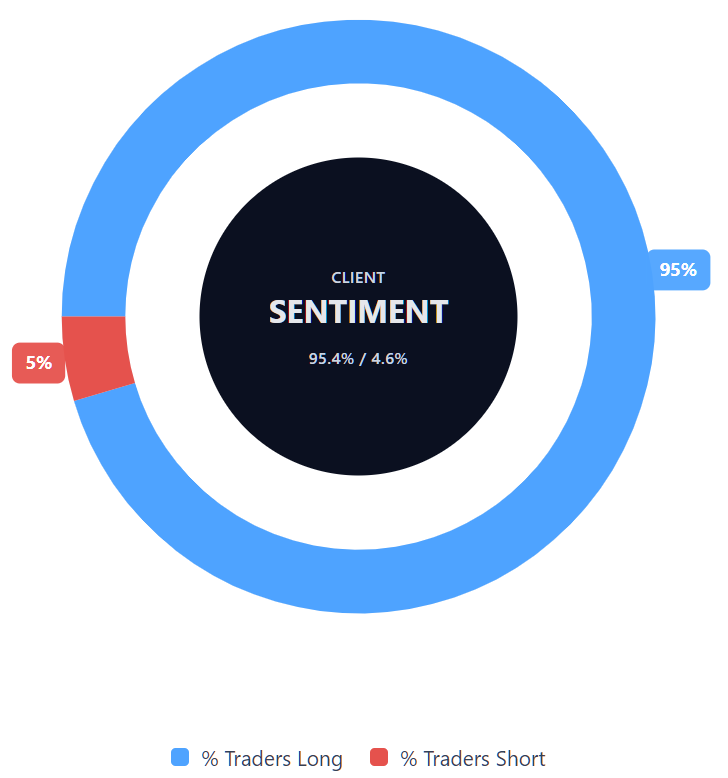
As of 11 February 2026, Capital.com client positioning in PepsiCo CFDs currently shows approximately 95.4% of open positions on the buy side and 4.6% on the sell side. This represents a heavily long skew, with buyers ahead by around 90.8 percentage points. Client sentiment data is dynamic and may shift as market conditions change.
Summary – PepsiCo 2026
- PepsiCo’s share price has moved from the mid-$140s in early 2025 to around $167.01 as of 10 February 2026, within a broader two-year range.
- Fourth-quarter 2025 results showed year-on-year revenue growth and adjusted EPS above some analyst expectations, while management reaffirmed 2026 guidance and outlined ongoing productivity and pricing initiatives.
- On the daily chart, PEP trades above its 20-, 50-, 100- and 200-day moving averages (approximately $153, $149, $147 and $142), with RSI near 74, indicating an extended directional move rather than a consolidation phase.
- This overview summarises publicly available information and analyst commentary. It does not constitute investment advice or a recommendation to buy or sell any financial instrument.
Past performance is not a reliable indicator of future results.
FAQ
Who owns the most PepsiCo stock?
PepsiCo’s largest shareholders are typically institutional investors, such as global asset managers and index fund providers. Firms including the Vanguard Group and BlackRock are often listed among the largest holders, reflecting PepsiCo’s inclusion in major equity indices and its status as a widely held consumer staples company. Ownership levels can change as funds rebalance portfolios or respond to investor flows, so the composition and size of major holdings may shift over time.
What is the five-year PepsiCo share price forecast?
There is no single, widely agreed five-year PEP stock forecast. Most published analyst price targets focus on a 12-month horizon, with recent estimates clustering between the $160s and low-$180s. Longer-term projections depend on assumptions about earnings growth, margins, consumer demand and broader macroeconomic conditions. Over a five-year period, actual outcomes may differ materially from shorter-term targets, as company performance and market cycles evolve.
Is PepsiCo a good stock to buy?
Whether PepsiCo is considered ‘good’ depends on an individual’s objectives, risk tolerance and time horizon. Analysts currently express a mix of Hold and Buy ratings, with price targets spanning a relatively narrow range. Supportive factors cited in coverage include established brands and capital-return policies, while risks include volume trends, pricing sensitivity and regulatory pressures. Any evaluation should weigh both potential gains and potential losses, as share prices can move in either direction.
Could PepsiCo stock go up or down?
PepsiCo’s share price can move higher or lower, influenced by earnings results, forward guidance, cost developments, consumer demand and broader market conditions. Technical indicators may highlight prevailing trends, while analyst targets reflect a range of assumptions. Changes in macroeconomic data, interest rate expectations or sector sentiment can also affect price action. As with all shares, past performance does not guarantee future results.
Should I invest in PepsiCo stock?
Deciding whether to invest in PepsiCo shares depends on your personal financial circumstances, objectives and appetite for risk. Although the company operates in a traditionally defensive sector, its share price still responds to earnings, guidance and shifts in market sentiment. This article provides general market information and analyst commentary and does not constitute investment advice or a recommendation. If you are unsure, you may wish to seek independent financial advice before making investment decisions.
Can I trade PepsiCo CFDs on Capital.com?
Yes, you can trade PepsiCo CFDs on Capital.com. Trading share CFDs lets you speculate on price movements without owning the underlying asset and to take long or short positions. However, contracts for difference (CFDs) are traded on margin, and leverage amplifies both profits and losses. You should ensure you understand how CFD trading works, assess your risk tolerance, and recognise that losses can occur quickly.