HomeCardano price prediction: Protocol 11 launch timeline

Cardano price prediction: Protocol 11 launch timeline

Cardano is a blockchain network whose ADA token remains in focus after developers kept Protocol 11 on track for a late-June 2026 mainnet launch despite a recent node pre-release issue. Explore third-party ADA price targets. Past performance is not a reliable indicator of future results.
By Dan Mitchell
Cardano cryptocurrency coin placed on a digital chart background
Photo: Shutterstock

Cardano (ADA/USD) is trading at $0.244 as of 2:31pm UTC on 14 April 2026, within an intraday range of $0.236–$0.249. Past performance is not a reliable indicator of future results.

Price action reflects a combination of protocol-level developments and broader macro pressure on risk assets. On 11–12 April 2026, the Cardano development team confirmed that Protocol 11 (the 'van Rossem hard fork') remains on schedule for a late-June 2026 mainnet launch after it resolved a memory regression identified in the 10.7 node pre-release – causing approximately 6 GB of additional RAM usage over a 15-day benchmarking window – and prepared a patched 10.7.1 release (Phemex, 11 April 2026). Separately, Cardano founder Charles Hoskinson publicly contested a governance proposal to allocate approximately 14 million ADA ($3.3m) to event spending, instead calling for permanent global community hubs; the community subsequently voted against the proposal through Cardano's decentralised governance system (U.Today, 12 April 2026). The broader crypto market has traded with elevated sensitivity to US trade policy in April 2026, with tariff uncertainty continuing to weigh on risk appetite across digital assets, while open interest on ADA derivatives rose 3.68% to $435.15m as of 13 April, pointing to active positioning ahead of the protocol upgrade (CoinMarketCap, 12 April 2026).

Cardano price prediction 2026-2030: Analyst price target view

As of 14 April 2026, third-party ADA price predictions reflect differing assumptions around the Protocol 11 hard fork timeline, institutional access via ETF inclusion, on-chain activity, and broader crypto market sentiment.

CoinCodex (algorithmic year-end model)

CoinCodex places ADA within a full-year 2026 trading range of $0.1926–$0.2576, with a December 2026 central estimate of $0.2118. The model indicates a bearish technical backdrop, with 26 of 34 indicators signalling downside pressure, as the 50-day SMA of $0.2674 and 200-day SMA of $0.4378 both sit above the current price, while the 14-day RSI at 39.72 indicates neutral momentum (CoinCodex, 13 April 2026).

Changelly (monthly range model)

Changelly sets an April 2026 range of $0.236–$0.247, with an average of $0.242, before projecting a recovery through the second half of the year, with a June 2026 average of $0.285, a September 2026 peak of $0.419, and a November 2026 average of $0.447. The model cites improving risk appetite and Cardano development milestones as the primary drivers of the projected second-half increase, while flagging wide monthly dispersion throughout the year (Changelly, 12 April 2026).

Coinpedia (on-chain analysis with scenario framework)

Coinpedia notes that ADA holds $0.23 support, with $0.27 as immediate resistance and $0.33 as the key breakout level. It adds that a confirmed move above $0.33 could open a path towards $0.40–$0.50 in the near term. The analysis, published on 2 April 2026, cites stablecoin supply on the Cardano network more than doubling year on year, whale accumulation intensifying since early March, and on-chain activity stabilising after a prolonged decline as the three supporting conditions for a potential recovery (Coinpedia, 3 April 2026).

Coinpedia (annual scenario table)

Coinpedia's longer-range consensus table presents a 2026 annual average of $3 within a $2.75–$3.25 range, derived from a multi-scenario blended view. In a bullish case, where scalability upgrades, Midnight privacy integrations, and capital inflows converge, ADA is projected to trade between $2.50–$5, while a downside scenario, where adoption lags development or macro conditions deteriorate, would keep ADA below $1.50 for the year (Coinpedia, 31 March 2026).

Predictions and third-party forecasts are inherently uncertain, as they cannot fully account for unexpected market developments. Past performance is not a reliable indicator of future results.

ADA price: Technical overview

The ADA/USD price is trading at $0.244 as of 2:31pm UTC on 14 April 2026, below its full moving-average stack on the daily chart. According to TradingView, all 12 tracked moving averages carry a sell signal, with the 20/50/100/200-day SMAs at $0.2475 / $0.2602 / $0.2945 / $0.4157, each sitting above the current price and reinforcing the prevailing downtrend structure.

Momentum indicators present a mixed but predominantly cautious picture. The 14-day RSI reads 45.33, sitting in neutral territory and below the 50 midpoint, while the ADX (14) registers 12.42, a level that TradingView’s data characterises as reflecting a weak or absent trend. The Hull moving average (9) at $0.2417 is the sole indicator returning a buy signal, and the MACD (12, 26) level of −041 also reads as a buy, though it remains in negative territory.

On the upside, the classic R1 pivot at $0.2803 represents the nearest overhead reference; a daily close above that level could bring R2 near $0.3189 into view. To the downside, the classic pivot point at $0.2566 marks initial support, with S1 at $0.2180 the next reference should that level give way (TradingView, 14 April 2026).

This is technical analysis for informational purposes only and does not constitute financial advice or a recommendation to buy or sell any instrument.

Cardano price history (2024–2026)

ADA/USD’s price opened April 2024 near $0.46, remaining broadly range-bound through mid-year before a sharp post-US election rally in November 2024 carried it from around $0.33 to a close of $0.845 on 31 December 2024.

2025 began with further momentum. ADA climbed through January to close above $1 on 21 January 2025, before a volatile March saw the coin spike to a two-year intraday high of $1.147 on 2 March 2025, followed by a steep reversal. The remainder of 2025 was largely a story of gradual unwinding. ADA traded back through the $0.90s in August and September, shed further ground in Q4, and closed the year at $0.334 on 31 December 2025.

The 2026 calendar year opened at $0.357 on 1 January, with ADA briefly recovering to a January high near $0.437 before a sustained decline set in. The coin has traded broadly between $0.24 and $0.36 since late March 2026.

ADA closed at $0.245 on 14 April 2026, approximately 31.4% down year to date and 61.5% down year on year.

Past performance is not a reliable indicator of future results.

Capital.com analyst view: Cardano

Cardano’s price trajectory over the past two years reflects the broader volatility of the crypto market, with ADA rallying sharply through late 2024 and into early 2025, reaching an intraday high of $1.147 in March 2025, before a sustained retracement brought the token back to the $0.24 range by April 2026. The asset’s decline has been shaped by a combination of macro headwinds, including tariff-driven risk-off sentiment across digital assets, and competition from faster-growing DeFi ecosystems. Cardano’s total value locked fell to approximately $219m by early 2026, according to AInvest. On the other hand, institutional engagement has grown, with Grayscale reportedly raising its ADA allocation to 20.07% and CME Group launching ADA futures contracts in Q1 2026, which some analysts view as structural support, though institutional flows can also amplify downside moves during periods of risk aversion.

Looking ahead, Protocol 11 and the Midnight sidechain launch remain the most closely watched near-term developments. Proponents argue that on-chain governance, improved scalability, and the Hashdex Nasdaq ETF inclusion could attract fresh capital. Critics note that development timelines have slipped before and that dApp traction continues to lag competitors such as Ethereum and Solana. As with all digital assets, outcomes remain highly uncertain and sensitive to shifting market conditions.

CFDs are complex instruments and come with a high risk of losing money rapidly due to leverage. Past performance is not a reliable indicator of future results.

Capital.com’s client sentiment for Cardano CFDs

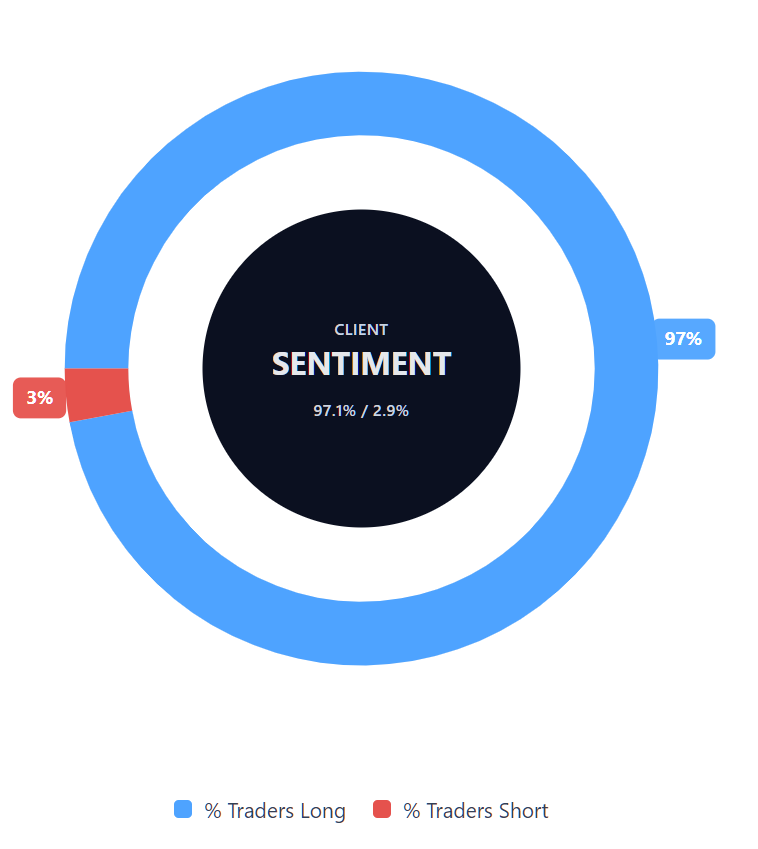
As of 14 April 2026, Capital.com client positioning in Cardano CFDs sits at 85.7% long and 14.3% short, putting buyers ahead by 71.4 percentage points and placing sentiment firmly in heavy-buy, one-sided-long territory. This snapshot reflects open positions on Capital.com at the time of capture and can change rapidly as market conditions evolve.

Image

Summary – Cardano (2026)

Past performance is not a reliable indicator of future results.

FAQ

What is the latest Cardano crypto price prediction?

Third-party Cardano price predictions in the article vary widely, which reflects how uncertain crypto forecasting can be. At the lower end, CoinCodex places ADA around $0.2118 by December 2026, while DigitalCoinPrice targets $0.52. Coinpedia’s more bullish scenario table points much higher, though that depends on stronger adoption and favourable market conditions. These are external forecasts, not guarantees, and they can change quickly as market sentiment, network developments and macro conditions shift.

Who owns the most Cardano?

Cardano ownership is spread across retail holders, larger private wallets and institutional vehicles that have added ADA exposure. The article notes growing attention from larger holders, including whale wallets with more than 10 million ADA, as well as ETF-related access through the Hashdex Nasdaq Crypto Index ETF. However, ownership concentrations can change over time, and public reporting does not always identify the ultimate owner behind each wallet, fund or custody arrangement.

How many Cardano coins are there?

Cardano has a fixed maximum supply model, which is one reason supply metrics often feature in ADA analysis. In market commentary, analysts usually focus not only on the total supply, but also on how much ADA is circulating, how actively it is used on-chain and whether large holders are accumulating or distributing tokens. For traders, supply matters because it can influence valuation discussions, although price still depends heavily on sentiment, adoption and broader crypto market conditions.

Could Cardano’s price go up or down?

Cardano’s price could move in either direction, depending on how project-specific and market-wide factors develop. The article highlights possible support from Protocol 11, ETF-linked access and developer activity, while also noting risks from weaker risk appetite, tariff-related macro pressure and competition from other blockchain ecosystems. Technical signals remain mixed, with some indicators showing weak momentum. As with other digital assets, short-term price moves can be volatile and difficult to predict with consistency.

Should I invest in Cardano?

Whether Cardano is suitable for you depends on your objectives, risk tolerance and understanding of the market. The article is designed to summarise third-party forecasts and market context, not to recommend buying or selling ADA. Cardano has shown significant price swings over the past two years, which underlines the risk involved. Anyone considering exposure should research the asset carefully, understand how CFDs work if trading derivatives, and consider the possibility of losses as well as gains.

Can I trade Cardano CFDs on Capital.com?

Yes, you can trade Cardano CFDs on Capital.com. Trading cryptocurrency CFDs lets you speculate on price movements without owning the underlying asset and to take long or short positions. However, contracts for difference (CFDs) are traded on margin, and leverage amplifies both profits and losses. You should ensure you understand how CFD trading works, assess your risk tolerance, and recognise that losses can occur quickly.

Capital.com is an execution-only brokerage platform and the content provided on the Capital.com website is intended for informational purposes only and should not be regarded as an offer to sell or a solicitation of an offer to buy the products or securities to which it applies. No representation or warranty is given as to the accuracy or completeness of the information provided.

The information provided does not constitute investment advice nor take into account the individual financial circumstances or objectives of any investor. Any information that may be provided relating to past performance is not a reliable indicator of future results or performance.

To the extent permitted by law, in no event shall Capital.com (or any affiliate or employee) have any liability for any loss arising from the use of the information provided. Any person acting on the information does so entirely at their own risk.

Any information which could be construed as “investment research” has not been prepared in accordance with legal requirements designed to promote the independence of investment research and as such is considered to be a marketing communication.