
Oil drops on de-escalation hopes, but risks remain
Markets react to the ceasefire deal between the US and Iran with oil dropping over 10% from the recent highs
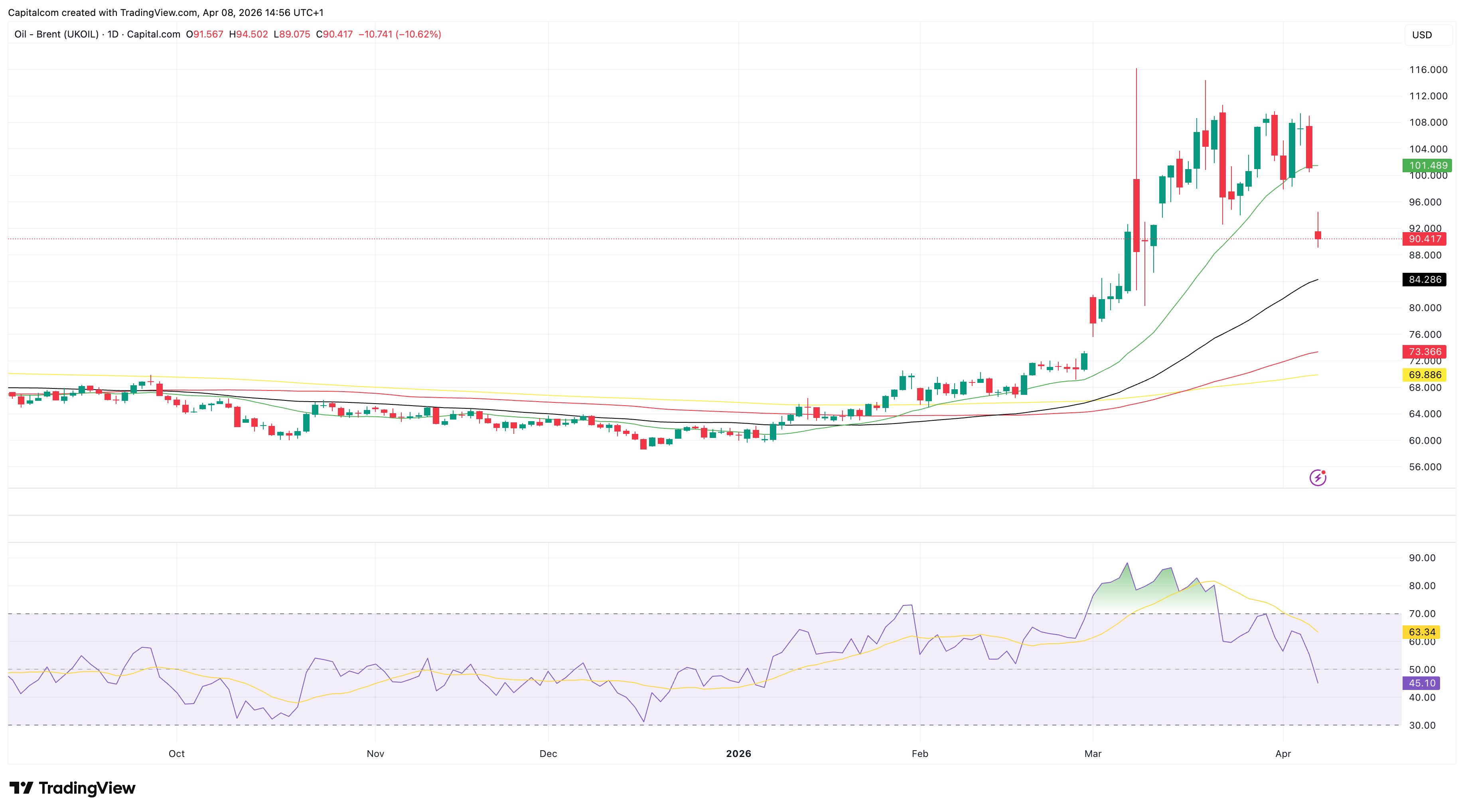
Oil has staged a sharp reversal following reports of a two-week conditional ceasefire between the US and Iran and tentative steps toward reopening the Strait of Hormuz. Brent fell back below the psychologically important $100 a barrel mark after having traded materially higher during the peak of the crisis, as traders rapidly priced out part of the extreme geopolitical premium that had built up around the risk of prolonged supply disruption. Early signs of vessel movement through the Strait have also helped calm the market, reinforcing the view that the worst-case scenario for near-term energy flows may have been averted.
Brent Crude daily chart
Past performance is not a reliable indicator of future results.
That said, the move lower in oil should not be mistaken for full normalisation. The ceasefire is temporary and conditional, and markets remain unsure whether it will hold, let alone evolve into a durable peace agreement. Even the more optimistic read-through is that the market is shifting from pricing an immediate supply shock to pricing a more complex transition period: one where flows may resume, but where security, shipping costs and political risk remain elevated. Reports that Iran and Oman may impose transit fees, alongside higher insurance costs for tankers, suggest that even if oil keeps moving, it may do so at a higher structural cost than before the war.
What could happen next?
From here, there are three broad scenarios for oil. The first is the most constructive: the ceasefire holds, shipping gradually normalises and peace talks gain traction. In that case, Brent could continue to retrace toward the low-to-mid $80s, especially if the market gains confidence that the Strait will remain open and infrastructure damage proves manageable. However, whilst oil prices would likely normalise, it is unlikely that they will return to the previous $60 level anytime soon, with futures pointing at elevated prices throughout the remainder of 2026.
The second is a muddle-through outcome, where the ceasefire formally survives but remains fragile, with sporadic incidents, slow-moving diplomacy and persistent uncertainty around the Strait. That would likely keep Brent in a volatile but elevated range, perhaps around the high $80s to mid $90s, as the market retains a meaningful residual risk premium.
So far, less than 24 hours since the ceasefire was agreed, there are already reports of heavy airstrikes across the Gulf states, casting doubt over the likelihood of the ceasefire terms being upheld. This leads to the third, and most disruptive, scenario in which talks break down and hostilities resume. In that case, oil could quickly reprice higher again, particularly if energy infrastructure or shipping lanes become direct targets.
The key point is that oil is no longer trading just on the existence of war, but on the probability of normalisation. During the height of the conflict, front-month prices reflected acute fears over the loss of a major share of global seaborne energy supply. Now, traders are asking a different question: how much of that lost flow can realistically come back, how quickly, and at what cost? Until those questions are answered, price action is likely to remain highly sensitive to headlines. A ceasefire can remove panic, but it does not instantly repair damaged infrastructure, restore insurer confidence or eliminate the political leverage attached to the Strait.