
SpaceX IPO prices at $135 ahead of Nasdaq debut
SpaceX priced its $75bn IPO at $135 a share before its 12 June 2026 Nasdaq Global Select Market debut, with valuation, Starlink, risks and CFD trading in focus.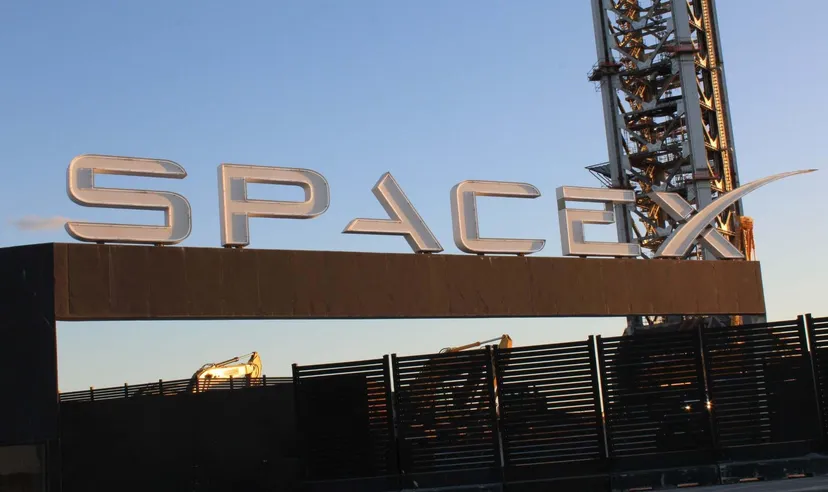
Learn about the SpaceX IPO, including its business model, potential valuation, key price drivers, and how to trade its stock via CFDs if it becomes available. Contracts for difference (CFDs) are traded on margin, leverage can amplify both profits and losses.
This is a marketing communication and should not be construed as investment advice. IPO stocks can be highly volatile. Early trading may involve rapid price movements, limited trading history and significant risk.
Takeaways
- SpaceX priced its IPO at $135 a share ahead of its 12 June 2026 Nasdaq listing under the ticker SPCX.
- The IPO raised $75bn through the sale of 555.56m shares, valuing SpaceX at about $1.77tn.
- Starlink growth, launch activity, Starship progress and future capital spending are central to how public markets may assess SpaceX.
- The IPO has drawn scrutiny around valuation, governance, investor protection, retail participation and the possible impact of index inclusion.
- SpaceX made a larger-than-usual portion of the offering available to retail investors, which may contribute to early trading interest.
- If SpaceX lists and becomes available on Capital.com, SpaceX share CFDs would let traders speculate on price movements without owning the underlying shares.
- IPO stocks can be volatile, and CFDs are leveraged products, meaning both profits and losses can be magnified.
Latest SpaceX IPO news: 12 June 2026
On 12 June 2026, SpaceX priced its IPO at $135 a share, selling 555.56m shares and raising $75bn (Reuters, 12 June 2026). The pricing values the space, satellite and AI provider at about $1.77tn, making it the largest IPO on record and placing SpaceX among the biggest US-listed companies by market value as trading begins under the ticker SPCX (Reuters, 11 June 2026).
Market attention now moves from pricing to the first day of trading. Given the size of the offer, SpaceX shares may not begin trading immediately after the Nasdaq open, as the exchange and underwriters work through buy and sell orders before setting an opening price. Some market participants may also view the listing as an early test for a wider pipeline of large technology and AI-related IPOs (Investing.com, 12 June 2026; CNBC, 11 June 2026).
The offer has also stood out for its retail allocation. Reuters reported that SpaceX set aside 30% of the IPO for retail investors, while Morningstar said the final allocation may be closer to 20% (Morningstar, 12 June 2026). In either case, the allocation is unusually high for a large US listing and may contribute to early trading interest, particularly among investors who were unable to buy shares at the IPO price. Newly listed shares can move sharply in early trading, and demand at the offer stage does not guarantee post-listing performance (Reuters, 5 June 2026).
Valuation is likely to remain a key area of focus. SpaceX has described a $28.5tn market opportunity across launch, satellite connectivity and AI infrastructure, with Starlink currently accounting for most of its revenue (Bloomberg, 21 May 2026). At the same time, analysts have noted the company’s capital requirements, governance structure, competition from rivals such as Blue Origin, and the uncertainty around newer AI-related business lines (Morningstar, 28 May 2026). Morningstar has estimated SpaceX’s fair value at around $780bn, well below the IPO valuation (Morningstar, 12 June 2026).
When is the SpaceX IPO date?
SpaceX priced its IPO after the US market closed on 11 June 2026, with trading expected to begin on 12 June 2026 on the Nasdaq Global Select Market and Nasdaq Texas under the ticker SPCX (Reuters, 12 June 2026). SpaceX had previously confidentially filed with the US SEC on 1 April 2026 and publicly filed its S-1 prospectus on 20 May 2026, offering investors a first public view of its internal finances and risk factors. (Yahoo Finance, 20 May 2026). The company’s pricing announcement confirmed the $135 offer price, the sale of 555.56m shares and an expected offering close on 15 June 2026, subject to customary closing conditions.
SpaceX's roadshow launched on 4 June 2026 – ahead of the previously reported week-of-8-June estimate – driven by an accelerated timeline following a quicker-than-expected SEC review (BNN Bloomberg, 15 May 2026). Share pricing is expected after market close on 11 June, with the first trading day targeted for 12 June on Nasdaq under the ticker SPCX (Reuters, 3 June 2026; Yahoo Finance, 3 June 2026). Reuters reports SpaceX is targeting an IPO price of $135 per share for an offering of 556.6 million shares, targeting a $75bn raise at a $1.75tn valuation – which would be the largest IPO in stock market history (Reuters, 3 June 2026. Approximately 125 analysts from 21 participating banks are expected to meet SpaceX management, and a dedicated event for around 1,500 retail investors is planned for 11 June (Finimize, 7 April 2026).
Key IPO timing factors include:
| Factor | Why it matters |
|---|---|
| SEC review | SpaceX confidentially submitted a draft registration statement to the SEC on 1 April 2026 and publicly filed its S-1 on 20 May 2026; the public filing provides detail on financials, risk factors, and share structure (Yahoo Finance, 20 May 2026). |
| Roadshow demand | SpaceX’s roadshow kicked off around 4–5 June 2026; the IPO later priced at $135 a share, giving traders a fixed reference point for the first day of trading (Reuters, 12 June 2026). |
| Market conditions | Broader equity market sentiment can influence IPO timing; SpaceX's own advisers have noted the listing could slip to 2027 depending on conditions (Reuters, 3 June 2026). |
| Starlink growth | Starlink's subscriber base and revenue – estimated at 58% of SpaceX's total revenue in 2024 – are central to valuation discussions (SpaceXStock.com, 25 March 2026). |
| IPO structure | Reuters reported that Elon Musk is discussing allocating up to 30% of IPO shares to retail investors – at least three times the typical 5–10% reserved in standard public offerings (Reuters, 3 June 2026; Seeking Alpha, 26 March 2026). |
SpaceX has previously been discussed as a possible Starlink spin-off candidate. However, current reporting points to a wider SpaceX listing rather than a confirmed standalone Starlink IPO.
What is SpaceX?
SpaceX, or Space Exploration Technologies Corp., is a US private aerospace and satellite communications company founded by Elon Musk in 2002. It develops rockets, spacecraft and satellite networks used for commercial launches, government missions, broadband connectivity and future space transport projects.
Its main operations include Falcon rocket launches, Dragon spacecraft missions, Starship development and Starlink satellite internet services.
Key milestones in SpaceX’s journey
- 2002 – Elon Musk founded SpaceX.
- 2008 – Falcon 1 becomes the first privately developed liquid-fuelled rocket to reach orbit.
- 2012 – Dragon becomes the first commercial spacecraft to deliver cargo to the International Space Station.
- 2020 – SpaceX launches NASA astronauts to the ISS, becoming the first private company to complete a crewed orbital mission.
- 2025 – Starlink expands further across consumer, enterprise, maritime and aviation broadband markets.
- 2026 – SpaceX is reportedly preparing for a June IPO, with Starlink expected to play a major role in the valuation case.
How does SpaceX make money?
SpaceX earns revenue from a mix of launch services, government contracts, satellite broadband subscriptions and emerging technology projects.
| Revenue stream | Description |
|---|---|
| Launch services | Fees from commercial companies, NASA and defence agencies for satellite, cargo and crew launches. |
| Starlink subscriptions | Monthly broadband charges from residential, enterprise, maritime, aviation and other users. |
| Government contracts | Long-term contracts and mission payments linked to civil, defence and space exploration programmes. |
| Satellite deployment | Paid launches for companies and institutions placing satellites into orbit. |
| Emerging initiatives | Newer areas including direct-to-cell services, Starship-based missions and space infrastructure concepts. |
SpaceX reportedly generated about $15bn–$16bn in revenue and around $8bn in profit in 2024, according to Reuters reporting from January 2026 (Reuters, 1 April 2026). More recent figures reported by The Information in April 2026 indicate that SpaceX's 2025 revenue exceeded $18.5bn, though the company posted a loss of nearly $5bn for the year – a reversal largely attributed to the integration of xAI, Elon Musk's artificial intelligence venture acquired by SpaceX in February 2026 (Reuters, 10 April 2026). Starlink is widely viewed as the primary driver of SpaceX's commercial growth, accounting for an estimated $10bn of total revenue in 2025 and generating around $6bn in EBITDA from its core launch and satellite operations (Yahoo Finance, 14 April 2026).
What might influence the SpaceX live stock price?
If SpaceX lists publicly, its share price could be influenced by operational performance, reported financials, investor demand, regulation and broader market conditions. The same themes may also affect sentiment toward other space, satellite and aerospace companies. Any SpaceX CFDs, if offered, would track movements in the underlying share price without giving traders ownership of SpaceX shares.
Starlink subscriber growth and profitability
Starlink is expected to be central to the SpaceX investment case. The satellite internet service passed 10 million subscribers in February 2026, after doubling its customer base in 2025 from 4.5 million to 9 million.
Potential price drivers include:
- Subscriber growth in existing and new markets
- Average revenue per user
- Pricing changes and hardware costs
- Enterprise, aviation and maritime adoption
- Direct-to-cell service development
- Network reliability and capacity
The scale of Starlink’s revenues, and the cost of maintaining and replacing its satellite constellation, may be important to how public markets value SpaceX.
Launch cadence, cost efficiency and reusability
SpaceX’s reusable rocket model has changed launch economics across the aerospace sector. A higher launch cadence can support revenue, but delays, failed launches or regulatory interruptions may affect sentiment.
Potential stock price influences include:
- Annual launch volume
- Falcon 9 and Falcon Heavy reliability
- Launch margins
- New government or commercial contracts
- Delays linked to safety, regulation or technical issues
A consistent launch schedule may support confidence in SpaceX’s operating model, while disruption could increase short-term volatility.
Progress on Starship
Starship is SpaceX’s fully reusable heavy-lift rocket programme. It is linked to future satellite deployment, lunar missions and longer-term space transport plans.
Investors may follow:
- Orbital test progress
- Regulatory approvals
- In-space refuelling milestones
- NASA and other government contract updates
- Starship’s role in lowering satellite deployment costs
Starship could affect long-term growth expectations, but it also carries technical, financial and regulatory risk.
IPO valuation and capital raise
SpaceX priced its IPO at $135 a share, raising $75bn through the sale of 555.56m shares. Reuters reported that the deal valued the company at about $1.77tn, making it the largest IPO on record and placing SpaceX among the largest US-listed companies by market value at debut (Reuters, 12 June 2026).
Valuation may be influenced by:
- Reported revenue and profit figures
- Starlink’s share of total revenue
- Future capital spending needs
- Investor appetite for large technology listings
- Governance disclosures in the public S-1
- Index inclusion expectations after listing
- Early trading liquidity and whether the stock holds above or below its $135 offer price
The scale of the valuation is also likely to remain under scrutiny. Morningstar values SpaceX at $780bn, citing a narrow moat in the company’s launch and satellite communications businesses, while noting a wide range of possible outcomes for the newer AI business (Morningstar, 5 June 2026).
Regulation and geopolitical factors
SpaceX operates across regulated industries, including telecommunications, aerospace, defence and satellite spectrum. That makes regulatory and geopolitical developments important to any public-market valuation.
Potential factors include:
- Federal Communications Commission (FCC) spectrum decisions
- Federal Aviation Administration (FAA) launch approvals
- Defence contract scrutiny
- Export controls
- Orbital debris and environmental concerns
- International competition in satellite communications and launch services
Any regulatory delay or change in government procurement priorities could affect market sentiment.
What would SpaceX share CFD trading involve?
Now that SpaceX is expected to begin trading publicly, brokers such as Capital.com may review whether to offer SpaceX share CFDs. CFDs let you trade price movements without owning the underlying shares.
If SpaceX share CFDs become available, key points to consider may include:
Product availability
Availability would depend on market access, liquidity, demand and internal product review after listing.
No share ownership
Trading SpaceX share CFDs would not give you voting rights, dividends or ownership of the underlying shares.
IPO volatility
Newly listed shares can experience sharp price movements, particularly during early trading when liquidity and price discovery are still developing.
Leverage and margin
CFDs are traded on margin, which means both gains and losses can exceed the initial amount required to open a position.
Risk-management tools
Tools such as stop-losses and take-profits can help manage exposure, although not all stop-losses are guaranteed.
Market information
Official filings, IPO pricing, first-day liquidity, company disclosures and post-listing news may all influence price movements.
CFDs are leveraged products. Leverage can magnify both profits and losses, so it’s important to understand the risks before trading. This section is for information only and is not an invitation or recommendation to trade SpaceX, any IPO stock, or CFDs.
Learn more in our CFD trading guide.
Which space and aerospace share CFDs can I trade?
SpaceX is expected to begin public trading on 12 June 2026. If SpaceX share CFDs are not yet available, several listed companies provide exposure to aerospace, satellite technology, defence contracting or space-related activity via CFDs.
- Rocket Lab (RKLB) – Small satellite launch services and space systems
- Virgin Galactic (SPCE) – Commercial spaceflight and suborbital tourism
- Boeing (BA) – Aerospace, defence and space hardware
- Lockheed Martin (LMT) – Defence, aerospace and space systems
- Northrop Grumman (NOC) – Launch systems, spacecraft and defence technology
- Amazon (AMZN) – Satellite broadband through Project Kuiper
These companies differ from SpaceX in structure, business model and risk profile. Traders should review each company’s financials, sector exposure and market conditions before deciding whether any related product is appropriate for them. Contracts for difference (CFDs) are traded on margin. Leverage amplifies both profits and losses.
Create an account Open a demo account
FAQ
Who owns SpaceX?
SpaceX is becoming a publicly listed company following its IPO, although Elon Musk is expected to retain significant voting control after the listing. Other shareholders have included employees, venture capital firms and institutional investors. Public reporting on SpaceX’s IPO filing suggests Musk would retain significant voting control after the listing, while public investors would receive shares with lower voting rights.
How much is SpaceX worth?
SpaceX priced its IPO at $135 a share, giving the company an implied valuation of about $1.77tn. If maintained after listing, this would make SpaceX one of the most valuable companies to enter public markets. Market value may change once shares begin trading, as the live share price moves above or below the IPO price (Reuters, 12 June 2026).
When will SpaceX IPO?
SpaceX priced its IPO on 11 June 2026, with shares expected to begin trading on 12 June 2026 on the Nasdaq Global Select Market and Nasdaq Texas under the ticker SPCX. The offering is expected to close on 15 June 2026, subject to customary closing conditions (SpaceX, 11 June 2026; Reuters, 12 June 2026).
How much could SpaceX raise in its IPO?
SpaceX raised $75bn by selling 555.56m shares at $135 a share. The company also granted underwriters a 30-day option to buy up to 83.33m additional shares at the IPO price, which could increase the total number of shares sold if exercised (SpaceX, 11 June 2026).
How many Starlink subscribers does SpaceX have?
Starlink passed 10 million subscribers in February 2026. The service had doubled its customer base in 2025, rising from 4.5 million to 9 million subscribers.
Will SpaceX be available for CFD trading?
If SpaceX lists publicly, brokers such as Capital.com may review whether to offer SpaceX share CFDs. Availability will depend on market access, liquidity, demand and product approval after listing. CFD trading would not involve ownership of SpaceX shares. Contracts for difference (CFDs) are traded on margin, and leverage can amplify both profits and losses.