
Iberdrola stock forecast: €30m grid and battery contracts
Iberdrola is a Spanish utility group. On 10 September 2026, it confirmed €30m of battery and grid-equipment contracts with Ingeteam and Ormazabal. Explore third-party IBE price targets and technical analysis. Past performance is not a reliable indicator of future results.
Iberdrola S.A. (IBE) traded at €20.08 as of 10:09am UTC on 10 September 2026, near the top of the session's €19.75–€20.15 range. Past performance is not a reliable indicator of future results.
Recent company news includes Iberdrola's confirmation of €30m in contracts with Ingeteam and Ormazabal for battery and grid equipment (Iberdrola, 9 September 2026). The wider IBEX 35 has been volatile amid crude prices above $100 a barrel and inflation concerns ahead of the European Central Bank meeting (MarketScreener, 10 September 2026).
Third-party Iberdrola outlook: grid contracts and mixed ratings
As of 10 September 2026, third-party Iberdrola stock predictions include earnings estimates, consensus ratings, price targets and valuation forecasts. These use different methodologies and, in some cases, different listings, so they aren't directly comparable.
Erste Group Bank
Erste Group Bank projects full-year 2026 earnings of $4.71 per share, up from its previous estimate of $4.67, and $5.03 per share for FY2027. Analyst S. Lingnau maintains a buy rating, with the revision following Iberdrola's second-quarter results and contributions from international projects (MarketBeat, 31 August 2026).
MarketBeat
MarketBeat reports a consensus hold rating based on nine analysts, comprising six hold, two buy and one sell recommendation. The source also provides a current-year consensus EPS estimate, adding an earnings-based measure to the distribution of analyst ratings (MarketBeat, 8 September 2026).
Investing.com
Investing.com reports a 12-month average target of €20.51 across 23 analysts, with estimates ranging from €17.30–€23.50. The consensus is neutral, comprising six buy, 16 hold and one sell recommendation. The spread reflects different assumptions around earnings, interest rates and utility valuations (Investing.com, 4 September 2026).
Zacks Investment Research
Zacks reports a consensus target of $97.02 for Iberdrola's US-listed ADRs, against a last close of $92.57, and assigns the stock a Zacks Rank of 2. As this relates to the US-listed instrument rather than the Madrid-listed ordinary shares, it isn't directly comparable with euro-denominated IBE targets (Zacks, 9 September 2026).
MarketScreener
MarketScreener's forecast data includes a projected price-to-earnings ratio of 19.6x and EV/Sales multiple of 4.05x. These are valuation estimates derived from aggregated analyst models rather than direct share-price targets (MarketScreener, 10 September 2026).
Predictions and third-party forecasts are inherently uncertain, as they cannot fully account for unexpected market developments. Past performance is not a reliable indicator of future results.
Iberdrola earnings: latest results and next report
Iberdrola reported H1 2026 results on 22 July. Reported net profit rose 22% year on year to €4.336bn, while adjusted net profit increased 8% to €3.565bn from €3.308bn in H1 2025 (Iberdrola, 22 July 2026).
Adjusted EBITDA grew 7% to more than €8bn, with the company citing Networks growth as one contributor to the stronger second quarter. Revenue rose 4.2% to €22.469bn from €21.571bn, while gross margin increased 3.7% to €12.257bn.
Iberdrola's financial calendar lists its nine-month 2026 results for 21 October (Iberdrola, accessed 10 September 2026). As of 10 September, the H1 figures remain the latest reported results covered here.
Past performance is not a reliable indicator of future results, and scheduled reporting dates may change.
IBE stock price: technical overview
As of 10:09am UTC on 10 September 2026, TradingView data shows the IBE stock price at €20.08, with its 20-, 50-, 100- and 200-day simple moving averages at approximately €20.02, €20.56, €20.35 and €19.72 respectively. The price sits above the 20- and 200-day averages but below the 50- and 100-day averages. The 20-day average also remains below the 50-day average.
The 14-day relative strength index (RSI) sits near 46.3, within neutral territory. The average directional index (ADX) at 31.2 indicates an established trend without showing its direction on its own.
Above the latest price, the classic pivot near €20.28 provides the first reference, followed by R1 at €20.68 and R2 around €21.28. Below the price, the 20-day moving average near €20.02, Hull moving average around €19.95 and 200-day average near €19.72 provide additional references, with S2 lower at approximately €19.29.
A move higher could bring €20.28 and €20.68 into focus, while a decline could shift attention towards €20.02, €19.95 and €19.72 (TradingView, 10 September 2026).
This is technical analysis for informational purposes only and does not constitute investment advice or a recommendation to buy or sell any instrument.
Iberdrola share price history (2024–2026)
IBE’s stock price traded as low as €12.99 on 19 December 2024, the lowest level in the two-year period covered here, before closing the year at €13.36. The shares then rose through 2025 to finish at €18.52, around 38.6% above their 2024 year-end close.
Iberdrola opened 2026 near €18.67 and traded around €19.09 on 23 March before moving higher through spring and early summer. The stock reached a two-year high of €21.95 on 30 June before easing over the following months.
As of 10:09am UTC on 10 September 2026, Iberdrola traded near €20.08, around 7.6% higher year to date and approximately 27.6% above its level a year earlier.

Past performance is not a reliable indicator of future results. Share prices are indicative and may differ from live market prices.
Iberdrola (IBE): Capital.com analyst view
Iberdrola's share price has risen overall over the past two years, moving from €13.36 at the end of 2024 to a two-year high of €21.95 in June 2026 before easing towards €20 by September. Over the same period, the company continued investing in electricity networks and renewables, while reported H1 2026 net profit rose 22% year on year.
Several factors could influence the shares in either direction. Continued earnings growth, grid investment or lower financing costs could support valuations, while higher interest rates may weigh on capital-intensive utilities. Regulatory changes, project execution and energy-market conditions could also support or weigh on expectations depending on how they develop.
Capital.com’s client sentiment for Iberdrola CFDs
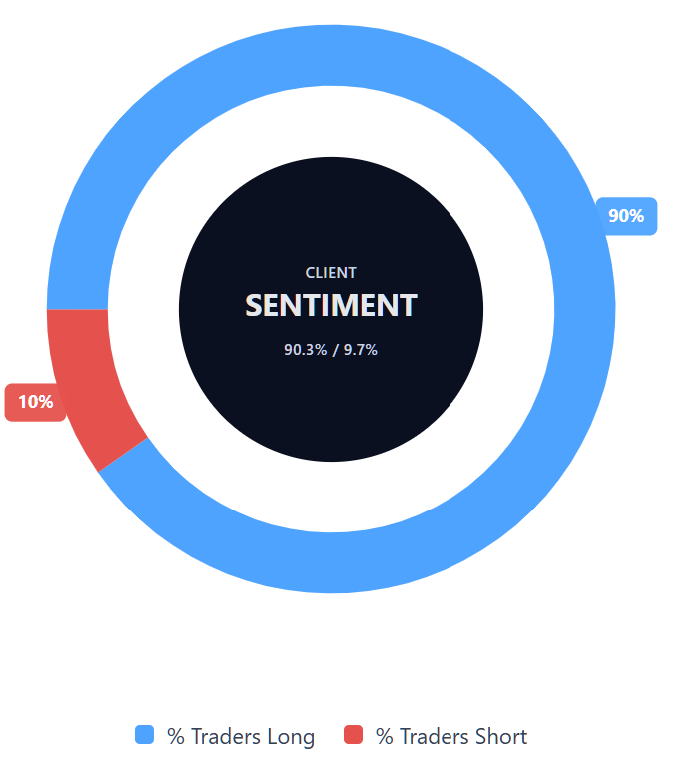
As of 10 September 2026, Capital.com client positioning in Iberdrola CFDs shows 90.3% long and 9.7% short. This reflects open positions on Capital.com at the time of measurement rather than future price direction and can change.
Summary – Iberdrola 2026
- As of 10:09am UTC on 10 September 2026, Iberdrola traded near €20.08, within an intraday range of €19.75–€20.15.
- According to TradingView data, tThe price sat above its 20- and 200-day moving averages but below its 50- and 100-day averages, while RSI stood near 46 and ADX at 31.2.
- Key factors include H1 earnings, grid and battery-equipment contracts, interest-rate expectations and wider energy-market conditions.
- Earnings growth, continued grid investment or lower financing costs could support the shares, while higher rates, weaker results or regulatory pressure could weigh on them.
- Recent news includes Iberdrola's €30m contracts with Ingeteam and Ormazabal, alongside mixed third-party analyst views.
Past performance is not a reliable indicator of future results.
FAQ
Who owns the most Iberdrola stock?
What is the five-year Iberdrola share price forecast?
Is Iberdrola a good stock to buy?
Could Iberdrola stock go up or down?
Should I invest in Iberdrola stock?
Can I trade Iberdrola CFDs on Capital.com?
Yes, you can trade Iberdrola CFDs on Capital.com. Trading share CFDs lets you speculate on price movements without owning the underlying asset and to take long or short positions. However, contracts for difference (CFDs) are traded on margin, and leverage amplifies both profits and losses. You should ensure you understand how CFD trading works, assess your risk tolerance, and recognise that losses can occur quickly.