
Stellar Lumens price prediction: MetaMask integration, Bell Upgrade Vote
Stellar is a blockchain network used for payments and asset tokenisation. Validator votes on its Bell (Protocol 30) upgrade are scheduled for 3 and 23 November 2026. Explore third-party XLM price targets and technical analysis. Past performance is not a reliable indicator of future results.
Stellar (XLM/USD) is trading at $0.16732 as of 12:32pm UTC on 2 November 2026, within an intraday range of $0.16675–$0.17059. The price sits near the session low. Past performance is not a reliable indicator of future results.
Stellar fell around 23% in October 2026 to approximately $0.17, ahead of November's scheduled validator votes on the Bell (Protocol 30) upgrade. Chainlink Data Feeds also went live on Stellar on 14 October. In the wider cryptocurrency market, Binance reported a $6.3bn security breach in late October, while Bitcoin traded near $78,000 on 2 November (24/7 Wall St, 29 October 2026; Stellar Development Foundation, 14 October 2026).
XLM price prediction 2026-2030: Analyst price target view
Third-party XLM price predictions include algorithmic estimates, scenario ranges and conditional outlooks. These forecasts do not represent a broker consensus or investment recommendations.
Stellar price prediction 2026
- CoinLore estimates XLM at $0.17 for 3 November 2026, with a projected 24-hour range of approximately $0.16–$0.18 (CoinLore, 1 November 2026).
- CoinCodex forecasts approximately $0.20 by the end of 2026, based on historical price data, past volatility and technical indicators (CoinCodex, 2 November 2026).
- Crypto News models a December 2026 base case of $0.20, with bearish and bullish scenarios of $0.17 and $0.24 respectively (crypto.news, 2 November 2026).
- Coinpedia outlines a possible move towards $0.34, provided support near $0.1456 holds and XLM reclaims resistance around $0.1757. A sustained break below support would weaken this scenario (Coinpedia, 29 October 2026).
- CryptoPredictions estimates an average XLM price of $0.22 for December 2026, within a range of $0.19–$0.28 (CryptoPredictions, 2 November 2026).
Stellar price prediction 2027
- Crypto News projects a 2027 base-case price of $0.23, with bearish and bullish scenarios of $0.16 and $0.32 respectively (crypto.news, 2 November 2026).
- CoinDataFlow forecasts a 2027 trading range of $0.11–$0.31, with an average price of $0.21, using a model based on Bitcoin's four-year cycle (CoinDataFlow, 3 November 2026).
- CryptoTicker estimates a 2027 average XLM price of $0.21, within a range of $0.09–$0.40 (CryptoTicker, 3 November 2026).
Stellar price prediction 2030
- Crypto News models a 2030 base-case price of $0.54, with bearish and bullish scenarios of $0.38 and $0.75 respectively (crypto.news, 2 November 2026).
- CoinDataFlow projects a 2030 range of $0.35–$1.28, with an average price of $0.82, using cycle-based modelling (CoinDataFlow, 3 November 2026).
- CoinCodex forecasts XLM at $0.37 by 2030, drawing on historical price data and Bitcoin halving cycles (CoinCodex, 3 November 2026).
- CoinLore suggests a move towards $0.31 by 2030, based on historical volatility, trend persistence and cycle modelling (CoinLore, 3 November 2026).
- CryptoTicker forecasts a 2030 average XLM price of $0.27, within a range of $0.04–$1.02 (CryptoTicker, 3 November 2026).
Stellar technical analysis
The XLM/USD price trades at $0.16732 as of 12:32pm UTC on 2 November 2026, below its 20-, 50-, 100- and 200-day simple moving averages (SMAs), at approximately $0.17, $0.19, $0.18 and $0.18 respectively.
The 14-day relative strength index (RSI) reads 38.76, indicating subdued momentum without reaching oversold territory. The 14-day average directional index (ADX) stands at 28.30, indicating some trend strength without establishing its direction.
On the upside, the 100- and 200-day SMAs near $0.18 provide initial resistance references, followed by the classic pivot at $0.19. Beyond these levels, R1 stands at $0.21 and R2 at $0.26.
On the downside, the classic S1 level at $0.14 provides a lower support reference. A move above the central pivot could bring R1 into view, while further declines could shift attention towards S1 (TradingView, 2 November 2026).
This is technical analysis for informational purposes only and does not constitute financial advice or a recommendation to buy or sell any instrument.
Stellar CFD price history (2024–2026)
XLM/USD CFDs began November 2024 around $0.09, rising to an intraday high of $0.64 on 24 November, its highest level during this two-year period. The year closed near $0.33.
XLM peaked again at $0.52 on 18 July 2025 before declining through the autumn. It dipped to $0.24 intraday on 10 October during a broader sell-off, ending 2025 near $0.20.
In 2026, XLM touched a low of $0.14 on 6 February and spent much of April and May between $0.14 and $0.17. A recovery in late May took the price to approximately $0.30 on 30 May before it eased through the summer. Further declines brought XLM back towards $0.16 on 29 October.
At $0.16732 on 2 November 2026, XLM was approximately 16% lower year to date and 45% lower year on year.

Past performance is not a reliable indicator of future results. Prices are indicative and may differ from live market prices.
Stellar latest and upcoming macro and sector news
MetaMask–Stellar integration
MetaMask added Stellar as a default network on 29 October 2026, allowing users to manage XLM and Stellar-based assets without manually adding the network. Chainlink Data Feeds and Data Streams launched on 14 October, expanding access to market data for Stellar-based applications (MetaMask, 29 October 2026; Stellar Development Foundation, 14 October 2026).
Bell upgrade vote
The Bell (Protocol 30) upgrade faces a testnet validator vote on 3 November, followed by a mainnet vote on 23 November. Proposed changes include expanded smart contract functionality, support for post-quantum signature verification and groundwork for faster ledger processing. Implementation depends on validator approval (Stellar Development Foundation, 20 October 2026).
$6.3bn Binance cyberattack
Binance resumed withdrawals following its reported $6.3bn security breach in late October, during a period of wider cryptocurrency market volatility (Reuters, updated 2 November 2026).
Capital.com analyst view: Stellar
MetaMask's addition of Stellar as a default network and the launch of Chainlink Data Feeds have expanded access to Stellar-based services, although their effect on demand for XLM remains uncertain.
The Bell (Protocol 30) upgrade could influence network activity and sentiment, depending on validator approval and implementation.
Tokenisation partnerships may encourage wider use of Stellar, although higher activity does not necessarily lead to higher XLM prices. Broader cryptocurrency market conditions could also affect demand, with continued outflows potentially weighing on prices while stabilising flows may provide support.
Capital.com’s client sentiment for Stellar CFDs
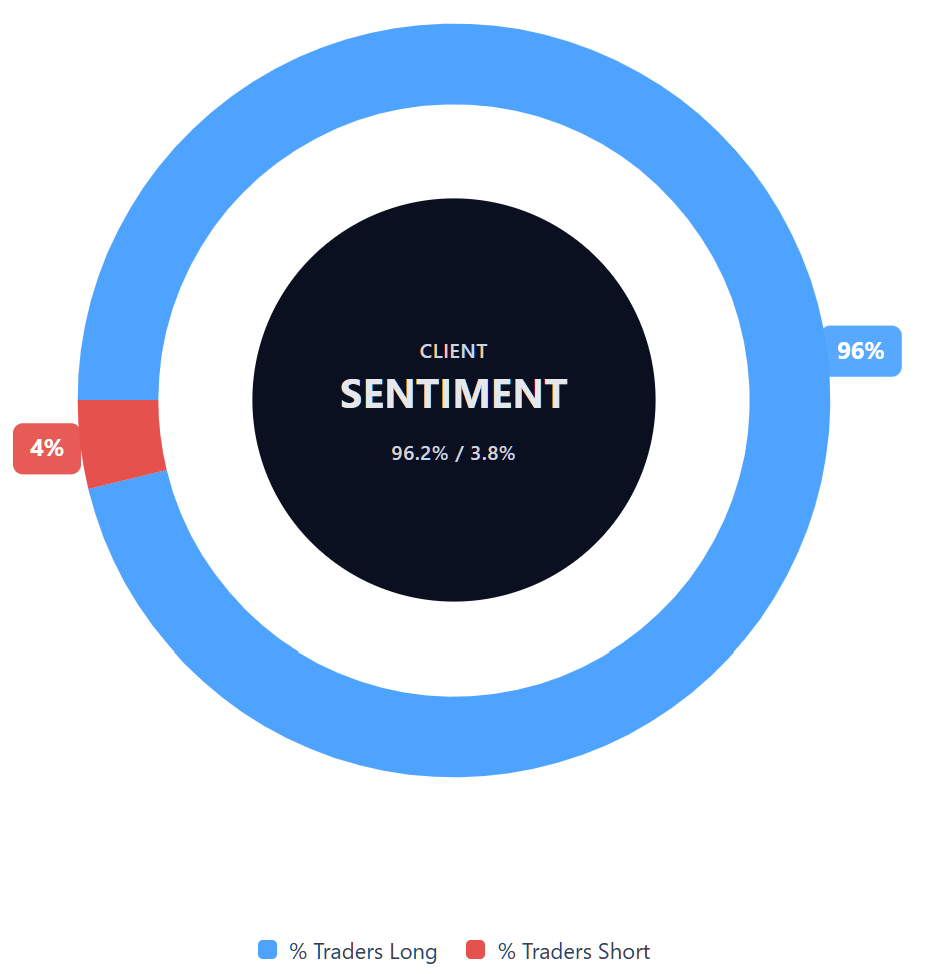
As of 2 November 2026, Capital.com client positioning in Stellar CFDs shows 96.2% buyers and 3.8% sellers, a difference of 92.4 percentage points. The figures reflect open positions as of 2 November 2026 and can change. They do not indicate future price direction.
Summary – Stellar (2026)
- Stellar traded at $0.16732 as of 12:32pm UTC on 2 November 2026, within an intraday range of $0.16675–$0.17059, near the session low.
- According to TradingView. technical readings place XLM below its 20-day and 50-day simple moving averages, while the 14-day RSI of 38.76 indicates subdued momentum.
- Potential price influences include the Bell (Protocol 30) upgrade votes, tokenisation partnerships and wider cryptocurrency flows, with possible effects in either direction.
- Recent news includes MetaMask's Stellar integration, the launch of Chainlink Data Feeds and upcoming Bell upgrade votes, against a backdrop of cryptocurrency volatility following the Binance security breach.
Past performance is not a reliable indicator of future results.