
NOK/PLN forecast: Third-party price targets
Norwegian krona Polish zloty (NOK/PLN) is a foreign exchange cross that compares Norway’s krone with Poland’s zloty, reflecting relative economic conditions and monetary policy in both countries.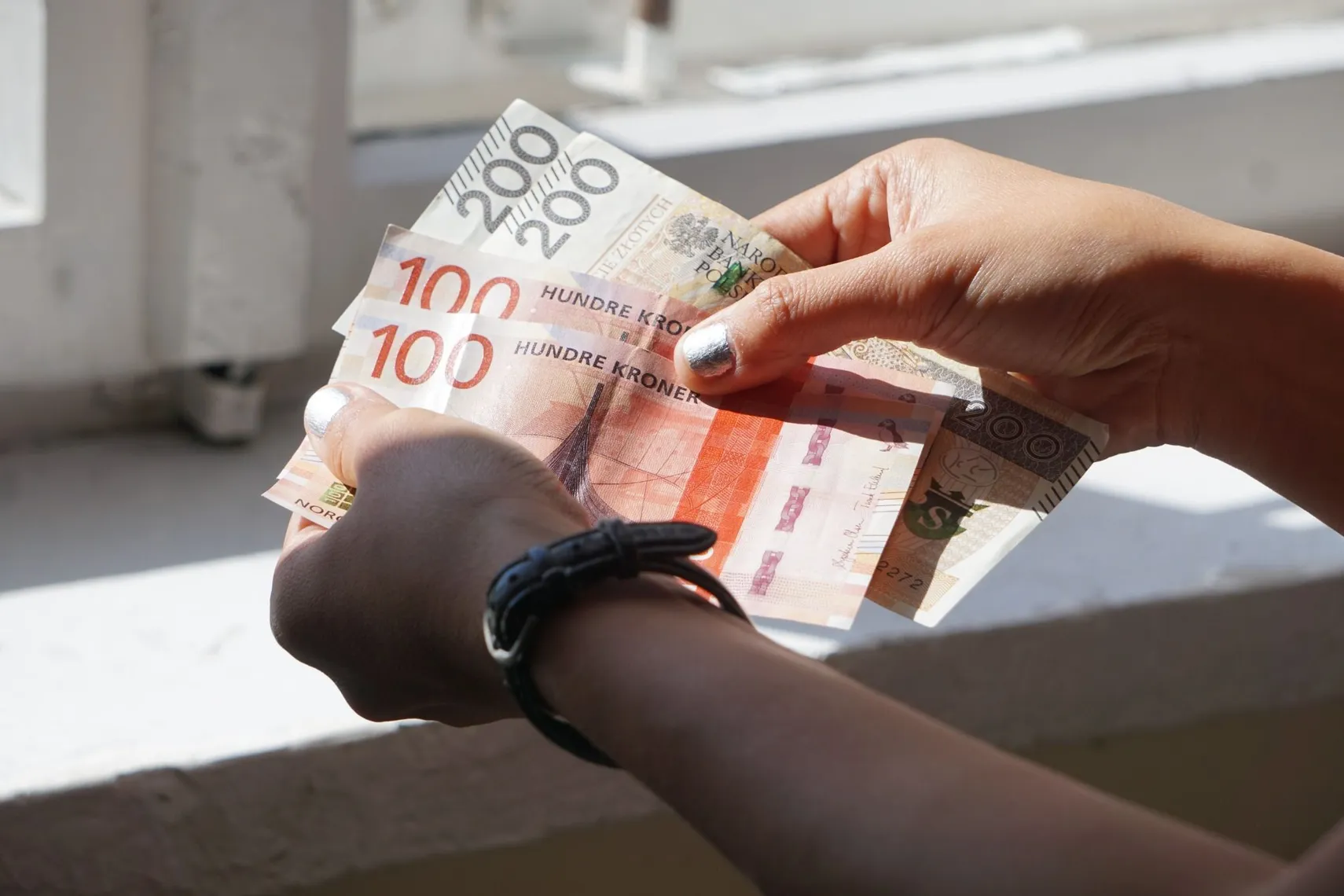
The Norwegian krona Polish zloty (NOK/PLN) pair – as of 6 February 2026 at 10:23am – has broadly tracked wider Nordic and Central European currency movements, with recent NOK levels versus PLN remaining close to the ranges observed in January 2026 across major interbank and retail platforms. Past performance is not a reliable indicator of future results.
The cross is trading amid Norway’s ongoing daily foreign-exchange sales of 726 million NOK in February 2026 to fund government transfers, a factor that can affect krone liquidity conditions (Norges Bank, 30 January 2026), while Poland’s zloty has responded to easing domestic inflation pressures, with December’s annual CPI at 2.4%, slightly below the National Bank of Poland’s 2.5% target (Trading Economics, 4 February 2026). Broader PLN performance is also shaped by external influences, including developments in USD/PLN, with the zloty showing modest relative strength over the past month (Trading Economics, 6 February 2026).
NOK/PLN forecast 2026–2030: Analyst price target view
As of 6 February 2026, third-party Norwegian krona–Polish zloty predictions tend to focus on how structural NOK flows, Central European inflation dynamics, and broader G10 FX conditions may influence NOK/PLN over the coming year. The mini-briefs below summarise six dated sources that discuss anticipated currency behaviour for the Norwegian krone and Polish zloty in 2026, which can provide contextual insight when assessing NOK/PLN.
MUFG (annual FX outlook, NOK vs USD)
MUFG’s 2026 Annual Foreign Exchange Outlook outlines a USD/NOK profile with the pair around 10.07 at end-Q1 2026 and 10.00 at end-Q4 2026, implying a gradual NOK appreciation against the US dollar over the year. MUFG notes that this scenario is based on assumptions of a softer US dollar and stable domestic conditions in Norway, with rate differentials and macroeconomic factors expected to support incremental NOK moves, subject to global risk conditions (MUFG Research, 7 January 2026).
Nordea (Nordic macro and NOK flows)
Nordea’s article ‘Growing demand for NOK’ suggests that after several years of persistent downward pressure, structural net NOK transactions have shifted towards a more supportive profile for the currency in 2026. The bank links this to changing flow dynamics and still-restrictive real interest rates in Norway, while also noting that NOK remains sensitive to broader risk sentiment despite domestic fundamentals (Nordea, 23 January 2026).
ING (EMEA FX Talking, EUR/PLN path)
ING’s ‘EMEA FX Talking: CEE to continue outperforming forwards’ sets out an EUR/PLN path around 4.21 in one month, 4.23 in three months, 4.24 in six months, and 4.22 in twelve months, pointing to a broadly stable PLN profile over the year. ING notes that Poland’s CEE complex is expected to perform relatively well versus forwards, supported by growth momentum, moderating inflation, and a credible policy framework, while external and euro-area developments remain relevant drivers (ING Think, 14 January 2026).
Monex Europe (Week Ahead, PLN focus)
In its ‘Week Ahead: 2–6 February 2026’ note, Monex Europe indicates that the National Bank of Poland is likely to keep the reference rate at 4% in February, despite headline inflation easing to 2.4%. The note describes this stance as a tactical pause within an easing cycle, with strong consumption, persistent wage growth, and positive real rates arguing for a cautious policy approach. Any short-term PLN strength is described as potentially limited as markets reassess the timing of further rate cuts (Monex Europe, accessed 6 February 2026).
Predictions and third-party forecasts are inherently uncertain, as they cannot fully account for unexpected market developments. Past performance is not a reliable indicator of future results.
Norwegian krona–Polish zloty: Technical overview
On the daily chart, NOK/PLN trades above its main simple moving-average cluster, with the 20-, 50-, 100-, and 200-day SMAs converging around 0.36, keeping price close to its medium-term trend zone. The 14-day RSI near 60.7 sits in the upper-neutral range, while an ADX reading above 40 points to a well-established trend backdrop, rather than a purely range-bound environment.
On the upside, the nearest classic pivot resistance is R1 around 0.37, with a sustained daily close above that level bringing the 0.38 area near R2 into focus. On pullbacks, the classic pivot at 0.36 acts as an initial support area, followed by the 100-day SMA just below 0.36. A break beneath this zone could shift attention towards the S1 region around 0.36 (TradingView, 5 February 2026).
This technical analysis is for informational purposes only and does not constitute financial advice or a recommendation to buy or sell any instrument.
Capital.com analyst view
NOK/PLN has traded within a relatively contained range, with the cross remaining close to its primary moving-average cluster and momentum indicators such as the 14-day RSI holding in upper-neutral territory rather than at extreme levels. This suggests that market positioning has not become strongly one-sided, with both NOK- and PLN-focused participants continuing to engage with price movements in either direction. The elevated ADX highlights an established trend structure, while still allowing scope for both continuation and counter-trend phases as conditions change.
From a driver perspective, the pair often responds to developments in Norway’s energy-linked outlook and structural krone flows, alongside Poland’s inflation path and interest-rate expectations. Each of these influences can plausibly affect NOK/PLN in different ways. For instance, firmer energy prices or tighter Norwegian policy may support NOK, while periods of global risk aversion or weaker Norwegian data can offset such effects. Similarly, a stable policy framework and moderating inflation may underpin PLN, whereas softer growth outcomes or renewed easing expectations could weigh on it.
Summary – NOK/PLN 2026
- NOK/PLN trades close to its main daily moving-average cluster, suggesting a broadly balanced medium-term trend profile.
- Technical indicators present a mixed picture, with the 14-day RSI in upper-neutral territory and a relatively high ADX pointing to an established, but not extended, trend.
- Key fundamental drivers include Norway’s structural NOK flows and energy-linked considerations, alongside Poland’s inflation dynamics and National Bank of Poland policy stance.
- Analyst commentary highlights the uncertainty inherent in forecasts, with NOK/PLN remaining sensitive to global risk appetite and relative rate expectations across both economies.
Past performance is not a reliable indicator of future results.
FAQ
What is the Norwegian krona Polish zloty forecast?
The Norwegian krona Polish zloty (NOK/PLN) forecast typically reflects a range of third-party analyst perspectives, rather than a single directional outlook. Recent commentary points to a backdrop where NOK is influenced by structural flows and interest-rate differentials, while PLN is shaped by domestic inflation trends and central bank policy. As a result, forecasts often describe NOK/PLN as responsive to relative macroeconomic conditions and global risk sentiment, rather than implying a clear or certain price path.
What influences NOK/PLN movements?
NOK/PLN movements are influenced by a combination of domestic and external factors affecting both currencies. For the Norwegian krone, these can include energy-related developments, structural foreign-exchange flows, and Norges Bank policy expectations. The Polish zloty is often driven by inflation data, National Bank of Poland interest-rate decisions, and broader Central and Eastern European dynamics. Global risk sentiment and movements in major currency pairs can also play a role in shaping the cross.
Could NOK/PLN go up or down?
NOK/PLN can move in either direction, depending on how underlying drivers evolve over time. Factors that support the krone, such as favourable yield differentials or higher energy prices, may push the pair higher, while PLN-supportive developments could have the opposite effect. Periods of global risk aversion, shifts in monetary policy expectations, or unexpected economic data may also influence the balance between the two currencies. As with all markets, outcomes remain uncertain and subject to change.
Can I trade forex CFDs on Capital.com?
Yes, you can trade forex CFDs on Capital.com. Trading forex CFDs lets you speculate on price movements without owning the underlying currencies, and to take long or short positions. However, contracts for difference (CFDs) are traded on margin, and leverage amplifies both profits and losses. You should ensure you understand how CFD trading works, assess your risk tolerance, and recognise that losses can occur quickly.