
How far could the AI repricing go, and can gold benefit?
AI jitters continue to weigh on stocks but gold is unable to take advantage of the risk-off mood.
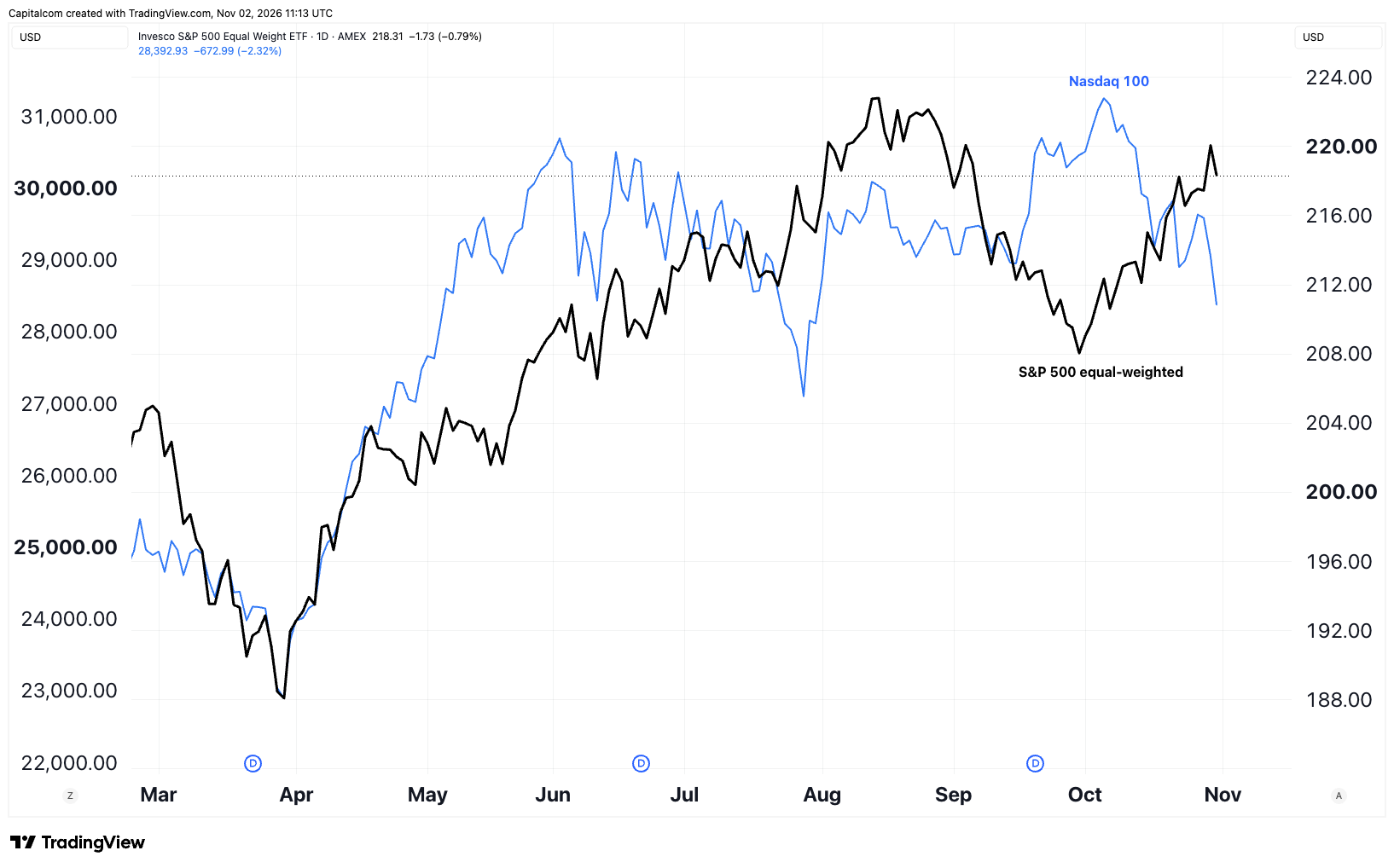
The recent divergence between the Nasdaq and the equal-weighted S&P 500 highlights how much of the latest market weakness has been concentrated in technology stocks. As the tech heavy index has dropped to two-month lows, the equal-weighted index has managed to carve out some gains.
Past performance is not a reliable indicator of future results.
Friday's 3.5% decline in the Nasdaq 100 reinforced concerns about the sustainability of AI investment, particularly after Alphabet and Amazon's results raised questions about cash generation and the returns on enormous infrastructure spending. However, the relative resilience of other sectors suggests this is still largely a repricing of technology valuations rather than a wholesale deterioration in the equity market. Meanwhile, Europe's lower exposure to technology has provided some protection, with investors seeking to move their capital to less-concentrated areas.
The biggest question is whether this remains a healthy correction or develops into something more significant. Previous technology selloffs show that valuations can adjust sharply without necessarily undermining the longer-term growth story. The 2022 Nasdaq bear market demonstrated how rising interest rates can compress valuations even when the underlying technology remains promising, while the 2024 technology rotation showed how investors can move away from concentrated market leaders without triggering a prolonged decline across all sectors. However, historical comparisons offer context, but not a reliable forecast of the eventual downside. The crucial difference today is that investors are questioning not just valuations, but whether AI spending will generate sufficient returns.
In this instance, the AI repricing could have further to run if upcoming earnings continue to show capital expenditure growing faster than revenues and free cash flow. However, the selloff could also create opportunities for companies demonstrating strong cloud demand, improving margins and clear AI monetisation. The fact that some strategists still see healthy underlying earnings and demand for computing capacity suggests the fundamental AI growth story has not necessarily deteriorated as much as recent share-price moves imply.
The US midterm elections on Tuesday could influence the direction of equities, but primarily through their impact on Treasury yields and fiscal expectations. Different congressional outcomes could change expectations for government spending, taxation and borrowing, while a result that differs substantially from market expectations could generate short-term volatility. A reduction in fiscal uncertainty could help stabilise yields and support technology valuations, but the elections are unlikely to resolve concerns about AI profitability. Ultimately, corporate earnings and the Federal Reserve's policy outlook should remain more important drivers of the Nasdaq's medium-term direction.
Will gold benefit from the selloff?
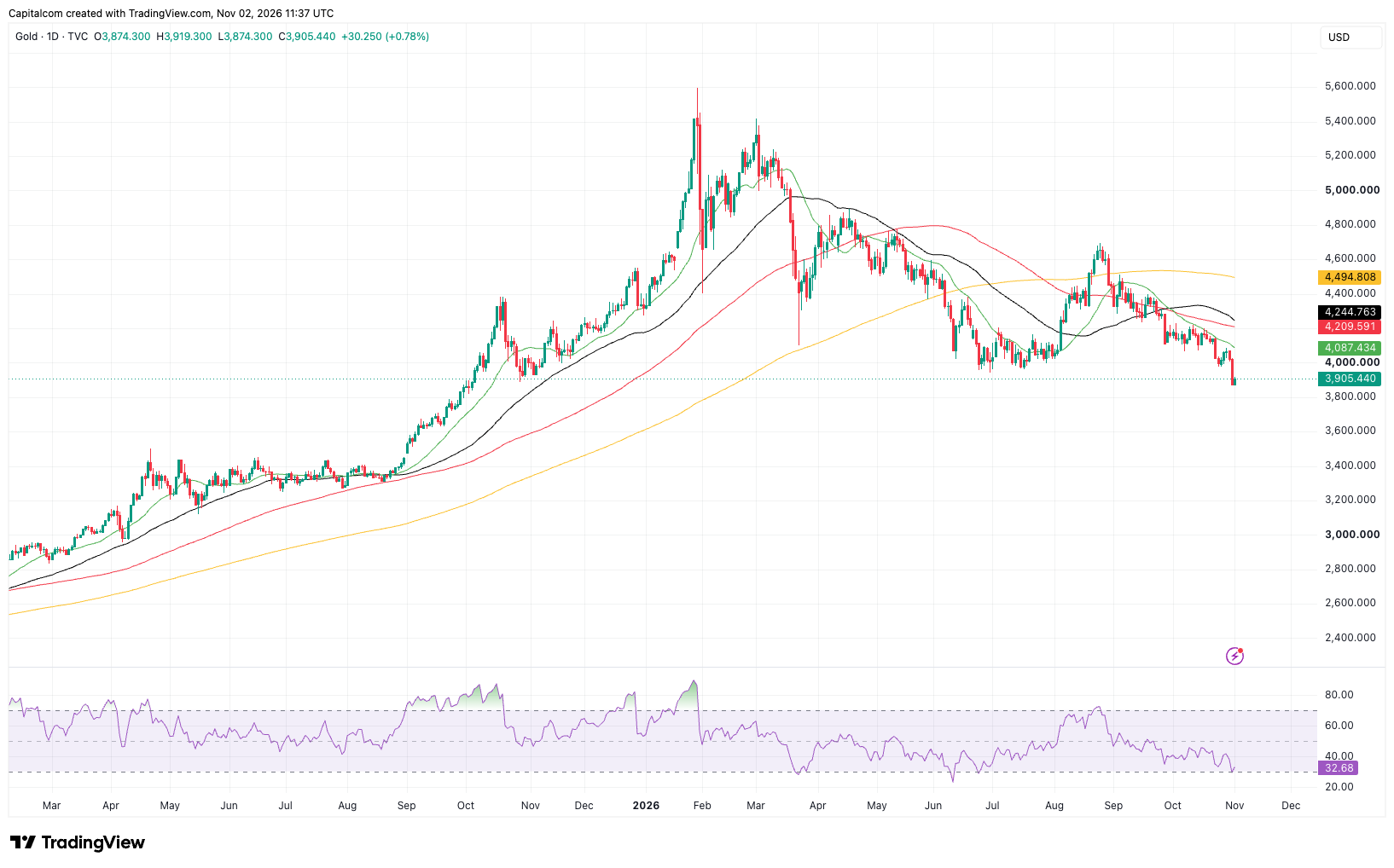
Gold is another interesting part of this story. In theory, a prolonged technology selloff should encourage safe-haven demand, but gold is currently facing two major obstacles: elevated real yields and the strength of the dollar. Higher real yields increase the opportunity cost of holding a non-yielding asset, while dollar strength makes bullion more expensive for international buyers. Gold also faces the risk of liquidation during sharp equity selloffs, as investors sell profitable or liquid positions to raise cash. This helps explain why gold fell sharply alongside equities on Friday, despite heightened uncertainty.
The more constructive scenario for gold would involve technology weakness spreading into broader growth concerns, prompting investors to scale back expectations of further Fed tightening. That could bring real yields and the dollar lower, creating a more supportive environment for bullion. However, if inflation remains persistent and the Fed maintains a restrictive stance, gold could continue struggling even as equities weaken. The midterms could influence this balance through fiscal expectations, but the direction of Treasury yields will be crucial.
Gold (XAU/USD) daily chart
Past performance is not a reliable indicator of future results.
Overall, three things should be watched to judge whether the correction has further to run: whether weakness spreads beyond technology into the equal-weighted S&P 500, whether upcoming earnings provide evidence of improving AI returns, and whether Treasury yields begin rising again. The 10-year yield eased to around 4.93% on Friday, so high yields remain a valuation headwind, but they were not the immediate trigger for that day's selloff. The more concerning scenario would be falling earnings expectations combined with another sustained rise in yields. That would put pressure on both sides of equity valuations and make a deeper correction more plausible.