
Gold safe haven status questioned as selloff continues in precious metals
Precious metals struggle to find their footing as rising yields weigh on their appeal despite rising geopolitical risks.
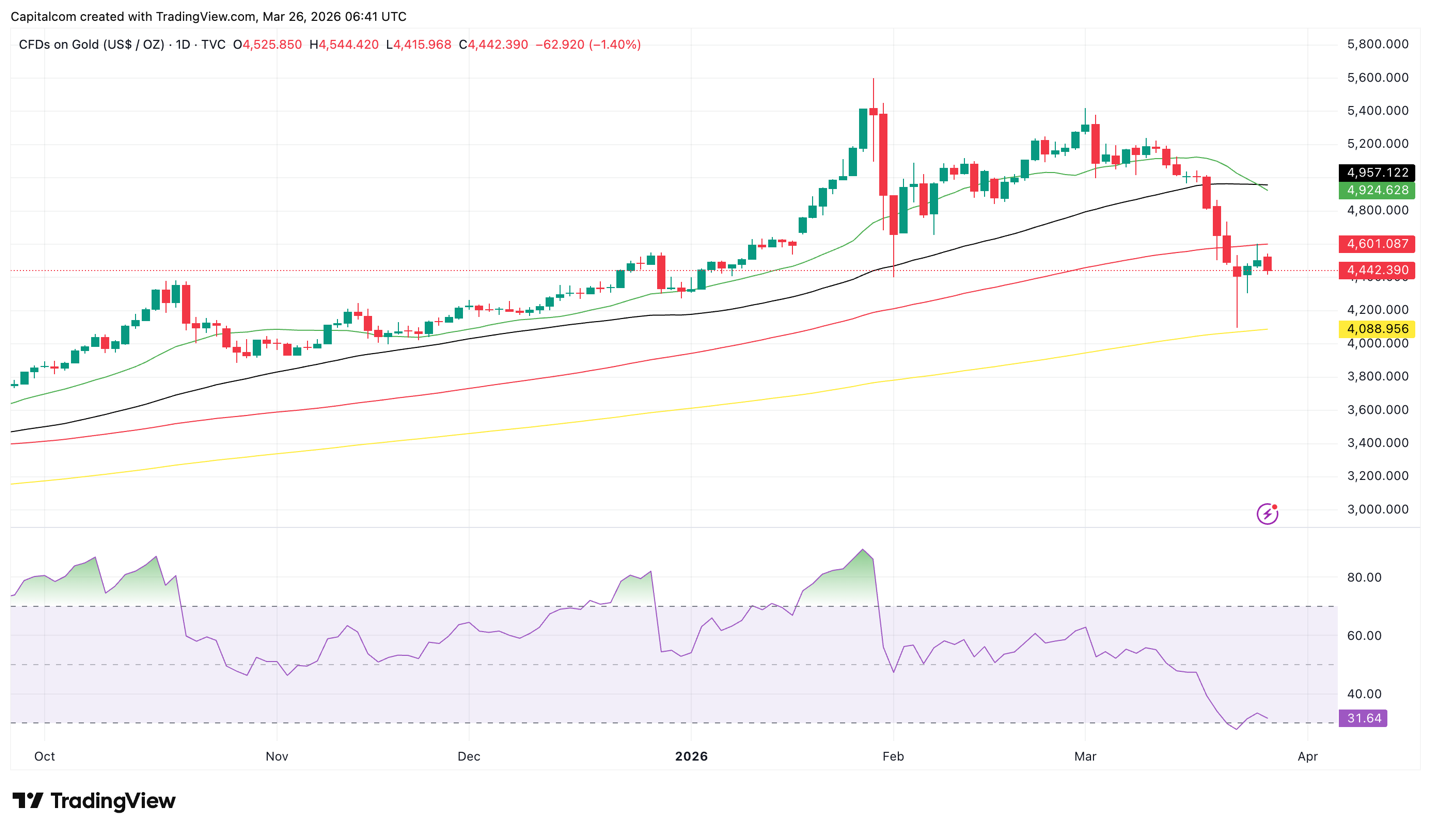
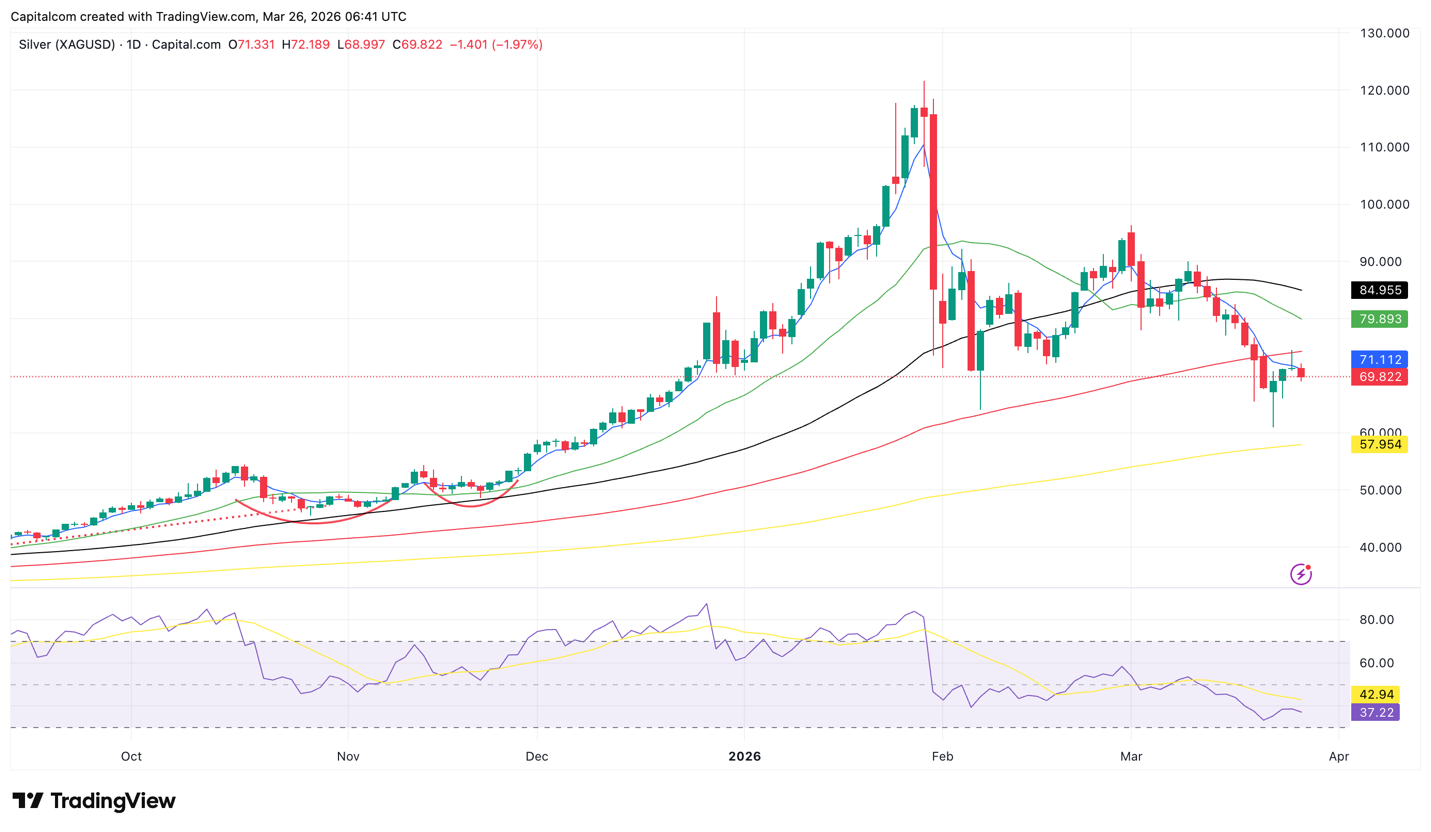
Gold and silver have extended their recent declines, with both metals now firmly in a corrective phase after the strong rally seen earlier in the year. Gold has broken below the key $4,500 level and is now testing support around the 200-day moving average, with price action showing a clear loss of upward momentum. The structure has shifted from higher highs to a sequence of lower highs and lower lows, while RSI has dropped toward oversold territory, reflecting persistent selling pressure. Similarly, silver has underperformed, falling back toward the $68–70 region and trading below its shorter-term moving averages. The breakdown in silver appears more pronounced, highlighting its higher beta and sensitivity to broader market sentiment.
Gold (XAU/USD) daily chart
Past performance is not a reliable indicator of future results.
From a technical perspective, both metals are transitioning from an upward trending to a consolidation or corrective phase. Gold remains above its longer-term moving average, suggesting this is still a pullback within a broader bullish structure rather than a full reversal, at least for now. However, the failure to hold above previous support levels and the sustained pressure on momentum indicators suggest that further downside or sideways consolidation may be needed before a new base is established. Silver, given its sharper decline, may require a longer stabilisation period, particularly as it struggles to find consistent buying interest.
Silver (XAG/USD) daily chart
Past performance is not a reliable indicator of future results.
Fundamentally, the underperformance of gold may seem counterintuitive, but it reflects a shift in the nature of safe-haven demand. In the current environment, the US dollar has been the preferred refuge, supported by rising yields and tighter financial conditions. As oil prices have surged and inflation expectations have been revised higher, markets have pushed back expectations for rate cuts, lifting real yields. That creates a headwind for gold, which does not generate income and tends to struggle when real rates rise. In addition, gold entered this period from a position of stretched positioning after a prolonged rally, making it vulnerable to profit-taking.
Silver’s weakness adds another layer to the story. Unlike gold, silver has a significant industrial component, making it more sensitive to growth expectations. With the energy shock raising concerns about global economic slowdown, demand for industrial metals has come under pressure, amplifying the downside move. This dual dynamic of tighter financial conditions weighing on gold and growth concerns weighing on silver helps explain why both metals have struggled even in a risk-off environment. Until yields stabilise and rate-cut expectations regain traction, gold and silver may continue to face headwinds, even as geopolitical uncertainty remains elevated.