

Markets lean into peace deal optimism
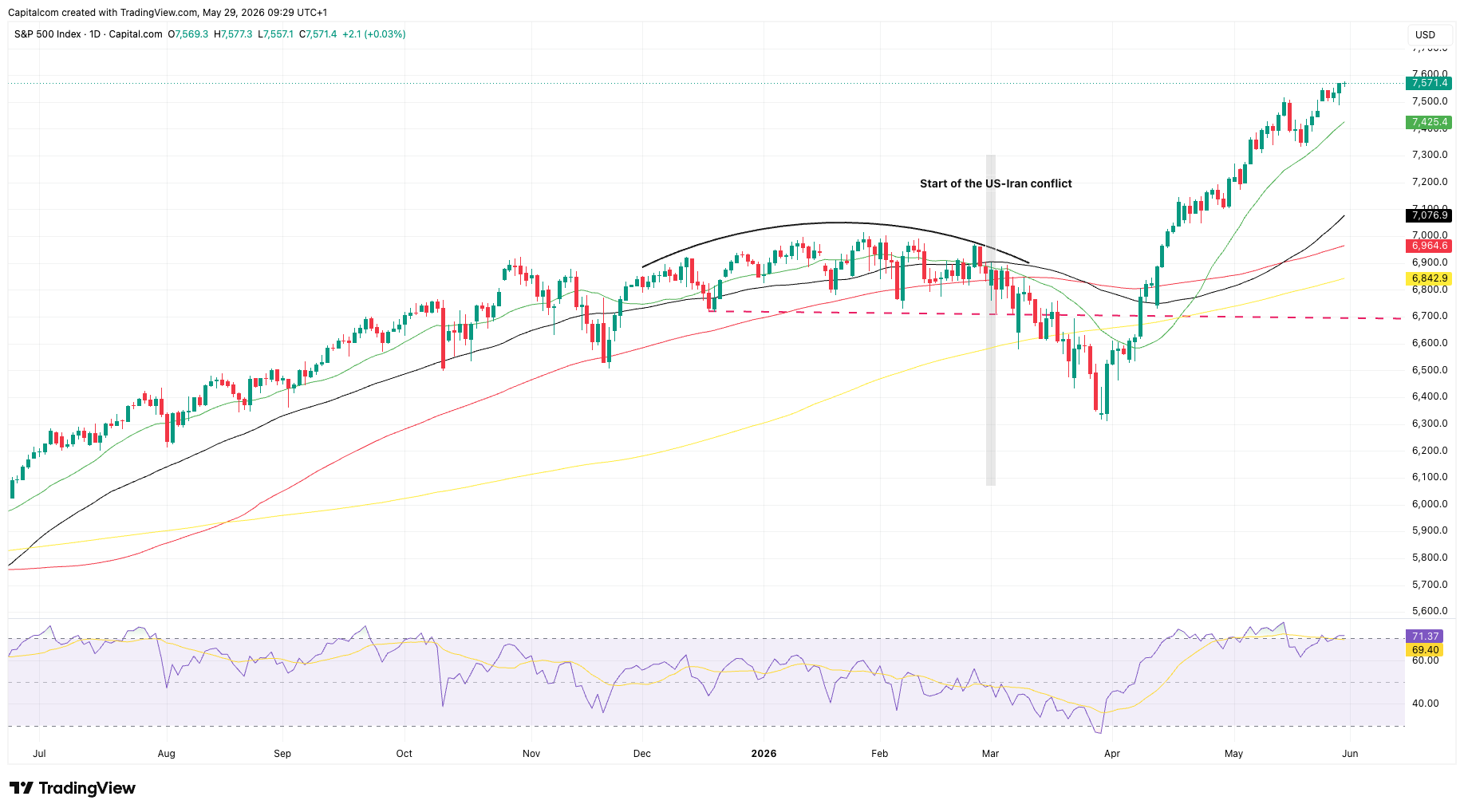
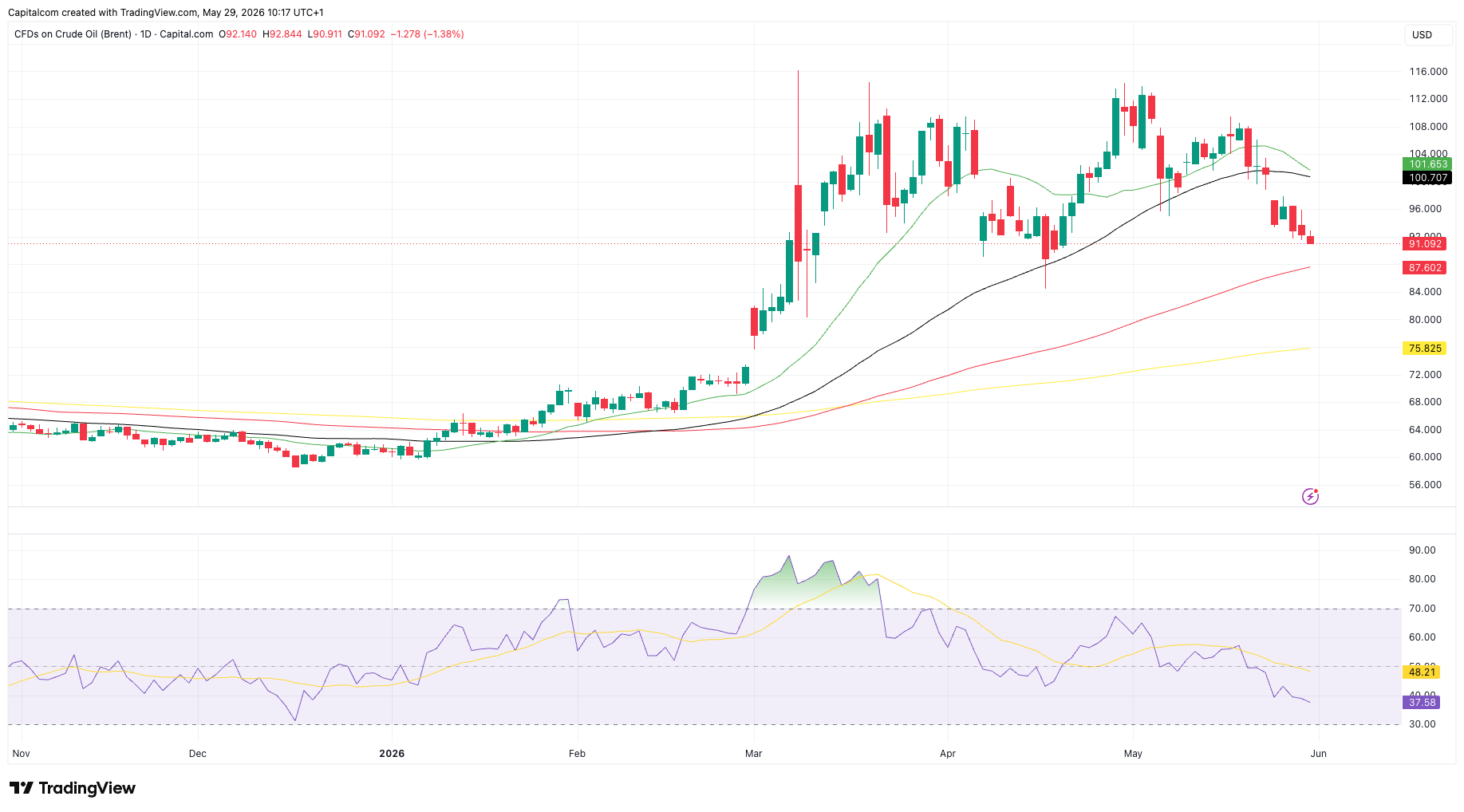
Equity markets continue to move higher and oil drops on reports that the US and Iran seem to be getting closer to a peace deal.
Markets are ending the week with a cautiously constructive tone, helped by what appears to be the most credible progress yet toward a framework agreement between the US and Iran. Reports suggest negotiations have moved closer to a formal memorandum that could pave the way for broader nuclear talks and a gradual de-escalation of tensions. While the Strait of Hormuz remains constrained and many details are unresolved, investors are increasingly treating the conflict as a negotiation process rather than an imminent escalation risk.
S&P 500 daily chart
Past performance is not a reliable indicator of future results.
That shift has helped improve risk appetite heading into the weekend, particularly across equities and European markets. The clearest reaction has been in energy markets. Brent crude has pulled back sharply from the highs seen earlier in May as traders unwind part of the geopolitical premium that had been embedded in prices. The market is effectively repricing the probability of a prolonged supply shock, with improving diplomatic sentiment reducing fears of a sustained disruption to global oil flows. At the same time, lower oil prices have helped ease some inflation concerns, feeding through into bond markets where yields have stabilised after their recent surge.
Brent crude daily chart
Past performance is not a reliable indicator of future results.
The latest US PCE inflation data has also contributed to that stabilisation. Headline PCE rose 0.4% month-on-month and 3.8% year-on-year, remaining elevated but coming in slightly softer than some of the more concerning CPI and PPI readings had suggested. Core PCE rose 0.2% on the month and 3.3% annually, reinforcing the idea that underlying inflation pressures remain sticky but are not accelerating meaningfully. For markets, that result is important because it supports the current “higher-for-longer, but not necessarily the "even higher" narrative. The data is unlikely to materially alter the Fed’s near-term stance, but it also does not significantly increase pressure for further tightening. As a result, the Fed funds path remains broadly centred around rates staying restrictive for longer, rather than a renewed hiking cycle. That has allowed equities to remain supported, particularly given the continued strength in corporate earnings and the AI-driven investment cycle.
Overall, markets are heading into the weekend in a good position as risk appetite has improved as geopolitical fears ease and inflation data avoids a major upside surprise. However, positioning remains optimistic, valuations are elevated and much of the recent rally still relies on assumptions that tensions continue to de-escalate and earnings remain resilient. That means investors are likely to remain highly sensitive to both geopolitical headlines and incoming inflation data in the weeks ahead.