
Market Mondays: Peace deal reshapes the outlook ahead of FOMC meeting
News that the US and Iran have reached a peace deal and the Strait of Hormuz will re-open has reignited risk appetite in markets during a busy central bank week.
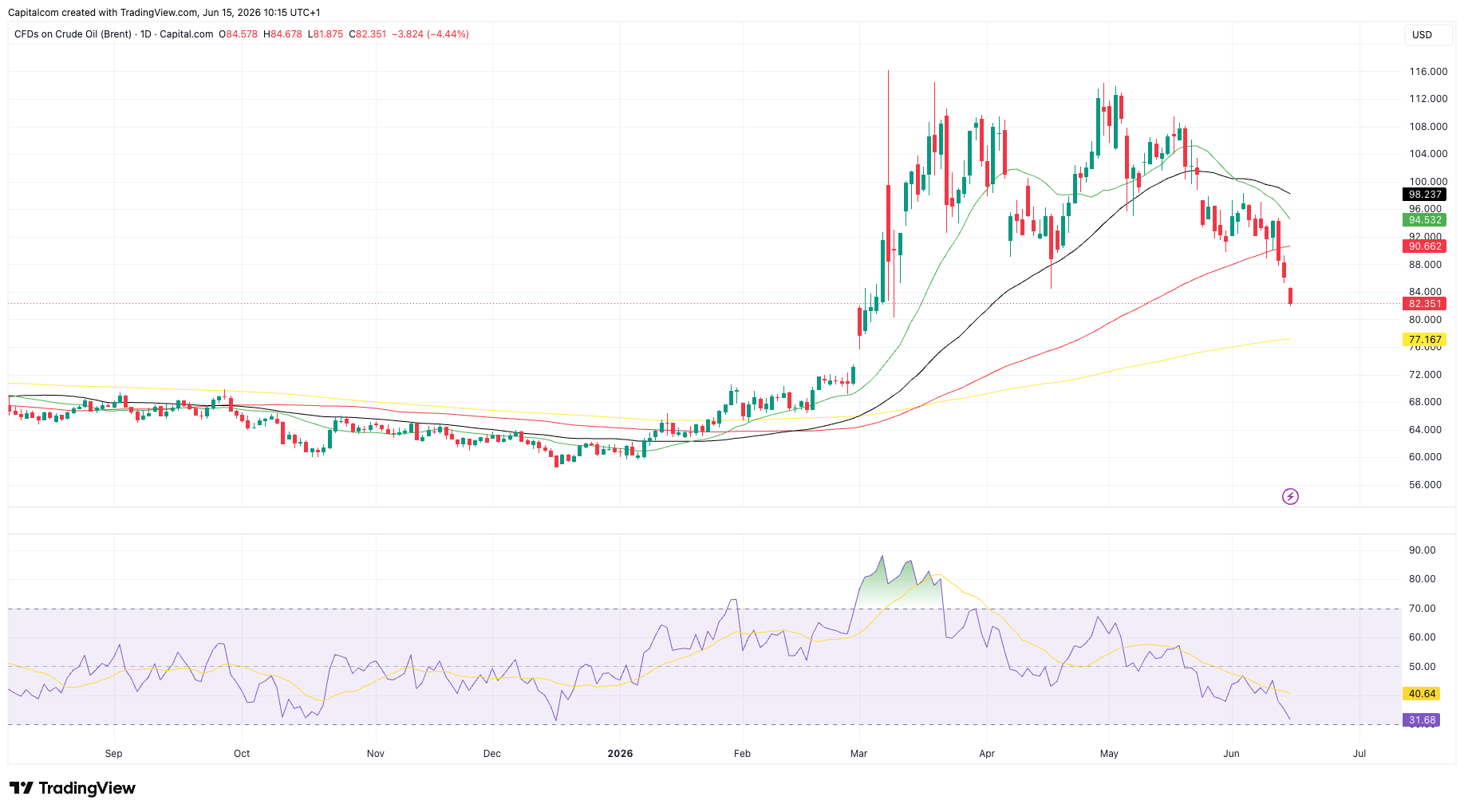
Financial markets have undergone a dramatic shift over the past week. After months dominated by fears of energy disruption and escalating conflict in the Middle East, investors are now confronting a very different reality: a ceasefire agreement between the US and Iran, the reopening of the Strait of Hormuz and a sharp decline in oil prices.
The immediate market reaction has been clear. Equities have moved higher, oil has fallen to a three-month low, and investors have begun reassessing the inflation outlook. While the agreement remains subject to implementation and several details still need to be finalised, the removal of a significant geopolitical risk has altered the macroeconomic landscape. Most importantly, it has reduced the immediate inflationary pressure coming from energy markets, providing central banks with more flexibility than appeared possible just a week ago.
Brent Crude daily chart
Past performance is not a reliable indicator of future results.
That flexibility arrives at a critical moment. This week brings a series of major central bank meetings, including the Federal Reserve, Bank of England, Bank of Japan and Reserve Bank of Australia. Particular attention will be paid to the Federal Reserve and the first policy meeting chaired by Kevin Warsh. Markets have spent recent weeks debating whether persistent inflation and higher energy costs would eventually force the Fed into further tightening. While those concerns have not disappeared entirely, the fall in oil prices reduces some of the urgency around that discussion.
The challenge for central banks is that the inflation story extends well beyond energy. While the conflict in the Middle East amplified inflation risks, underlying price pressures remain supported by resilient economic activity, strong labour markets and continued investment in artificial intelligence infrastructure. The AI boom remains one of the defining themes of the current cycle, creating substantial demand for semiconductors, energy, industrial metals and labour. In the short term, that investment boom is inherently inflationary, even if it also supports productivity growth and corporate profitability.
This leaves policymakers facing a familiar but difficult balancing act. On one side sits the risk of repeating the mistakes of 2022, when many central banks were criticised for responding too slowly to inflation that proved far more persistent than expected. On the other sits the memory of episodes such as the ECB's 2011 rate hikes, when policymakers tightened into an energy-driven inflation shock only to reverse course as growth weakened and the eurozone debt crisis intensified. The European Central Bank's decision last week highlighted this dilemma. While policymakers raised rates and left the door open to further tightening, President Christine Lagarde was careful not to commit to a specific path. The message was clear: inflation remains a concern, but growth risks cannot be ignored. The Federal Reserve now faces a similar challenge, albeit in a stronger economic environment.
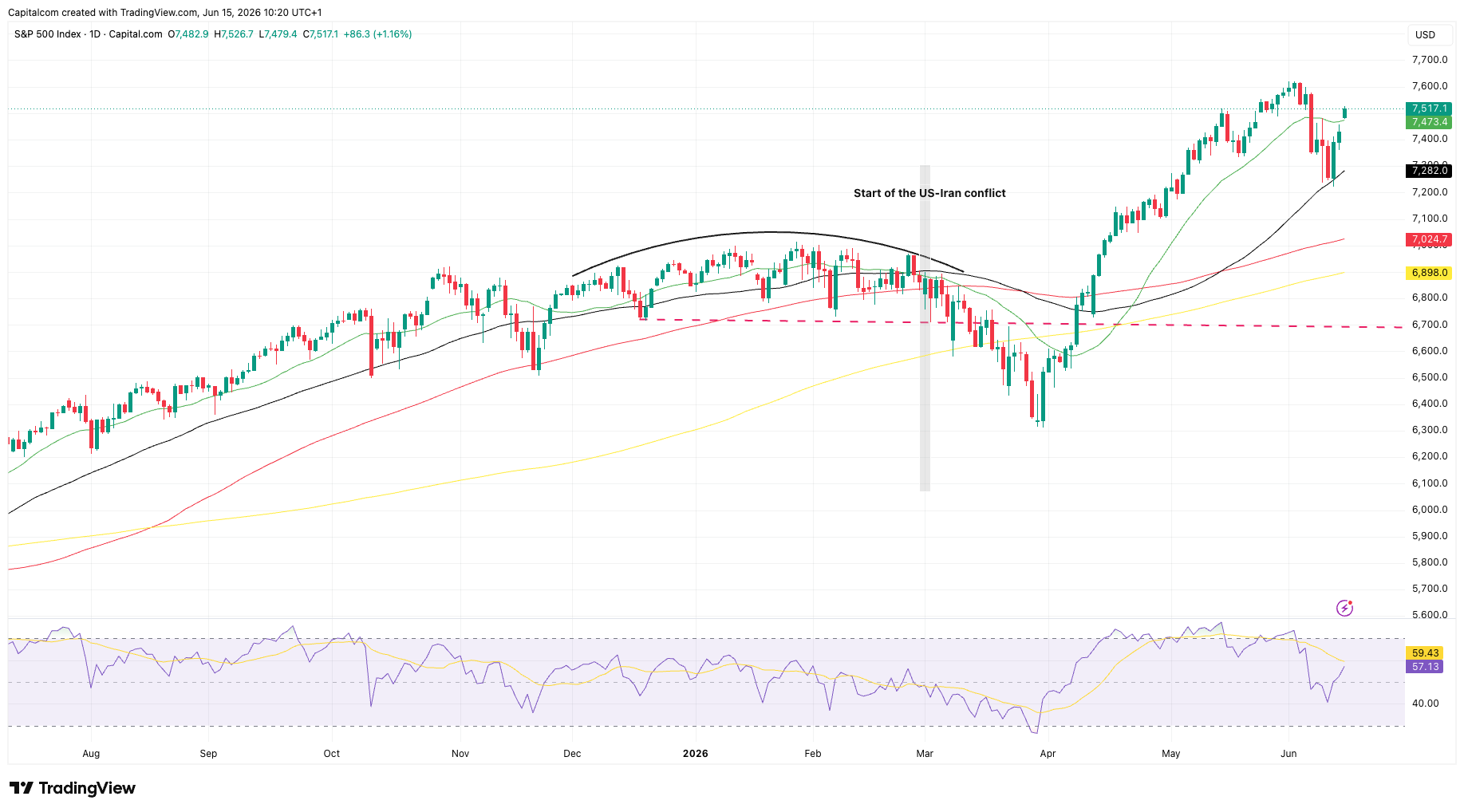
For equity markets, the peace agreement provides another potential tailwind. US stocks have already been supported by extraordinary earnings growth and the AI investment cycle, while European and Asian markets have lagged due to greater exposure to energy prices and geopolitical uncertainty. With oil prices falling and concerns about supply disruption easing, those markets may have greater scope to catch up.
S&P 500 daily chart
Past performance is not a reliable indicator of future results.
At the same time, investors should not overlook a growing structural theme: market concentration. The AI boom is increasingly funnelling capital toward a small number of companies. The prospect of major IPOs from firms such as SpaceX, OpenAI and Anthropic only reinforces that trend. While these listings could broaden opportunities within the AI ecosystem, they would also increase the concentration of market returns among a relatively small group of companies.
That dynamic creates both opportunities and risks. The opportunity is exposure to some of the most innovative and fastest-growing businesses in the world. The risk is that broad market performance becomes increasingly dependent on the fortunes of a handful of firms. We have already seen this phenomenon with the Magnificent Seven. The next generation of AI companies could amplify it further.
For now, however, markets are focused on the immediate implications of the ceasefire. Lower oil prices, reduced geopolitical risk and a less urgent inflation threat have improved sentiment significantly. Whether that translates into a sustained rally will depend on how central banks interpret the new environment and whether investors continue to believe that strong earnings growth can outweigh the remaining macroeconomic risks.