
Weekly recap: Earnings, oil and central banks set the tone
Markets end the week with a risk off tone as higher oil and disappointing earnings weigh on sentiment ahead of the FOMC meeting next week.
Markets navigated another eventful week as investors balanced an escalating geopolitical backdrop, the first wave of Big Tech earnings and central bank decisions. While equity markets ended the week mixed, the dominant theme remained the resurgence in oil prices, which has reignited inflation concerns just as policymakers were beginning to gain confidence that price pressures were easing.
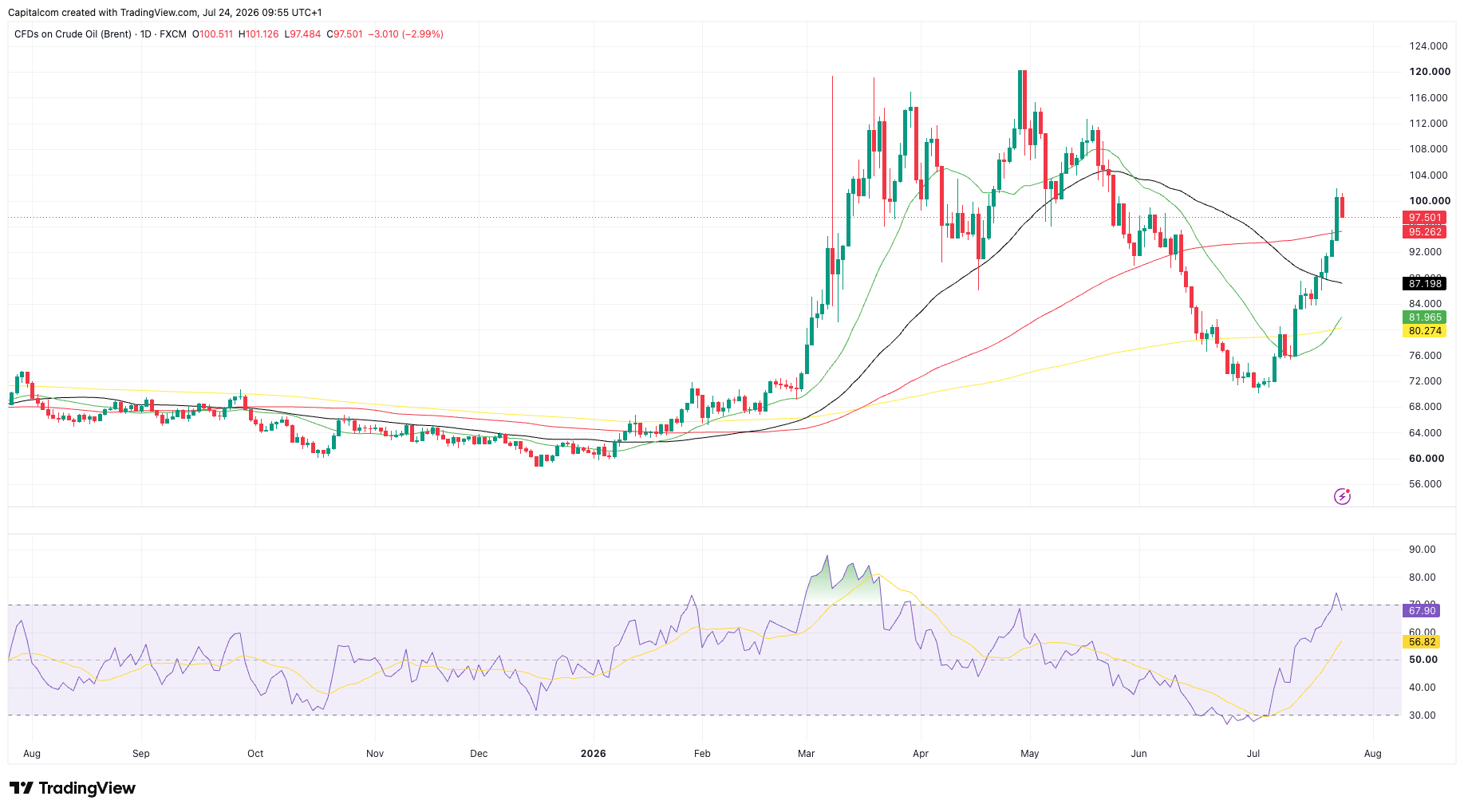
The Middle East once again took centre stage. Brent crude climbed back above $100 a barrel after renewed tensions between the US and Iran raised fears over potential disruptions to global energy supplies. Reports of threats against energy infrastructure and growing instability around key shipping routes have rebuilt a sizeable geopolitical risk premium into oil markets. Investor sentiment has also been dampened by continued disruption in the Red Sea, where attacks on commercial vessels have compounded concerns over global trade and energy security. Combined with tensions around the Strait of Hormuz, the developments have reinforced the view that geopolitical risks are unlikely to fade anytime soon, keeping energy markets tight and inflation risks elevated.
Brent Crude daily chart
Past performance is not a reliable indicator of future results.
That backdrop is becoming increasingly important for central banks. The European Central Bank left interest rates unchanged this week, as expected, but acknowledged that the full inflationary impact of the recent energy shock has yet to emerge. While policymakers maintained their meeting-by-meeting approach, the statement highlighted the difficult balancing act facing central banks. Growth across Europe remains fragile, yet higher oil prices threaten to delay the return of inflation to target, reducing the scope for policy easing in the near term.
The US picture remains similarly complex. Weekly jobless claims fell to their lowest level since 1969, reinforcing the view that the labour market remains remarkably resilient despite elevated interest rates. Strong employment continues to support consumer spending and the broader economy, but it also gives the Federal Reserve greater flexibility to keep policy restrictive if inflationary pressures persist. Combined with rising energy prices, the data suggests markets may have been too optimistic in pricing a rapid shift towards easier monetary policy.
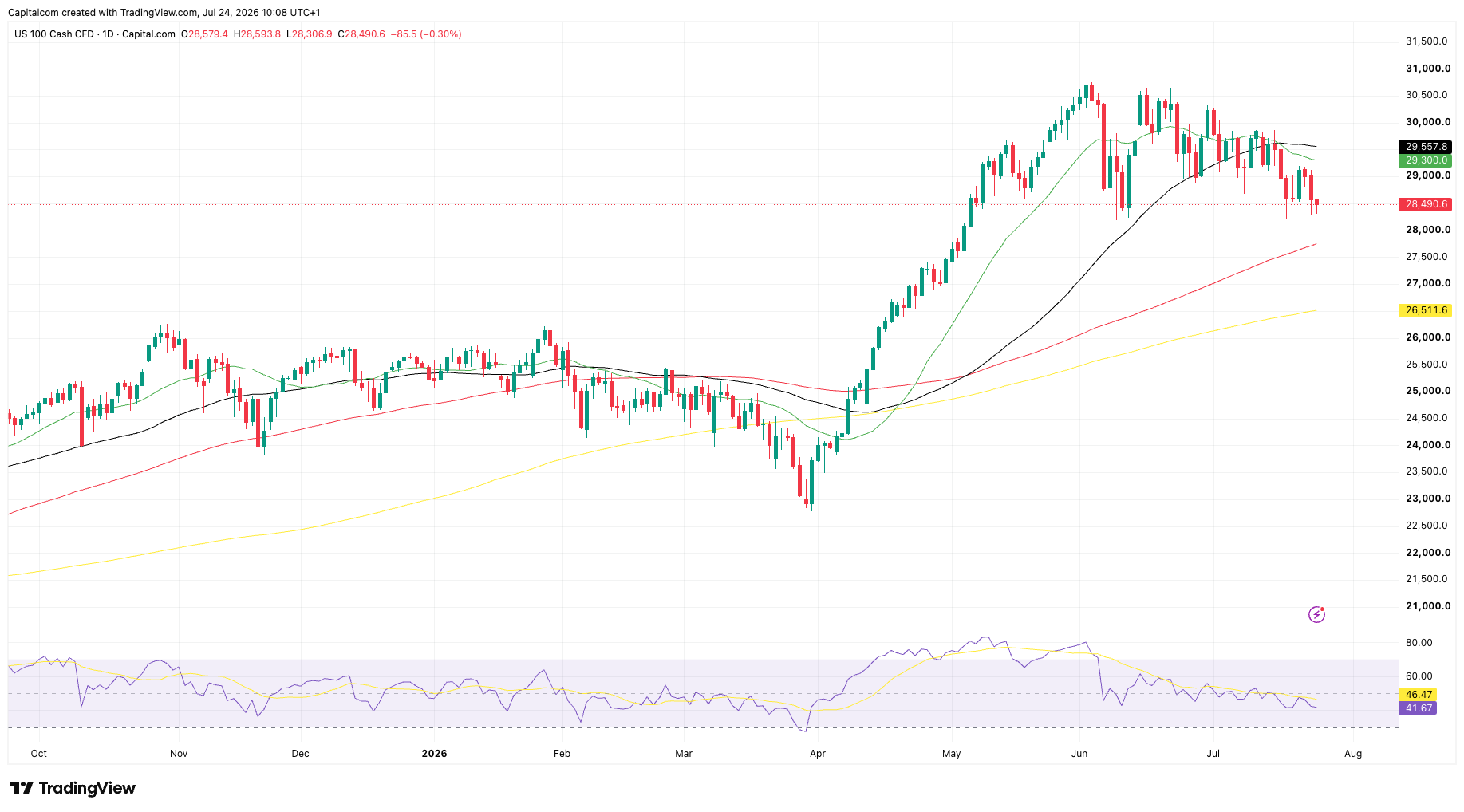
US tech 100 daily chart
Past performance is not a reliable indicator of future results.
Corporate earnings have provided another test for investors. The reporting season began with mixed results from the first major technology companies. While Alphabet continued to demonstrate robust demand for its AI-related businesses, investors remained focused on accelerating capital expenditure plans. Tesla disappointed more broadly, adding to concerns that heavy investment spending and slowing profitability may weigh on valuations. With AI remaining the dominant investment theme, markets are becoming increasingly selective, rewarding strong execution while showing less tolerance for elevated spending without a clear path to returns.
Looking ahead, attention will remain firmly on the intersection of geopolitics, earnings and monetary policy. Oil prices are likely to continue driving sentiment as investors assess whether tensions in the Middle East evolve into a sustained supply shock. The earnings calendar also intensifies, with several large-cap technology and industrial companies due to report, offering further insight into corporate profitability and AI investment trends. At the same time, markets will continue to scrutinise economic data for clues on the health of the US economy and whether resilient labour market conditions and higher energy prices alter expectations for the Federal Reserve's policy path.