

Marvell Technology stock forecast: Third-party price targets
Marvell Technology designs semiconductor solutions for data centres and networking. Its shares rose as chip stocks stabilised after TSMC’s record quarter and a $0.06 dividend declaration. Explore third-party MRVL price targets. Past performance is not a reliable indicator of future results.
Marvell Technology, Inc. (MRVL) is trading at $216.24 as of 10:23am UTC on 23 July 2026, near the top of its intraday range of $200.17–$217.23. Past performance is not a reliable indicator of future results.
The rise comes as AI-linked semiconductor stocks stabilise after a mid-July sell-off wiped roughly $1.3tn from the sector's market value (Forbes, 8 July 2026). The decline followed concerns about the sustainability of AI capital expenditure and elevated valuations (CNBC, 12 July 2026).
Sector sentiment improved after TSMC reported a 68% increase in June revenue and a 77% rise in net income alongside record quarterly results (CNBC, 23 July 2026). The figures indicated continued demand for AI-related foundry services after concerns about the sector had weighed on comparable stocks earlier in the month (Distill Intelligence, 17 July 2026). Marvell also declared a quarterly dividend of $0.06 per share, payable on 30 July 2026 (Investing.com, 25 June 2026).
Third-party Marvell Technology outlook: sector sell-off
As of 23 July 2026, third-party Marvell Technology stock predictions point to a generally positive 12-month outlook, although estimates vary considerably. Differences largely reflect assumptions about AI data-centre demand, custom silicon growth and future valuation levels.
MarketBeat consensus overview
As of 21 July 2026, MarketBeat reported an average 12-month price target of $245.45, based on 37 analyst estimates ranging from $105 to $400. The consensus implied a potential 18.18% increase from the reference price. The wide range reflected differing expectations about the durability of AI infrastructure spending and Marvell's ability to convert demand into sustained revenue growth (MarketBeat, 21 July 2026).
Investing.com UK consensus estimates
As of 14 July 2026, Investing.com UK reported an average 12-month price target of $252.94, based on forecasts from 40 analysts. Estimates ranged from $110 to $400. The average target implied a potential increase of 22.63%. The spread reflected different assumptions about how quickly Marvell could expand revenue from custom chips and optical interconnect products (Investing.com, 14 July 2026).
Public.com consensus overview
As of 21 July 2026, Public.com reported a price target of $243.71, based on a 'Buy' consensus from 28 analysts. Half assigned the stock a 'Strong Buy' rating. The projection assumed that data-centre product cycles could continue to support revenue growth during the remainder of 2026 (Public.com, 21 July 2026).
TickerNerd Wall Street median target
TickerNerd reported a median 12-month price target of $242.50 across 27 Wall Street analysts as of 19 July 2026. The highest estimate was $400 from KeyBanc analyst John Vinh, while the lowest was $110 from UBS analyst Timothy Arcuri. The median target implied a potential increase of roughly 28.8%. Higher forecasts reflected expectations of continued expansion in the AI accelerator market. Lower forecasts placed greater emphasis on valuation and execution risks (TickerNerd, 19 July 2026).
Predictions and third-party forecasts are inherently uncertain, as they cannot fully account for unexpected market developments. Past performance is not a reliable indicator of future results.
MRVL earnings outlook: upcoming results
Marvell published its most recent quarterly results, covering the first quarter of fiscal 2027, on 27 May 2026. The company reported non-GAAP earnings per share of $0.80, in line with consensus estimates, on revenue of $2.42bn (MarketBeat, 27 May 2026).
Marvell has not formally confirmed the date of its next earnings release, covering the second quarter of fiscal 2027. Based on previous reporting schedules, third-party calendars estimate that the results could be published on 27 August 2026 (MarketBeat, 21 July 2026).
In its full-year results for fiscal 2026, published on 3 March 2026, Marvell reported record annual net revenue of $8.20bn, GAAP net income of $2.67bn and non-GAAP diluted earnings per share of $2.84, an increase of 81% year on year (Marvell Technology Investor Relations, 5 March 2026).
MRVL stock price: technical overview
The MRVL stock price trades above its longer-term moving averages but below its shorter-term averages.
According to TradingView data as of 23 July 2026, the 100-day and 200-day simple moving averages (SMAs) stood at approximately $178 and $132 respectively, below the latest price of $216.24. The 20-day and 30-day SMAs were higher, at approximately $237 and $253. This places the price between its shorter- and longer-term moving-average groups, rather than within a clear upward or downward alignment.
Momentum indicators also show limited directional strength. The 14-day relative strength index (RSI) stood at 43.51, placing it in neutral territory. The 14-day average directional index (ADX) was 24.97, just below the 25 level commonly associated with an established trend. Taken together, these readings suggest that momentum and trend strength remained relatively limited at the time of publication.
Above the current price, the classic pivot point at $274.30 provides the nearest reference level, followed by the R1 pivot at $353.47 and R2 at $409.06. Below the current price, the 100-day SMA at approximately $178 represents the nearest longer-term reference, followed by the 200-day SMA at approximately $132. These levels indicate areas where price activity could attract attention, but they do not predict whether the market will rise or fall (TradingView, 23 July 2026).
This technical analysis is provided for informational purposes only. It does not constitute financial advice or a recommendation to buy or sell any instrument.
Marvell Technology share price history (2024–2026)
MRVL’s stock price traded at approximately $74.41 in late July 2024, after spending much of that summer within a $56–$80 range as market participants assessed demand for AI infrastructure.
The stock rose through late 2024 and early 2025, reaching approximately $127.54 on 23 January 2025 before reversing direction.
By April 2025, MRVL had fallen to a 52-week low of $49.24 as a broader technology-sector sell-off and tariff-related uncertainty affected semiconductor stocks.
The price subsequently recovered, moving above $100 again by March 2026. It reached an all-time closing high of $316.43 on 4 June 2026 as expectations for AI-related data-centre demand supported the sector.
The stock then pulled back. At 10:23am UTC on 23 July 2026, MRVL traded at $216.24, representing a year-to-date increase of 214.30%. However, it remained approximately 32% below its June peak, according to Capital.com’s quote feed and the cited third-party data.

Past performance is not a reliable indicator of future results. Share prices are indicative and may differ from live market prices.
Marvell Technology (MRVL): Capital.com analyst view
Marvell’s share price has experienced substantial volatility in 2026. The stock rose from below $80 in early January to an all-time closing high above $316 in early June, before retreating to approximately $215 by late July.
This performance reflected changing expectations around AI-linked data-centre spending, custom silicon programmes and the sustainability of hyperscaler capital expenditure. Broader semiconductor-sector movements linked to macroeconomic conditions and interest-rate expectations also influenced sentiment.
More positive assessments highlight Marvell’s data-centre revenue growth and design-win pipeline as possible support for a higher valuation. More cautious views note that the stock’s rapid advance could leave it sensitive to slower AI infrastructure spending, stronger competition or weaker execution.
Short-term declines may also reflect profit-taking rather than a change in underlying demand. The range of possible explanations means that price movements should be interpreted with caution rather than certainty.
Capital.com’s client sentiment for Marvell Technology CFDs
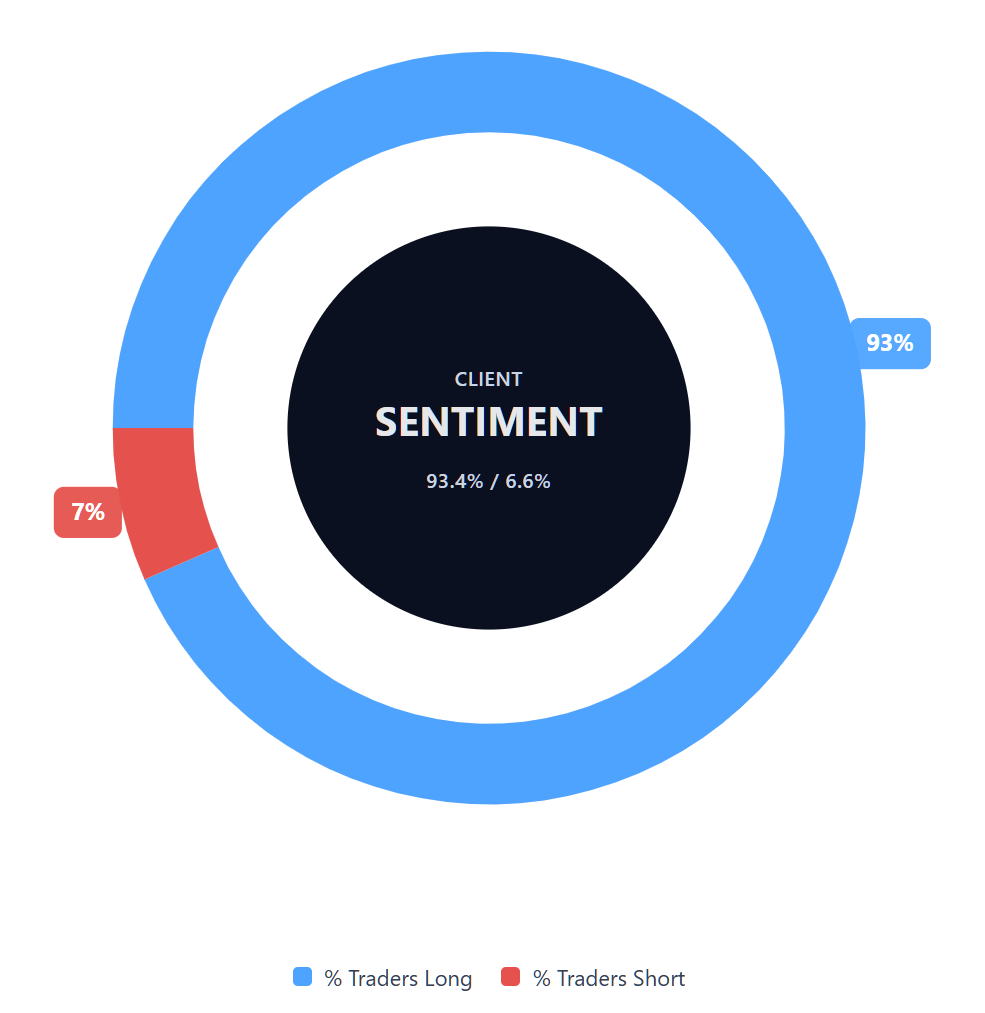
As of 23 July 2026, Capital.com client positioning in Marvell Technology CFDs is weighted towards long positions, with 93.4% of open positions long and 6.6% short. This represents a difference of 86.8 percentage points and indicates a strong skew towards long positioning. However, the figures only reflect open positions held by Capital.com clients and may change as market conditions develop.
Summary – Marvell Technology 2026
- As of 10:23am UTC on 23 July 2026, MRVL traded at $216.24. This was up from below $80 in January but remained below its June peak of $316.43.
- Technical indicators placed the price below its shorter-term moving averages and above its longer-term averages. The 14-day RSI of 43.51 indicated neutral momentum, while the 14-day ADX of 24.97 suggested that a clear trend had not yet developed.
- Key factors include AI data-centre demand, custom silicon design wins, hyperscaler capital expenditure and broader semiconductor-sector sentiment linked to macroeconomic conditions.
Past performance is not a reliable indicator of future results.
FAQ
Who owns the most Marvell Technology stock?
The article does not identify Marvell Technology’s largest shareholder. Ownership can change as institutions, investment funds and company insiders buy or sell shares. Investors typically review the company’s latest regulatory filings, shareholder disclosures and institutional ownership data to identify the largest positions. These figures should be checked against the most recent reporting date, as older data may no longer reflect Marvell’s current shareholder structure.
What is the five-year Marvell Technology share price forecast?
The article does not provide a five-year MRVL stock forecast. The third-party estimates it cites cover a 12-month period, with consensus targets clustering around $243–$255 and individual forecasts ranging from $105–$400. Extending projections across five years would involve considerably greater uncertainty, as earnings, AI infrastructure spending, competition, valuations and broader market conditions could change materially and unpredictably over that period.
Is Marvell Technology a good stock to buy?
Whether Marvell Technology is a good stock to buy depends on an individual’s objectives, financial circumstances and tolerance for risk. The article presents both supportive and cautious views. Potential drivers include data-centre demand, custom silicon growth and design wins, while risks include valuation pressure, slower AI spending, competition and market volatility. Analyst ratings and price targets are not guarantees, and the article does not recommend buying or selling the stock.
Could Marvell Technology stock go up or down?
Marvell Technology stock could move in either direction. Its price could rise following stronger data-centre demand, custom silicon growth, positive earnings or improved semiconductor-sector sentiment. It could fall because of weaker AI capital expenditure, competitive pressure, disappointing results or lower valuation multiples. The technical indicators cited in the article were broadly neutral, while analyst forecasts varied widely, highlighting the uncertainty surrounding any future price movement.
Should I invest in Marvell Technology stock?
The article does not state whether anyone should invest in Marvell Technology stock. That decision depends on personal goals, time horizon, financial position and tolerance for loss. Readers may consider the company’s earnings, data-centre exposure, valuation, competitive position and the risks associated with semiconductor-sector volatility. They should also distinguish between owning shares and trading CFDs, as CFDs use leverage and can magnify both profits and losses.
Can I trade Marvell Technology CFDs on Capital.com?
Yes, you can trade Marvell Technology CFDs on Capital.com. Trading share CFDs lets you speculate on price movements without owning the underlying asset and to take long or short positions. However, contracts for difference (CFDs) are traded on margin, and leverage amplifies both profits and losses. You should ensure you understand how CFD trading works, assess your risk tolerance, and recognise that losses can occur quickly.