

Crude gaps higher, gold rises and risk assets slide as war escalates in the Middle East
Volatility spikes on escalating geopolitical risks in the Middle East.
US-Israel strikes on Iran and the assassination of its supreme leader have sparked escalation in Middle East geopolitical tensions.
Global markets react violently to new geopolitical risks
The markets were not pricing in a comprehensive strike on Iran. Now it has happened, more than just oil and gold are moving. The impact has shades of the Russian invasion of Ukraine, albeit with more modest downside risks on global economic fundamentals because of Iran’s size and relative isolation from the world economy.
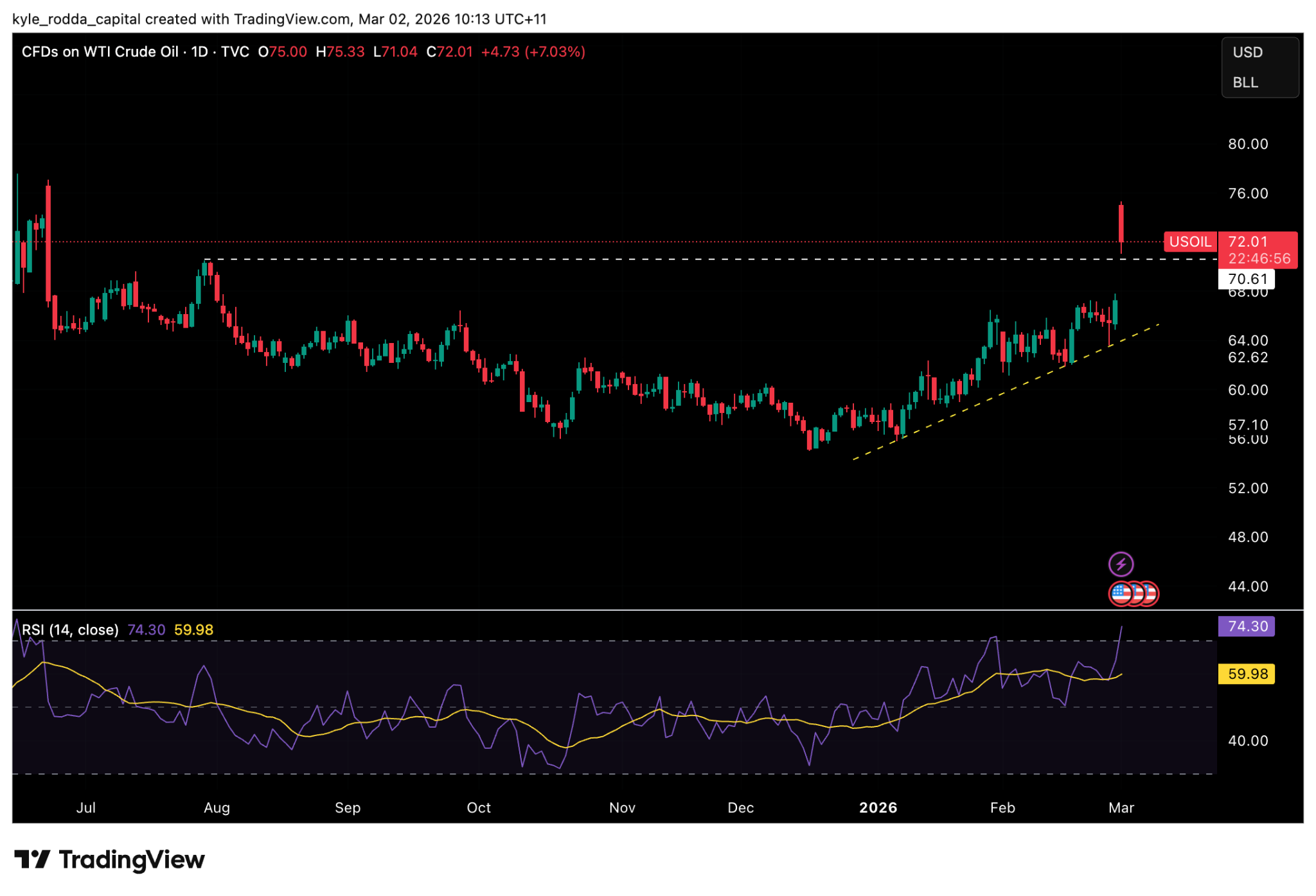
Naturally, the core theme from a markets perspective is what happens to global energy markets. To a lesser extent, the risks arise from broader disruption to supply chains because of slowed shipping activity in the Persian Gulf and, less than that, to the movement of people through the world’s most crucial international travel hubs. All in all, it’s a supply shock that could ripple across the global economy, especially if the war continues to escalate.
 (Source: Trading View)
(Past performance is not a reliable indicator of future results)
Volatility rises as incentives skew towards escalation
The critical factor is that Israel and the US have coordinated to assassinate a head of state –along with other key government officials – with reports already that Ayatollah Khamenei’s nominated successor as well as his son have been subsequently taken out.
Unlike the 12 day war and other flare ups in recent years, the incentives for the Iranians have likely shifted to escalation and not de-escalation, as the regime looks to save face and protect its survival. The US is also at a fork in the road after reports the US has sustained its first casualties.
This escalation opens up a potentially chaotic and therefore highly unpredictable chain of events that markets typically struggle to price-in. That dynamic could lead to heightened volatility and general risk aversion in coming days – possibly longer, with the US suggesting the campaign could last weeks.
Crude prices spike and gold pops as risk assets drop
The play-book for the markets is obvious even if unpredictable. Oil looks poised to surge today, with gold also prepared to jump. Global equities are poised to drop, with the markets in countries that are net energy importers – Japan, China and India are a few – at risk of the biggest hit.
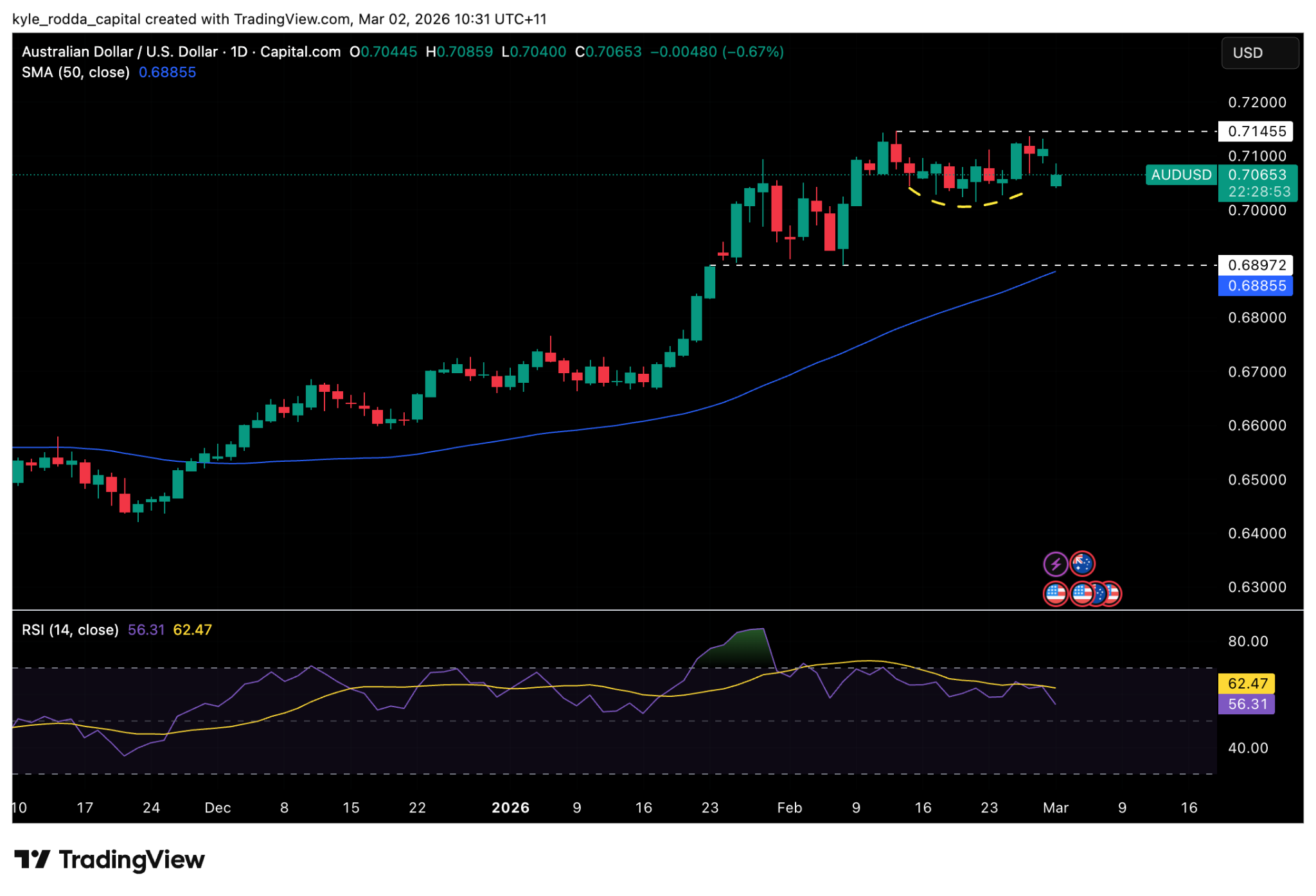
The US Dollar and Japanese Yen are also firmer, with the Australian Dollar looking at a drop despite the terms of trade benefits that will flow from higher commodity prices. The strong US Dollar is an amber signal, because it suggests that market participants are pricing in marginally higher financial stability risks.
 (Source: Trading View)
(Past performance is not a reliable indicator of future results)