

Gold breaks lower as yields and the dollar regain control
Gold struggles to regain upside momentum as higher yields and dollar weigh on the precious metal.
Gold has come under renewed pressure in recent sessions, with the metal extending its decline as rising yields, a firmer dollar and easing geopolitical fears continue to weigh on sentiment. After acting as a safe-haven trade during the initial phase of the Middle East conflict, gold has faced a challenging macro backdrop, one where investors have increasingly rotating back toward risk assets while markets reassess the likelihood of prolonged high interest rates.
The latest shift in sentiment has been driven largely by improving expectations around US–Iran negotiations and a reduction in immediate fears of a severe energy supply shock. As oil prices have pulled back from recent highs, markets have begun pricing a lower probability of a stagflationary scenario, helping support equities while reducing demand for defensive assets such as gold. At the same time, US Treasury yields have continued to push higher following hotter inflation data and a more cautious Federal Reserve tone, increasing the opportunity cost of holding non-yielding assets.
The US dollar has also regained momentum, adding another layer of pressure. With markets pushing back expectations for rate cuts and repricing the “higher-for-longer” narrative, the dollar has returned to the upper end of its recent range, limiting appetite for precious metals. This combination of elevated real yields, stronger dollar dynamics and fading safe-haven demand has created a difficult environment for gold despite ongoing geopolitical uncertainty.
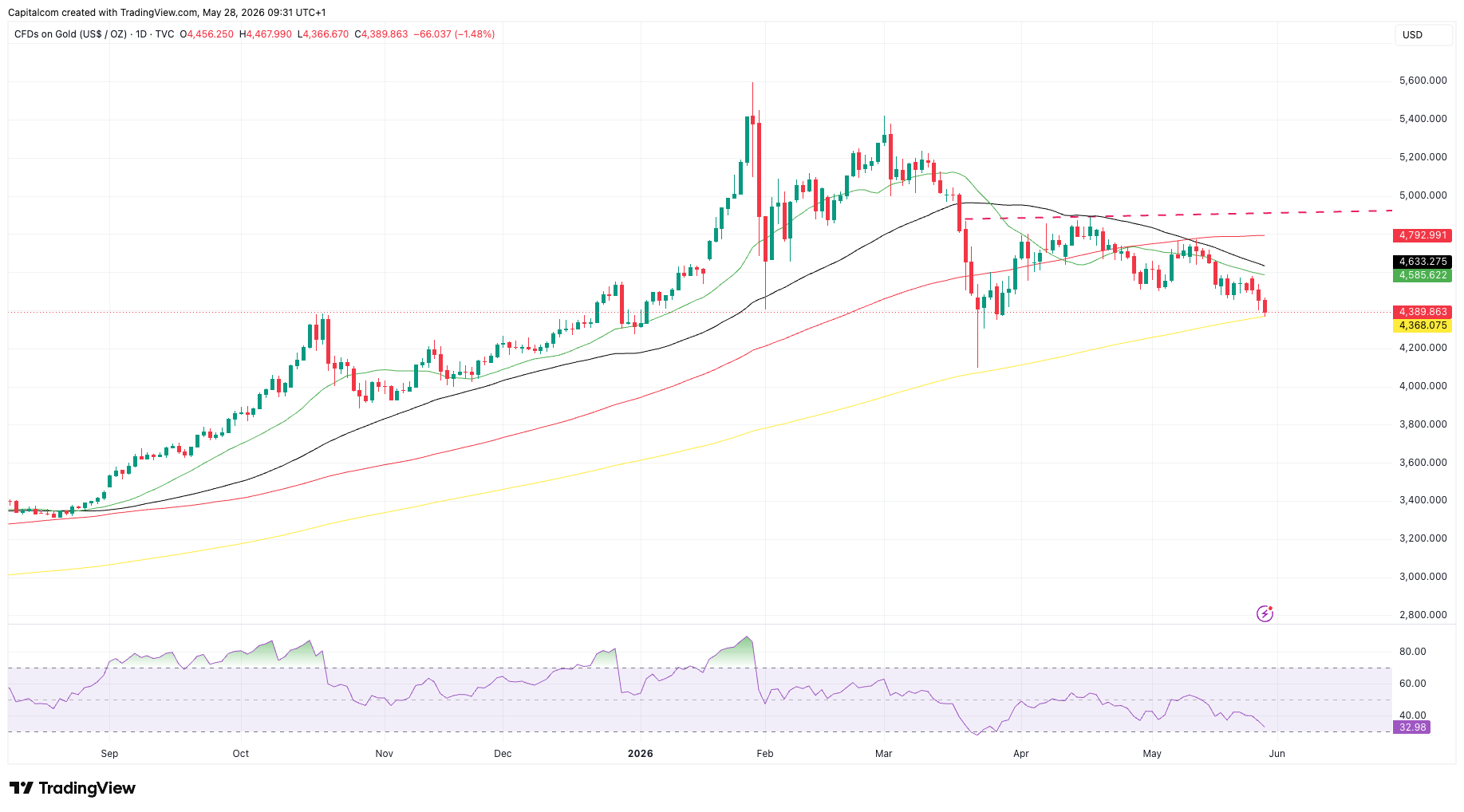
Technically, the picture has deteriorated noticeably. Gold has now broken below its key short- and medium-term moving averages, including the 20-day, 50-day and 100-day SMAs, reinforcing the loss of upward momentum that had already begun through April and May. The RSI has slipped toward oversold territory, reflecting persistent downside pressure and weak buying conviction.
That leaves the 200-day SMA as the next major area of support. Historically, this level has acted as an important long-term trend indicator, and the market is now approaching it at a time when positioning in gold has already been reduced significantly from earlier highs. A sustained break below the 200-day average could reinforce the view that gold has shifted from consolidation into a deeper corrective phase. Conversely, if the level holds, it could attract buyers looking for value after the sharp pullback.
Gold (XAU/USD) daily chart
Past performance is not a reliable indicator of future results.
For now, gold remains caught between competing macro forces. The metal still retains its long-term safe-haven appeal, particularly if geopolitical tensions flare up again or growth slows materially. However, in the near term, yields and the dollar remain the dominant drivers — and until those dynamics stabilise, rallies in gold may continue to face resistance.