
Uber Technologies stock forecast: 3,300 job cuts, robotaxi push
Uber is cutting around 3,300 jobs as part of a restructuring, while expanding its autonomous-vehicle partnerships amid growing competition in the robotaxi market. Explore third-party UBER price targets and technical analysis. Past performance is not a reliable indicator of future results.
Uber Technologies, Inc. (UBER) is trading at $72.52 as of 1:33pm UTC on 15 September 2026, within an intraday range of $71.30–$72.68. Past performance is not a reliable indicator of future results.
Recent developments include Uber's announcement on 2 September 2026 that it would cut approximately 3,300 jobs, or 10% of its global workforce, as part of a restructuring aimed at streamlining management and redirecting spending towards autonomous vehicles, Reuters reported (Reuters, 2 September 2026). Robotaxi competition has also remained in focus, including developments around Tesla's Cybercab (24/7 Wall St., 8 September 2026), while Uber secured Spain's first national Level 4 autonomous-vehicle permit alongside WeRide and AVOMO (Simply Wall St, 11 September 2026).
These developments could influence the shares in different ways. Cost reductions and progress in autonomous-vehicle partnerships could support sentiment, while stronger competition or disruption from restructuring could weigh on it.
Third-party Uber outlook: workforce cuts, robotaxi expansion
As of 15 September 2026, third-party Uber Technologies stock predictions reflect differing assumptions around autonomous vehicles, growth, competition and restructuring. The following targets provide a snapshot of recent published views.
Wedbush (broker note)
Wedbush gives Uber an Outperform rating and a $91 price target. Its view reflects expectations that Uber could benefit from the longer-term shift towards autonomous vehicles without building or operating its own fleet (MarketBeat, 8 September 2026).
Rosenblatt Securities (via MarketBeat)
Rosenblatt Securities initiated coverage with a Buy rating and a $100 price target, 32.26% above the previous close at the time. MarketBeat also reported a broader analyst consensus target of $104.14 (MarketBeat, 1 September 2026).
Financhill (consensus overview)
Financhill reports a 12-month consensus target of $101.11 based on estimates from 54 Wall Street analysts, with an overall consensus rating of Buy as of the capture date (Financhill, 15 September 2026).
MarketScreener (analyst consensus)
MarketScreener reports an average analyst target of $101.21, compared with a same-day trading price of $71.67. The estimates reflect differing views on Uber's growth and the potential impact of autonomous-vehicle competition (MarketScreener, 8 September 2026).
MarketBeat (Erste Group Bank estimate update)
MarketBeat lists a consensus price target of $103.03 and a Moderate Buy rating (MarketBeat, 14 September 2026).
Predictions and third-party forecasts are inherently uncertain, as they cannot fully account for unexpected market developments. Past performance is not a reliable indicator of future results.
Uber Technologies (UBER): upcoming and latest earnings
Uber last reported results on 5 August 2026, covering the second quarter ended 30 June 2026. GAAP diluted earnings per share reached $1.17, while non-GAAP earnings per share was $0.81, up 35% year over year. GAAP income from operations was $1.9bn, while non-GAAP operating income rose 40% to $2.1bn (Uber IR, 5 August 2026).
Gross bookings increased 22% year over year to more than $58bn, while trailing 12-month free cash flow exceeded $10bn for the first time, according to the company.
For the third quarter, Uber guided for gross bookings of $58.25bn–$60.25bn, non-GAAP earnings per share of $0.84–$0.88 and adjusted EBITDA of $2.86bn–$2.96bn (The Globe and Mail, 6 August 2026).
Uber's next quarterly report is scheduled for October 2026.
UBER stock price: technical overview
As of 1.33pm UTC on 15 September 2026, the UBER stock price trades near $72.52, below its 20-, 50-, 100- and 200-day moving averages at approximately $76, $74, $74 and $76 respectively, according to TradingView.
The 14-day relative strength index (RSI) stands at 44.35, within neutral territory, while the average directional index (ADX) is 15.32, indicating a relatively weak trend by conventional thresholds.
TradingView places the classic pivot point at $74.92, with resistance levels at $83.10 and $90.55. Support levels sit at $67.47 and $59.29. A move above nearby averages could improve the technical picture, while a move below support could shift attention towards lower levels (TradingView, 15 September 2026).
This is technical analysis for informational purposes only and does not constitute financial advice or a recommendation to buy or sell any instrument.
Uber Technologies share price history (2024–2026)
UBER’s stock price moved from around $60 in late 2024 to above $80 by mid-2025, although the path was uneven. The stock fell to $63.50 on 8 April 2025 during a broader technology-sector sell-off linked to tariff uncertainty before returning above $80 by mid-year.
It later reached an all-time high of $100.65 on 4 November 2025 during a period of rising bookings and increased focus on Uber's autonomous-vehicle partnerships.
Uber shares started 2026 near $83 but have since traded lower as investors weighed financial performance and autonomous-vehicle partnerships against stronger robotaxi competition and the potential effects of its September restructuring.
Uber Technologies was listed at $71.77 on 15 September 2026, around 13.6% lower year to date but broadly flat compared with its level two years earlier.

Past performance is not a reliable indicator of future results. Share prices are indicative and may differ from live market prices.
Uber Technologies (UBER): Capital.com analyst view
Uber's outlook reflects a balance between operating progress and competitive risk.
Growth in gross bookings, free cash flow and autonomous-vehicle partnerships could support sentiment if these trends continue. Cost reductions from the company's restructuring could also help margins over time.
However, greater robotaxi competition could put pressure on Uber's mobility business, while restructuring may bring short-term costs or disruption. The pace of autonomous-vehicle adoption also remains uncertain.
Uber's share price could therefore respond positively to stronger-than-expected growth, improving margins or progress in autonomous vehicles. Weaker growth, greater competition or execution difficulties could have the opposite effect.
Capital.com’s client sentiment for Uber Technologies CFDs
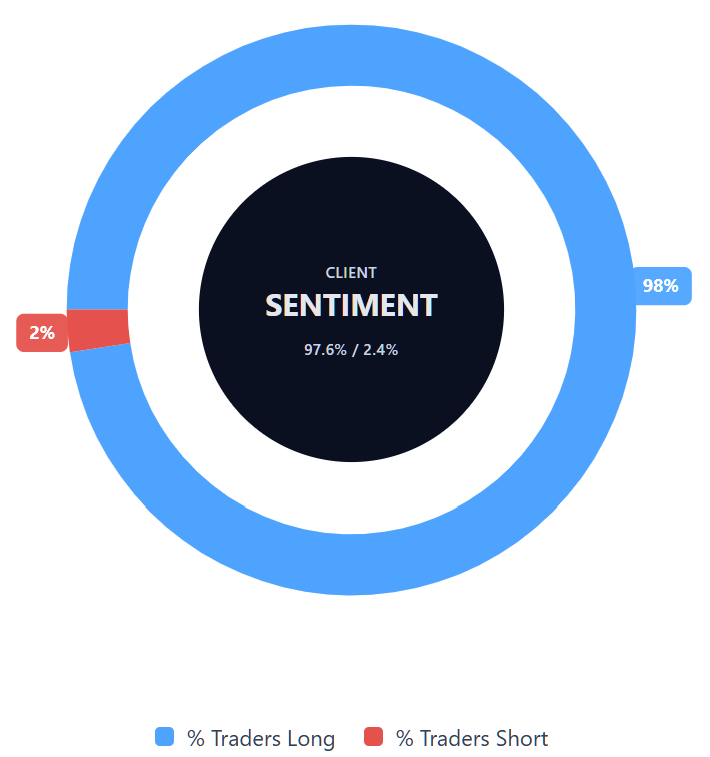
As of 15 September 2026, Capital.com client positioning in Uber Technologies CFDs shows 97.6% buyers and 2.4% sellers as of 15 September 2026.
This means open positions were heavily weighted towards buyers at the time of the snapshot. Positioning can change as clients open and close trades, and does not indicate future price direction.
Summary – Uber Technologies 2026
- As of 1.33pm UTC on 15 September 2026, Uber traded near $72.52, within an intraday range of $71.30–$72.68.
- The price sits below its 20-, 50-, 100- and 200-day moving averages, while RSI is 44.35 and ADX is 15.32.
- Recent developments include Uber's workforce restructuring, growth in bookings and free cash flow, and expansion of its autonomous-vehicle partnerships.
- Autonomous vehicles could create opportunities for Uber, while stronger competition could put pressure on its mobility business.
Past performance is not a reliable indicator of future results.
FAQ
Who owns the most Uber Technologies stock?
This article does not identify Uber Technologies’ largest shareholder, so it would be inappropriate to name one without separate ownership data. Major holdings can also change as institutions and other investors adjust their positions. For the latest ownership breakdown, traders should refer to current regulatory filings or reliable market-data providers. Ownership data can provide useful context, but it does not indicate how Uber’s share price will perform in future.
What is the five-year Uber Technologies share price forecast?
The article does not provide a five-year UBER stock forecast. The third-party forecasts cited focus mainly on shorter-term analyst targets, which currently sit broadly within a $91–$104 range. Longer-term forecasts involve greater uncertainty because they depend on factors such as earnings growth, competition, autonomous-vehicle adoption and wider market conditions. Any five-year projection should therefore be treated as speculative rather than a reliable indication of future performance.
Is Uber Technologies a good stock to buy?
Whether Uber Technologies is suitable to buy depends on an individual’s objectives, risk tolerance and view of the company, so this article does not make a recommendation. Factors that could support the shares include growth in bookings, free cash flow and autonomous-vehicle partnerships. However, stronger robotaxi competition, weaker growth or difficulties implementing restructuring plans could weigh on performance. Third-party analyst ratings and targets can also change as new information emerges.
Could Uber Technologies stock go up or down?
Yes. Uber shares could move in either direction as investors reassess the company’s financial performance, competitive position and progress in autonomous vehicles. Stronger-than-expected growth, improving margins or positive partnership developments could support the price. In contrast, weaker earnings, greater robotaxi competition or restructuring-related disruption could put pressure on it. Technical levels may also influence shorter-term trading, but they cannot reliably predict future price movements.
Should I invest in Uber Technologies stock?
The article does not provide investment advice or say whether you should invest in Uber Technologies. A decision would depend on your own financial circumstances, objectives and risk tolerance. Uber has reported growth in bookings and free cash flow, while autonomous-vehicle partnerships could create further opportunities. At the same time, competition, execution risks and uncertainty around the robotaxi market remain important considerations. Past performance and analyst forecasts do not guarantee future results.
Can I trade Uber Technologies CFDs on Capital.com?
Yes, you can trade Uber Technologies CFDs on Capital.com. Trading share CFDs lets you speculate on price movements without owning the underlying asset and to take long or short positions. However, contracts for difference (CFDs) are traded on margin, and leverage amplifies both profits and losses. You should ensure you understand how CFD trading works, assess your risk tolerance, and recognise that losses can occur quickly.