

Europe's STOXX 600 posts biggest drop in three weeks as banks tumble and oil climbs
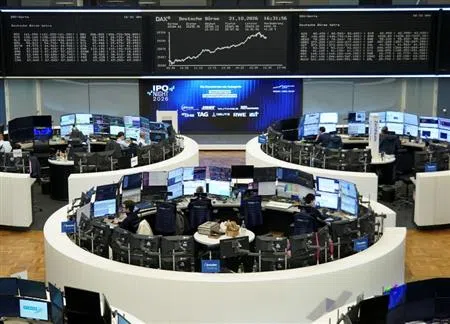
By Avinash P and Niket Nishant
Oct 22 (Reuters) - Europe's STOXX 600 posted its steepest decline in three weeks on Thursday, dragged lower by weakness in bank shares, while higher oil prices and rising yields on French bonds dampened risk appetite further.
The pan-European index ended more than 1% lower at 637.74 points. The euro zone banking index .SX7E was the biggest laggard, declining 4.2% for its weakest day since March.
Spain's Bankinter BKT.MC fell 7.6% after reporting results, which showed that higher interest rates increased deposit costs and pressured margins in the third quarter.
Barclays BARC.L fell 2.3% following a smaller-than-expected third-quarter profit. The bank said it is cutting around 5,000 jobs, or 5% of its workforce, this year.
European earnings have generally been solid, at times helping investors look past a bleak economic backdrop. The declines on Thursday, however, show how quickly sentiment can sour when disappointing results collide with economic uncertainty.
"We have some big concerns in the market," said Joost van Leenders, senior investment strategist at Van Lanschot Kempen Investment Management, referring to the Middle East conflict that sent Brent crude futures to a five-month high on Thursday.
"You have those risk factors and the positive factors which vary from day to day... (which can cause) a bit of volatility," he said.
Additionally, the yield spread between France's 10-year bond and German Bunds also hit a fresh 15-year high amid political uncertainty and protests in France. GVD/EUR
"The widening of the spread between French sovereign bonds and those in the rest of the euro zone probably has further to run over the coming months," wrote Jonas Goltermann, chief markets economist at Capital Economics.
Hermes HRMS.PA fell 5% after the Birkin bag maker posted slightly weaker-than-expected quarterly revenue, with the drop weighing on the luxury index .STXLUXP.
Nestle NESN.S added 1.1% after reporting better-than-expected organic sales growth for the third quarter. The food and beverage index .SX3P gained 0.6%, one of the few sectors to end higher.
Healthcare stocks .SXDP were the biggest gainers, up 2.1%. Belgian biopharmaceutical group UCB UCB.BR rose 21.6% after it raised its revenue growth forecast for 2026.
The tech index .SX8P came under renewed pressure, tracking a global selloff, and was down 2%. AI-related shares such as Infineon IFXGn.DE, STMicroelectronics STMPA.PA and ASML ASML.AS fell between 5% and 6%.
BE Semiconductor Industries BESI.AS fell 3.1% after its quarterly earnings.
Solid earnings from Meta Platforms META.O on Wednesday were not enough to placate investor worries about the sustainability and profitability of massive AI spending, reviving concerns that have triggered several selloffs in AI stocks this year.