

Valneva stock forecast: EMA validates Lyme vaccine application
Valneva is a French vaccine company listed on Euronext Paris. In August, the EMA validated the marketing-authorisation application for its Lyme disease vaccine candidate with Pfizer. Explore third-party VLA price targets. Past performance is not a reliable indicator of future results.
As of 10:15am UTC on 16 September 2026, Valneva SE (VLA) traded at €2.86, within an intraday range of €2.79–€2.88. Past performance is not a reliable indicator of future results.
Recent developments include the European Medicines Agency’s validation of the marketing-authorisation application for Valneva and Pfizer’s Lyme disease vaccine candidate. Valneva also reported 189,771,237 shares outstanding and 204,364,085 total voting rights as of 31 August (Yahoo Finance, 4 September 2026).
Third-party Valneva outlook: Lyme vaccine review, H1 losses
As of 16 September 2026, third-party Valneva stock predictions range from €4.40–€7.50, while US-dollar estimates include $9.30 and $12. The differences reflect assumptions around regulatory approval, future vaccine revenue and Valneva’s financial performance.
First Berlin Equity Research (broker note)
First Berlin set a 12-month target of €4.40 and maintained its Buy rating after reducing the target from €4.50. The broker cited lower 2026 profit assumptions following softer second-quarter gross profit and higher pro-forma net debt (EQS News, 21 August 2026).
Stifel (broker note)
Stifel maintained a €7.50 target and Buy rating, with the Lyme vaccine programme forming a key part of its valuation case (Ad Hoc News, 27 August 2026).
TD Cowen (broker initiation)
TD Cowen initiated coverage with a $12 target and Buy rating. Its assessment centred on the Lyme vaccine programme and its longer-term commercial potential following progress with the EMA application (Ad Hoc News, 20 August 2026).
MarketBeat (consensus update)
MarketBeat reported a $9.30 consensus target across four analysts, split between two Buy and two Sell recommendations. This resulted in an overall Hold classification and illustrates the range of views among the analysts tracked (MarketBeat, 1 September 2026).
TipRanks (latest rating)
TipRanks recorded its most recent individual rating as a Buy with a €5.60 target for the Paris-listed shares (TipRanks, 4 September 2026).
Predictions and third-party forecasts are inherently uncertain, as they cannot fully account for unexpected market developments. Past performance is not a reliable indicator of future results.
Valneva earnings: latest results and next report
Valneva published its first-half 2026 results on 13 August. Total revenue fell to €65.8m from €97.6m a year earlier, while product sales declined to €64m from €91m. The company reported lower travel-vaccine volumes alongside weaker gross margins (Idéal Investisseur, 24 August 2026).
Net loss widened to €63.3m from €20.8m in the first half of 2025. Roughly half of the operating loss was linked to the chikungunya vaccine Ixchiq, which carried a negative gross margin during the period.
Cash and cash equivalents stood at €121.5m at 30 June, up from €109.7m at the end of 2025, following a capital raise that generated €37m in gross proceeds during the second quarter.
Valneva reaffirmed full-year guidance of €135m–€150m in product sales and €145m–€160m in total revenue. It also said regulatory decisions on the Lyme disease vaccine candidate, developed with Pfizer, were expected within the following 12 months.
MarketScreener lists Valneva’s next expected earnings update, covering Q3 2026, for 11–12 November 2026 (MarketScreener, 30 August 2026).
VLA stock price: technical overview
The VLA stock price traded at €2.86 at 10:15am UTC on 16 September 2026, between the 20-day SMA near €2.88 and the 30-day SMA near €2.79. The 50- and 100-day SMAs stood lower at €2.55 and €2.47, while the 200-day SMA and EMA were higher at €3.14 and €2.93.
The 20-day SMA remained above the 50-day average. The 14-day RSI stood at 53.9, close to its neutral midpoint, while ADX at 28.7 was above the conventional 25 reference often associated with an established trend. MACD was positive at 0.08, while the Stochastic RSI fast line at 6.5 was below the conventional 20 threshold.
Higher technical references included the 200-day SMA near €3.14, R1 at €3.25 and R2 at €3.79. Below the quoted price, the central pivot stood at €2.70, followed by the 50-day SMA near €2.55, the 100-day SMA at €2.47 and S1 at €2.16 (TradingView, 16 September 2026).
These indicators and levels provide technical reference points rather than indications of future price direction.
This is technical analysis for informational purposes only and does not constitute financial advice or a recommendation to buy or sell any instrument.
Valneva share price history (2024–2026)
VLA’s stock price traded mainly between €1.80–€2.30 through late 2024 before rising above €5 in early 2025 alongside developments in the Lyme vaccine programme. The shares reached €5.06 on 10 March before falling to €2.31 by 23 March.
VLA traded around €2.13 in late July 2025 before rebounding to €5.07 in early August, during a period that included chikungunya vaccine approvals in Brazil and the EU. The move later reversed as investors assessed widening first-half losses and cash use.
Another rebound took the shares to €4.85 in October, before a decline through the first half of 2026 brought VLA towards €2.10 in July.
The EMA’s validation of the Lyme vaccine marketing application on 14 August 2026 coincided with an intraday move to €3.31. First-half results around the same period showed a €63.3m net loss and lower product sales, providing a financial counterweight to the regulatory development.
The shares subsequently traded largely between €2.80–€3.10 and stood at €2.86 at 10:15am UTC on 16 September 2026.

Past performance is not a reliable indicator of future results. Share prices are indicative and may differ from live market prices.
Valneva (VLA): Capital.com analyst view
Valneva’s share price has been sensitive to regulatory and financial developments in 2026, particularly those linked to the Lyme disease vaccine programme.
Further regulatory progress in Europe or the US could support expectations for future vaccine revenue and royalties, particularly if followed by successful commercialisation. Delays, an unfavourable regulatory decision or weaker-than-expected uptake could weigh on those expectations instead.
Valneva’s existing business also remains relevant. Stronger travel-vaccine demand or improving margins could support its financial position, while weaker sales, continued losses or higher development costs could increase pressure on cash resources.
The company ended June with €121.5m in cash and cash equivalents following its second-quarter capital raise. This provides additional liquidity, although future funding needs will depend on development costs, commercial spending, revenue and progress across its vaccine programmes.
Capital.com’s client sentiment for Valneva CFDs
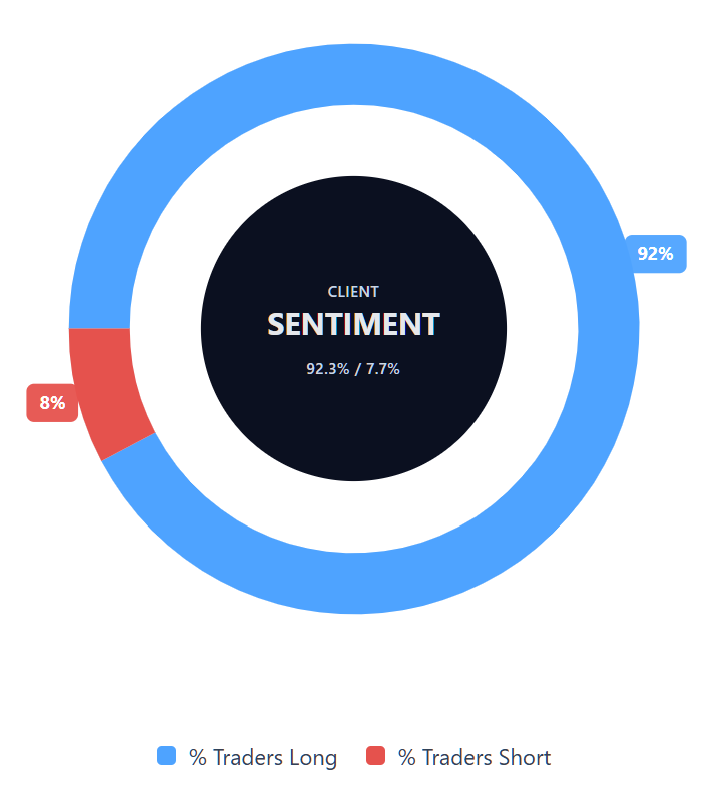
As of 16 September 2026, Capital.com client positioning in Valneva CFDs shows 92.3% buyers and 7.7% sellers, a difference of 84.6 percentage points. This reflects open positions on the platform, can change and does not indicate future price direction.
Summary – Valneva 2026
- As of 10:15am UTC on 16 September 2026, Valneva traded at €2.86 within an intraday range of €2.79–€2.88.
- According to TradingView data, technical readings placed the stock between its 20- and 30-day SMAs, with RSI at 53.9 and ADX at 28.7.
- Key influences include regulatory decisions for the VLA15 Lyme vaccine candidate, product sales, losses and funding requirements.
- Further regulatory progress or stronger commercial performance could support expectations, while delays, weaker sales or higher costs could weigh on them.
Past performance is not a reliable indicator of future results.
FAQ
Who owns the most Valneva stock?
What is the five-year Valneva share price forecast?
Is Valneva a good stock to buy?
Could Valneva stock go up or down?
Should I invest in Valneva stock?
Can I trade Valneva CFDs on Capital.com?
Yes, you can trade Valneva CFDs on Capital.com. Trading share CFDs lets you speculate on price movements without owning the underlying asset and to take long or short positions. However, contracts for difference (CFDs) are traded on margin, and leverage amplifies both profits and losses. You should ensure you understand how CFD trading works, assess your risk tolerance, and recognise that losses can occur quickly.