

Markets rebalance ahead of earnings season as geopolitics remain in focus
Markets end the week with caution as geopolitical tensions dominate the narrative ahead of the start of earnings season.
Markets are ending the week in a more cautious mood than they began it, as investors digest the implications of renewed tensions between the US and Iran. While the initial spike in oil prices and sell-off in equities reflected an immediate repricing of geopolitical risk, attention is now turning to whether this latest setback represents a temporary interruption to negotiations or the beginning of a more prolonged period of instability. The consensus view remains that neither side appears willing to escalate into a broader conflict, but the events of this week have reminded markets that the path to a lasting agreement is unlikely to be straightforward.
The biggest takeaway has been the re-emergence of a geopolitical risk premium across markets. Oil prices remain above last week's lows, suggesting traders are no longer willing to assume that global energy supplies will return to normal uninterrupted. While traffic through the Strait of Hormuz has continued, uncertainty surrounding future Iranian exports and the US decision to revoke Tehran's oil waiver have challenged expectations of abundant supply. Investors are now likely to demand a greater premium for geopolitical uncertainty than they did just a fortnight ago, even if the broader outlook for negotiations remains constructive.
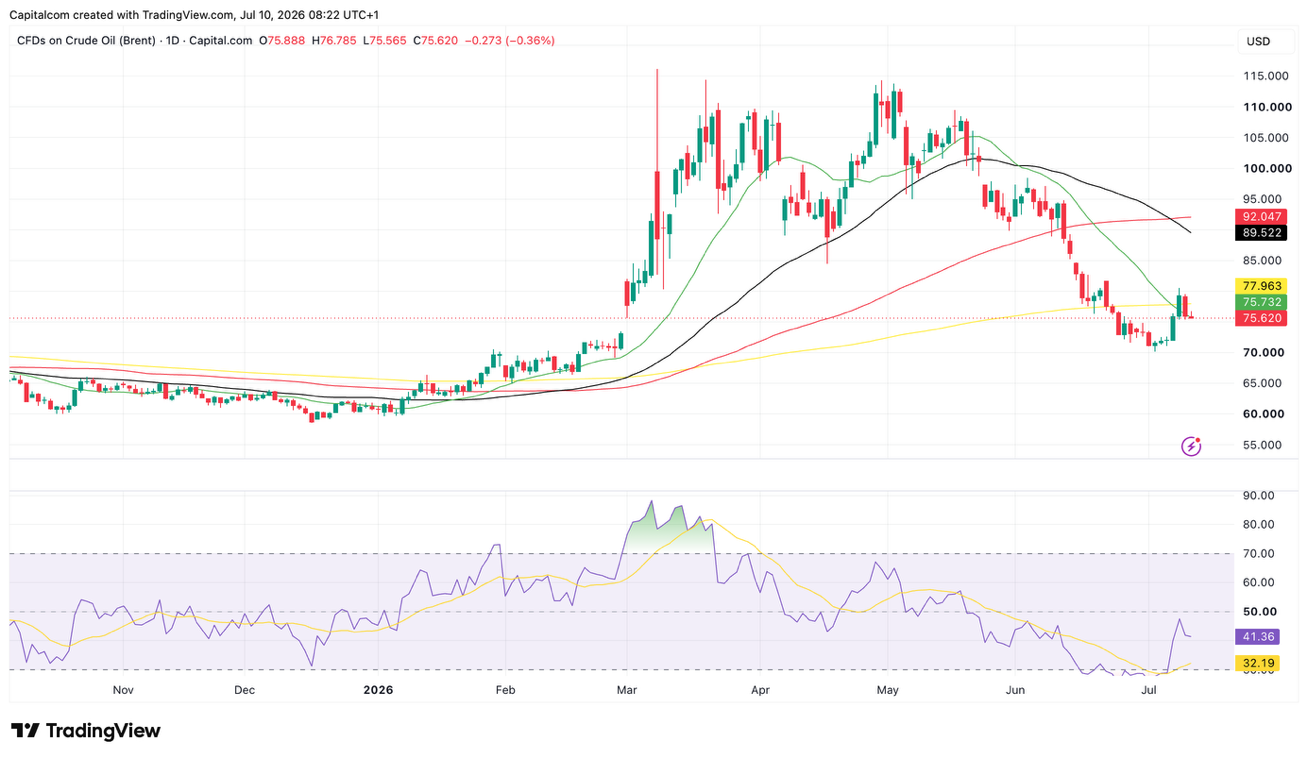
Brent Crude daily chart
Past performance is not a reliable indicator of future results.
The technical picture remains nuanced. While brent crude has rebounded sharply from its recent lows near $70 per barrel, the recovery appears to be losing momentum as prices encounter resistance around the 200-day moving average. The latest rally has helped lift RSI back from oversold territory, signalling an improvement in short-term momentum, although the indicator has yet to confirm a sustained bullish trend. Prices remain below the 20, 50 and 100-day moving averages, suggesting the broader technical picture is still cautious despite the recent bounce. The $70 area continues to stand out as an important support zone, while a decisive break above the 200-day moving average would be needed to signal that the recent correction may be giving way to a more durable recovery. Until then, brent is likely to remain vulnerable to further headline-driven volatility as geopolitical developments continue to influence sentiment.
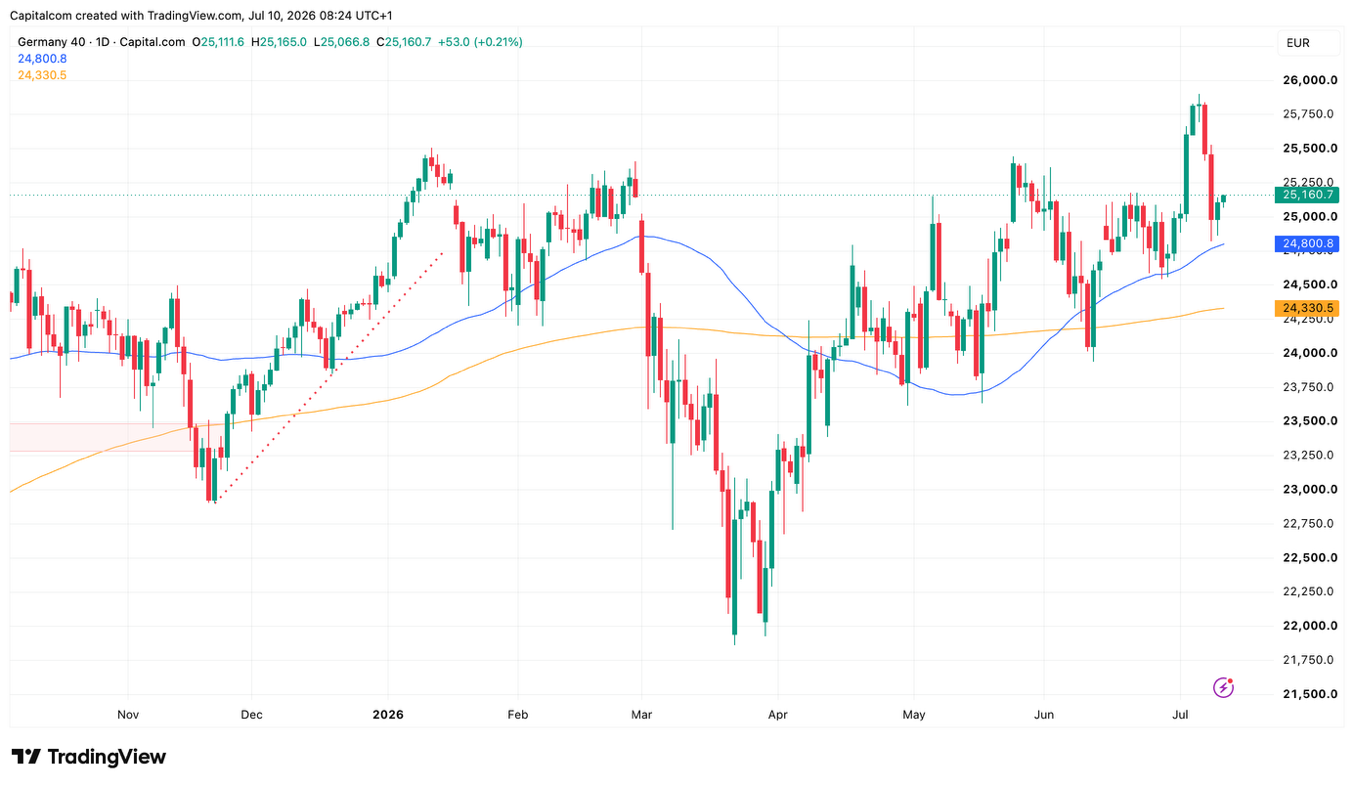
Equity markets have also become more selective. European indices have surrendered some of their recent outperformance, reflecting their greater sensitivity to higher energy prices, while Wall Street has continued to consolidate after an extraordinary AI-driven rally. The renewed rise in Treasury yields reinforces another challenge for equities: if higher oil prices begin feeding back into inflation expectations, markets may once again question how much flexibility the Federal Reserve has to ease policy. For now, however, the pullback still appears more like a pause in a broader uptrend than the beginning of a sustained reversal.
DAX 40 daily chart
Past performance is not a reliable indicator of future results.
Looking ahead, geopolitics is unlikely to be the only driver. The focus next week shifts firmly back to fundamentals as the second-quarter earnings season begins in earnest. Investors will be looking for confirmation that AI-related investment continues to translate into robust earnings growth and resilient margins, particularly among the large technology companies that have driven much of this year's rally. With valuations still elevated, earnings guidance could prove just as important as the headline results themselves.
The economic calendar will also become more active. US inflation data will be closely watched for signs on how broader price pressures have evolved, while retail sales and industrial production figures should provide further insight into the health of the global economy. Combined with any fresh developments in the Middle East, these releases will help determine whether markets return their focus to growth and earnings or remain dominated by inflation and geopolitical concerns.
Ultimately, this week has demonstrated that markets may have become too confident in pricing a smooth geopolitical outcome. That does not mean the broader risk-on environment has come to an end, but it does suggest investors may need to become comfortable with a higher degree of volatility. As earnings season gets underway, the next leg for markets is likely to be determined by whether strong corporate fundamentals can continue to outweigh the renewed uncertainty surrounding inflation, interest rates and geopolitics.