

Oil nears $100 as the Middle East conflict evolves
Further attacks in the Middle East drive the premium in oil higher, with Brent nearing $100 per barrel.
Oil is back on the move as the conflict between the US and Iran moves towards energy infrastructure, tankers and the shipping routes responsible for moving crude out of the Gulf. As a result, brent has climbed roughly 25% since early August and is now threatening the psychologically important $100-per-barrel level,
The latest escalation has seen US forces destroy five Iranian oil tankers on Tuesday after Iran attempted to strike US naval vessels with ballistic missiles. Tehran subsequently retaliated against a US military base in Jordan and claimed attacks against vessels attempting to transit the Strait of Hormuz. Iran has also warned tankers near Bahrain and Kuwait that they could become targets, extending the threat beyond Iranian exports towards the wider commercial shipping network.
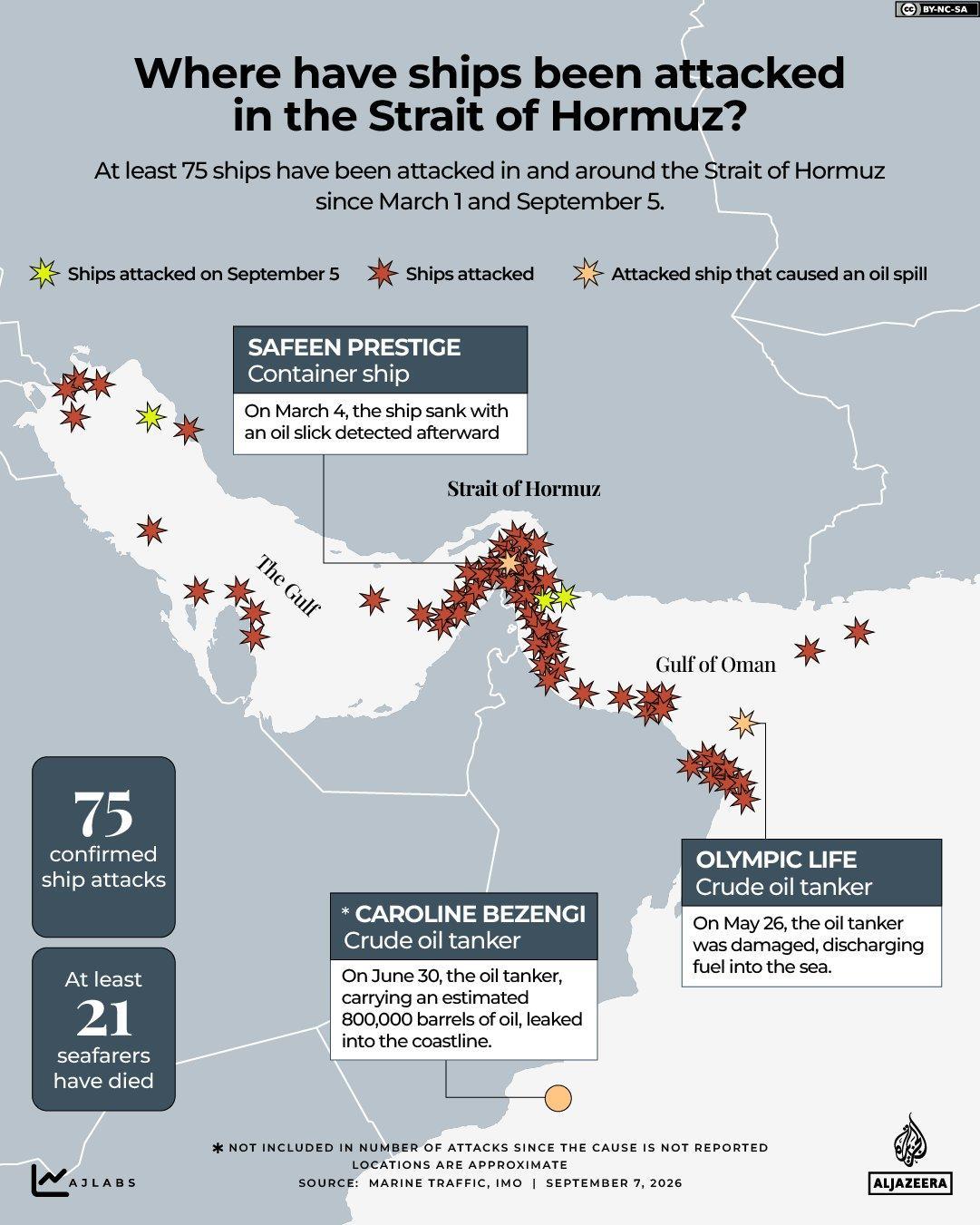
However, the conflict is spreading beyond Hormuz, which is adding further premium into oil prices. Iran-backed Houthi forces have launched drone and missile attacks against Saudi energy facilities, including infrastructure in the south of the country. Saudi Arabia has been particularly important in cushioning the impact of disruption around Hormuz because it can divert some crude westwards towards the Red Sea. Attacks on Saudi infrastructure therefore threaten one of the principal alternatives to moving barrels through the Strait.
These developments change the dynamic in oil markets because for much of the conflict traders have been willing to tolerate severe disruption around Hormuz because alternative export routes, spare capacity and weaker demand provided some reassurance that the world was not facing an outright shortage. If the conflict increasingly threatens both Hormuz and the infrastructure being used to circumvent it, that buffer becomes less reliable.
That said, given the scale of disruption, Brent trading just below $100 suggests markets are still assuming that the conflict remains contained enough to prevent a catastrophic loss of Gulf supply. Some Saudi crude continues to be rerouted, while traders are also conscious that very high energy prices eventually become their own demand-destruction mechanism. OPEC supply provides another counterbalance, although even that cushion has recently weakened. A Bloomberg survey cited by ANZ showed OPEC crude production falling by around 900,000 barrels per day in August, partly reflecting disruption from the conflict.
Which leaves Brent caught between two competing forces. On one side is a rapidly increasing geopolitical premium as attacks move closer to the physical infrastructure and shipping responsible for global supply. On the other is the assumption that producers can continue finding ways to move enough barrels to prevent a genuine shortage, while higher prices eventually suppress consumption.
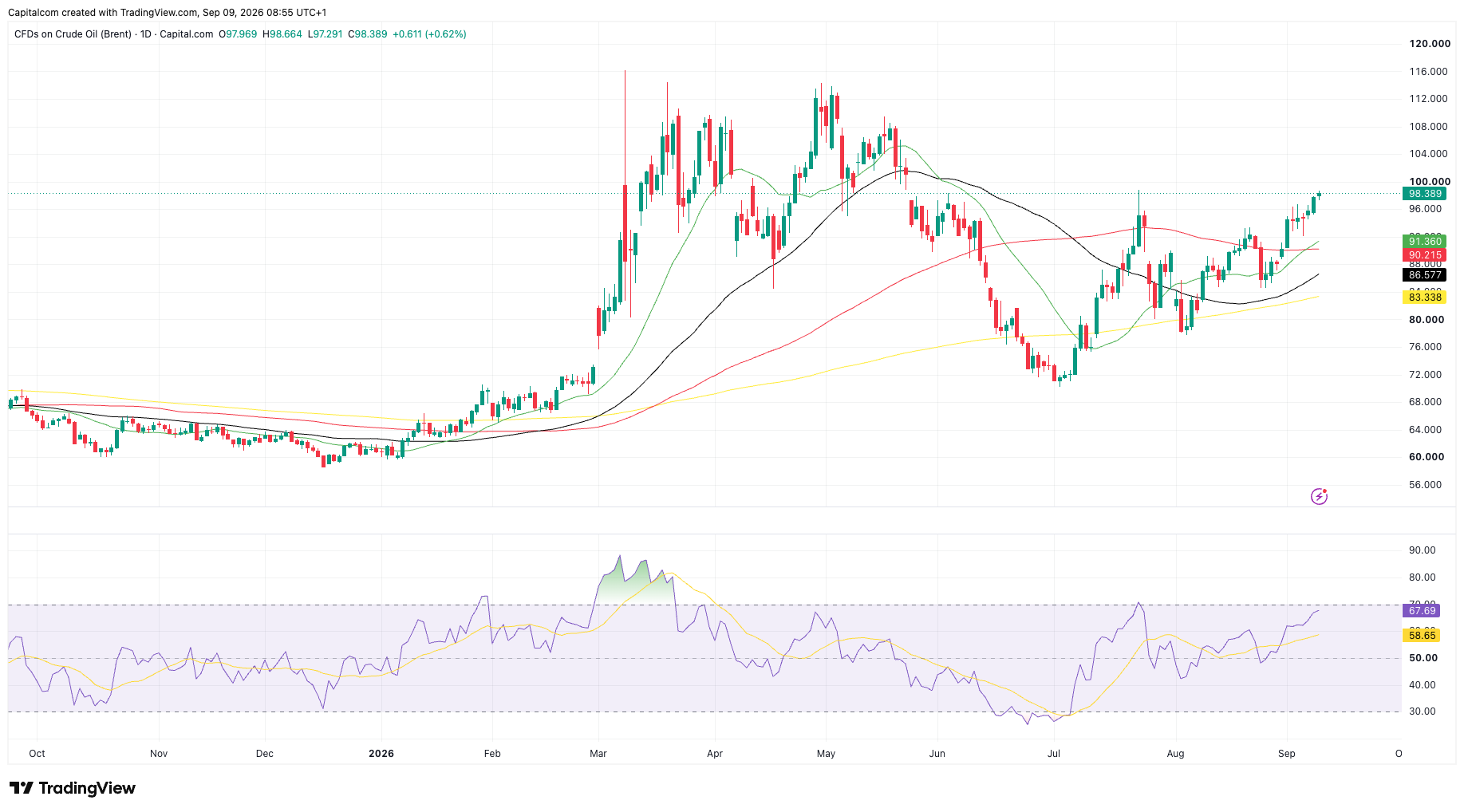
Brent crude daily chart
Past performance is not a reliable indicator of future results.
Technically, Brent's structure has strengthened considerably as it trades comfortably above the major moving averages, keeping the broader trend firmly to the upside. The immediate obstacle is $100. A sustained move through that level would be important both technically and psychologically. It could encourage momentum buying while signalling that markets are beginning to price a more prolonged disruption to Middle Eastern supply.
However, momentum is becoming stretched. The RSI is around 66, approaching overbought territory, meaning some consolidation would not be surprising after the rapid September advance. Failure to clear $100 could see prices retreat towards $95–96, with the $90–92 region becoming more important support below that.