

AI optimism meets a reality check as global equities struggle
Markets struggle to recover from selling pressure despite a successful IPO for Anthropic as rate expectations weigh on sentiment.
Global markets are heading towards the end of a challenging week, with selling pressure spreading across US, European and Asian equities. What initially looked like a correction concentrated in technology stocks has increasingly become a broader reassessment of risk, as investors question whether corporate earnings can justify elevated valuations in an environment of persistent inflation and restrictive monetary policy. Despite strong results from Nvidia and a successful stock market debut for Anthropic, investors appear increasingly reluctant to chase AI-related gains, suggesting that confidence in the broader equity market remains fragile.
This week: AI delivers strong results, but markets remain unconvinced
The standout development has been the contrasting performance of AI-related companies and the broader stock market. Nvidia delivered another impressive set of quarterly results, with revenue reaching $115.8 billion and forward guidance of $130 billion, reinforcing the strength of demand for AI computing infrastructure. However, the results have struggled to restore confidence in the wider technology sector. Investors remain concerned about the sustainability of capital expenditure, the returns being generated by AI investments and the uncertainty surrounding Nvidia's leadership transition following Jensen Huang's departure.
Anthropic's highly anticipated Nasdaq debut provided another important test of investor appetite. Shares priced at $83 and opened at $111.50 before closing their first session around $97, approximately 17% above the IPO price. The successful listing demonstrated that institutional and retail demand for direct AI exposure remains substantial. Nevertheless, the Nasdaq fell more than 2% on the same day, highlighting that investors may still be enthusiastic about individual AI companies while becoming increasingly cautious about the valuations attached to the broader sector.
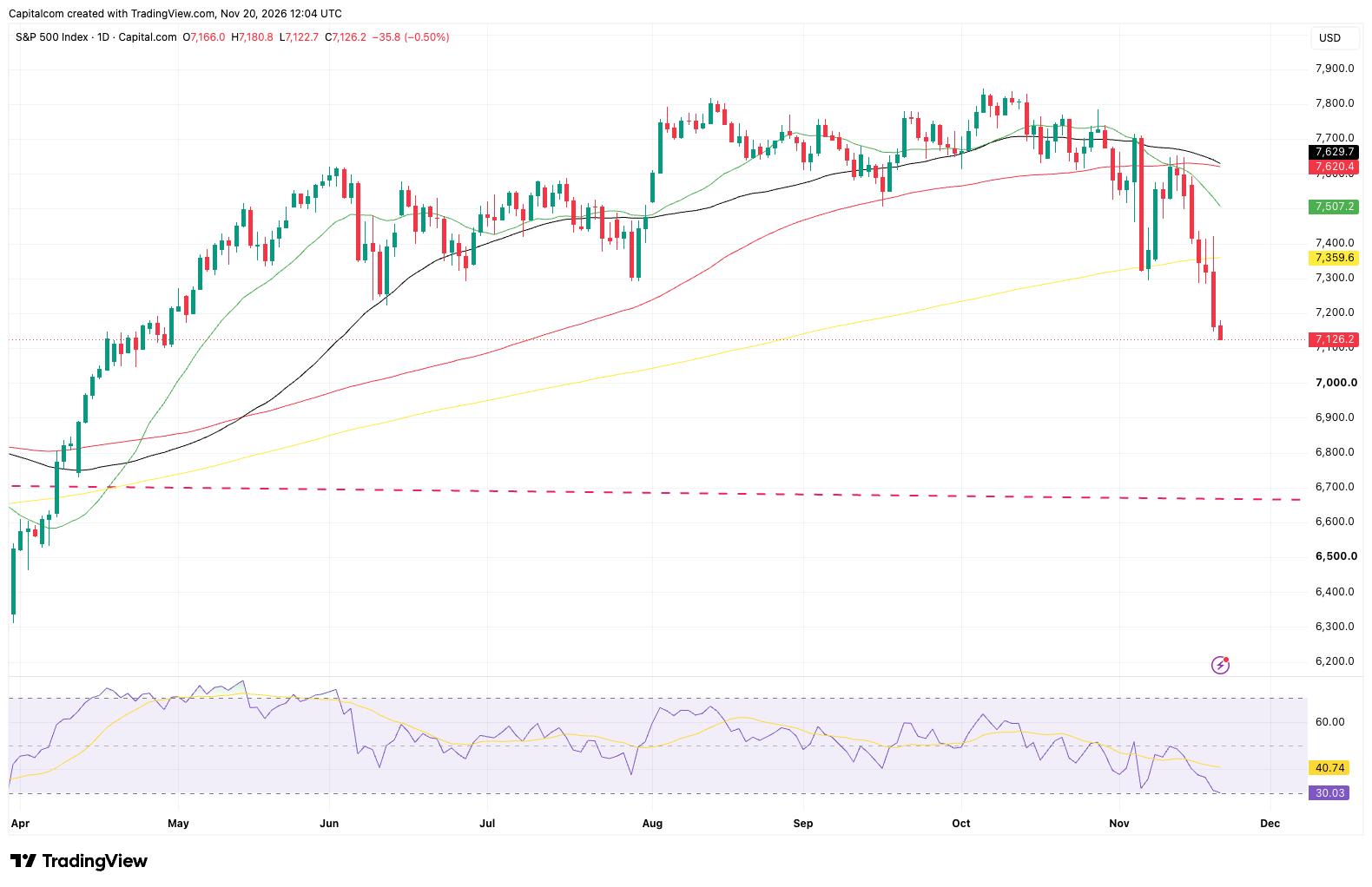
The most concerning development is that the weakness has spread beyond the Nasdaq. The S&P 500 has recorded six consecutive daily declines, while Europe's previous resilience has faded and Asian technology markets have experienced particularly sharp losses, reinforcing concerns that investors are reducing exposure to the broader AI supply chain.
S&P 500 daily chart
Past performance is not a reliable indicator of future results.
The Fed, dollar and commodities: Few places to hide
The Federal Reserve has added another layer of pressure. Minutes from the October meeting reinforced expectations that further tightening will be necessary to contain inflation, with markets now pricing an almost certain 25-basis-point hike in December. However, the bigger uncertainty is how much further rates may need to rise in 2027. Elevated borrowing costs are particularly challenging for technology companies, while persistent uncertainty around the terminal rate has contributed to volatility across Treasury markets.
Interestingly, US Treasury yields have eased slightly as investors seek safety from the equity selloff, even as the dollar remains close to its highest levels in 19 months. This suggests that defensive demand is increasingly competing with expectations of further monetary tightening. Lower yields would normally be supportive for growth stocks, but not necessarily when they reflect concerns about economic confidence rather than improving inflation expectations.
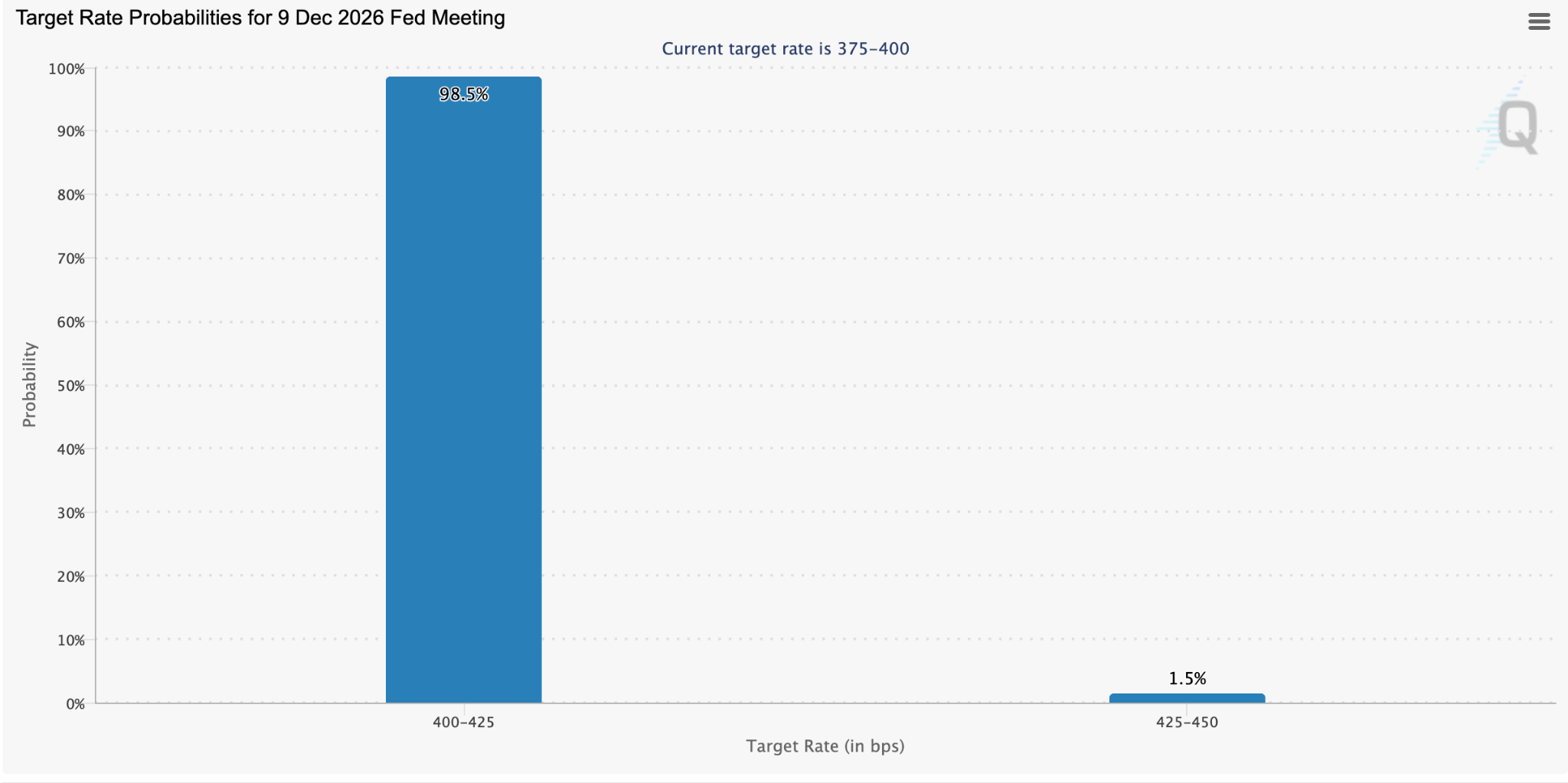
Source: CME FedWatch tool
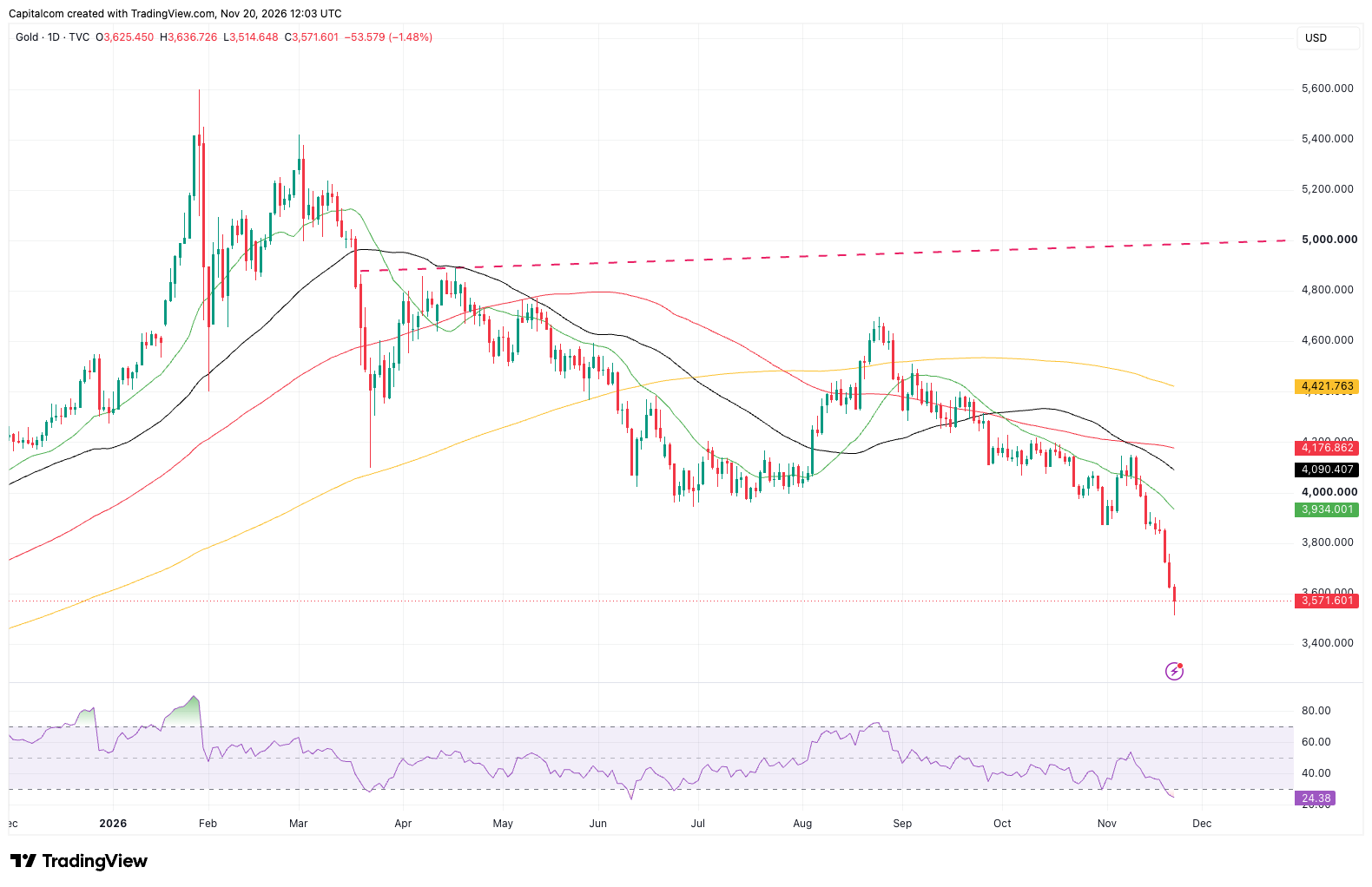
Commodities have also struggled. Brent crude has remained under pressure as recovering shipments through the Strait of Hormuz and expectations of more comfortable supply conditions reduce the geopolitical risk premium. While lower energy prices could eventually ease inflation pressures, they have not been enough to restore confidence in equities. Gold has also extended its decline towards $3,700, with dollar strength and elevated real yields outweighing its traditional safe-haven appeal. The simultaneous weakness in equities and precious metals suggests investors are prioritising liquidity and capital preservation.
Gold (XAU/USD) daily chart
Past performance is not a reliable indicator of future results.
Looking ahead: US inflation and growth data take centre stage
Next week will be shortened by the US Thanksgiving holiday, but the economic calendar is particularly concentrated on Wednesday. The most important release will be October's US PCE inflation report, the Federal Reserve's preferred inflation measure. Following the recent upside surprise in CPI, markets will be looking for evidence of whether price pressures are becoming more persistent. Another strong reading could reinforce expectations of additional tightening into 2027, pushing Treasury yields and the dollar higher and potentially prolonging the equity correction. Conversely, softer inflation could help stabilise rate expectations and provide some relief for risk assets.
The central question heading into next week is whether markets are approaching the end of a sharp correction or entering a more prolonged period of valuation adjustment. There are reasons for cautious optimism: corporate earnings remain relatively resilient, demand for AI infrastructure continues to grow, and the recent declines may create opportunities for investors willing to look beyond short-term volatility.
However, the biggest challenge is that strong earnings and successful IPOs are no longer sufficient to support the broader market when interest rate expectations are moving higher. For a sustainable recovery, investors will want to see inflation easing, Treasury yields stabilising and buying interest spreading beyond a handful of technology companies. The risk is that next week's data reinforce the case for further Fed tightening, keeping valuations under pressure even if the underlying economy remains strong.